
For a while now, Malaysia’s opposition has been talking about change.
A reset. A new beginning. A stronger political force that can challenge the government.
But recent developments have raised a different question. Is this really a reset or is it simply the opposition reorganising itself while keeping much of the same political foundation?
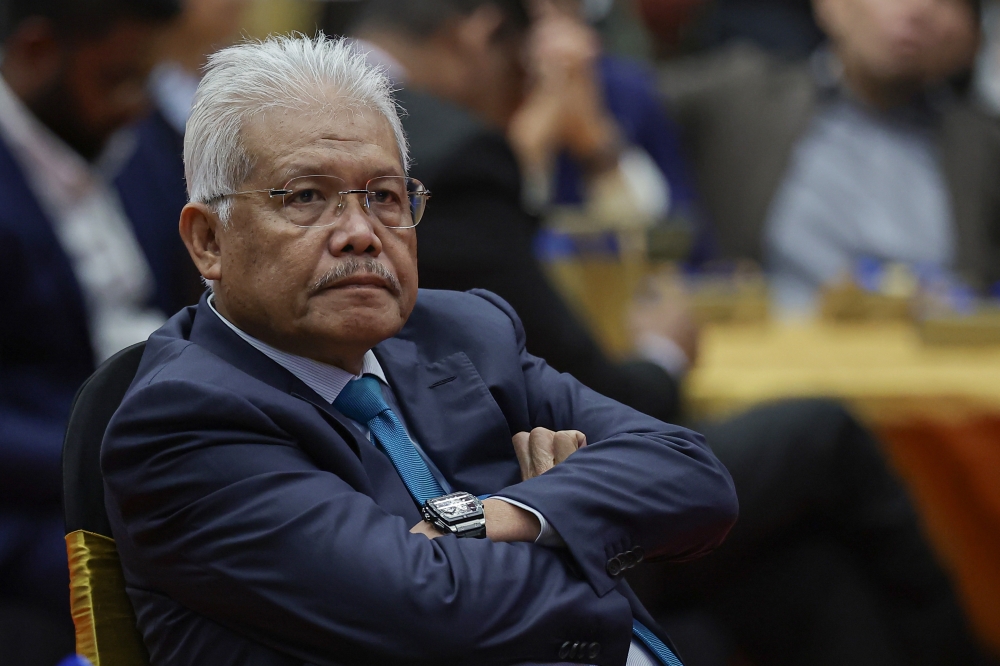
The return of Datuk Seri Hamzah Zainudin as Opposition Leader is a clear example of this shift.
At first glance, it appears to be a major political turnaround. A leader who recently lost his original party platform has been instantly restored to the apex of opposition leadership, backed by forces claiming to champion a "Reset" movement.
However, the bigger story is not just about one man returning to power. It is about what his rapid reappointment reveals about the structural realities of the opposition and why the term "reset" is being used to describe what looks like a familiar arrangement.
Before this, the opposition's power structure relied on a specific balance.
Parti Pribumi Bersatu Malaysia (Bersatu) provided the traditional Malay nationalist branding and central leadership, while its coalition partners brought the heavy lifting in terms of grassroots machinery. This partnership allowed the opposition to position itself as a seasoned alternative government.
When internal friction led to a messy parting of ways between Hamzah and Bersatu, it should have fundamentally fractured his standing in Parliament.
In Malaysian politics, an MP's leverage is almost always tied to the weight of their party machinery and established grassroots networks.
But the speed of Hamzah's return via the newly minted Parti Wawasan Negara proves that the opposition's structural foundation has not been demolished, it has simply been re-anchored.
Instead of a genuine ideological reset, the creation of Wawasan serves as a rapid structural adjustment. It functions as a swift vehicle to keep existing, influential lawmakers grouped together under a new banner without disrupting the numbers game in Parliament.
Supporters may see this agility as a sign that the opposition is adapting and modernizing its approach.
However, critics see something else.
While Wawasan features a brand-new name, the political ecosystem feeding it remains identical. The strategies, the key players and the calculations for power are drawn from the exact same pool that defined the opposition before this latest shift.
This is where the concept of a political "reset" faces its real test.
If a political bloc introduces a new party name but depends on the exact same alliances, rivalries, and leadership figures to function, has anything fundamentally changed?
Or has the opposition simply found a tactical rearrangement to sustain its existing pursuit of power?
The true significance of this rearrangement becomes clear when looking at the changing power dynamics within the broader opposition bloc.
For years, the partnership between the nationalist and Islamist factions of the opposition was presented as a meeting of equals. One provided federal governance experience, while the other brought unwavering grassroots loyalty.
However, the handling of Hamzah's political transition reveals that the internal center of gravity has fundamentally shifted.
The public backing of Hamzah by PAS leadership, highlighting that they favored him as Opposition Leader regardless of his status with Bersatu, makes it clear who is now directing the opposition's trajectory.
It signals that power within the bloc no longer rests where it did a few years ago.
The dominant force in the opposition is no longer hiding its confidence in shaping major leadership decisions, dictating terms, and choosing who leads the charge in Parliament.
Therefore, restoring Hamzah to the role of Opposition Leader is less about his personal comeback and more about stabilizing a rearranged hierarchy.
The position itself carries immense weight. The Opposition Leader is the public face of the alternative government, tasked with challenging state policies and presenting a cohesive vision to the nation.
By prioritizing structural preservation over fresh leadership faces, the opposition is signaling that it values continuity and familiar hands above all else.
But this is precisely why the "reset" narrative rings hollow.
A genuine political reset cannot just be a game of musical chairs among elite politicians or the sudden registration of new party acronyms. It demands a fresh policy platform, a distinct identity and an entirely new argument for why voters should trust them.
This distinction is critical as Malaysia heads into crucial upcoming elections.
Elections test whether internal party maneuvering actually resonates with ordinary citizens. It is where abstract political structures face the reality of public sentiment.
For the opposition, survival is not the benchmark of success. It has already proven it can navigate internal disputes and quickly patch over structural tears.
The real challenge is proving to the public that these internal adjustments mean something better for the country.
The launch of a new party proves logistical survival. A swift leadership reshuffle proves tactical flexibility. But neither of these things automatically produces a compelling, alternative vision for Malaysia.
The opposition has successfully altered its internal structure, but it has yet to change its core message.
Because in politics, rearranging the pieces does not always create a new picture. Sometimes it only produces a different version of the same one.