
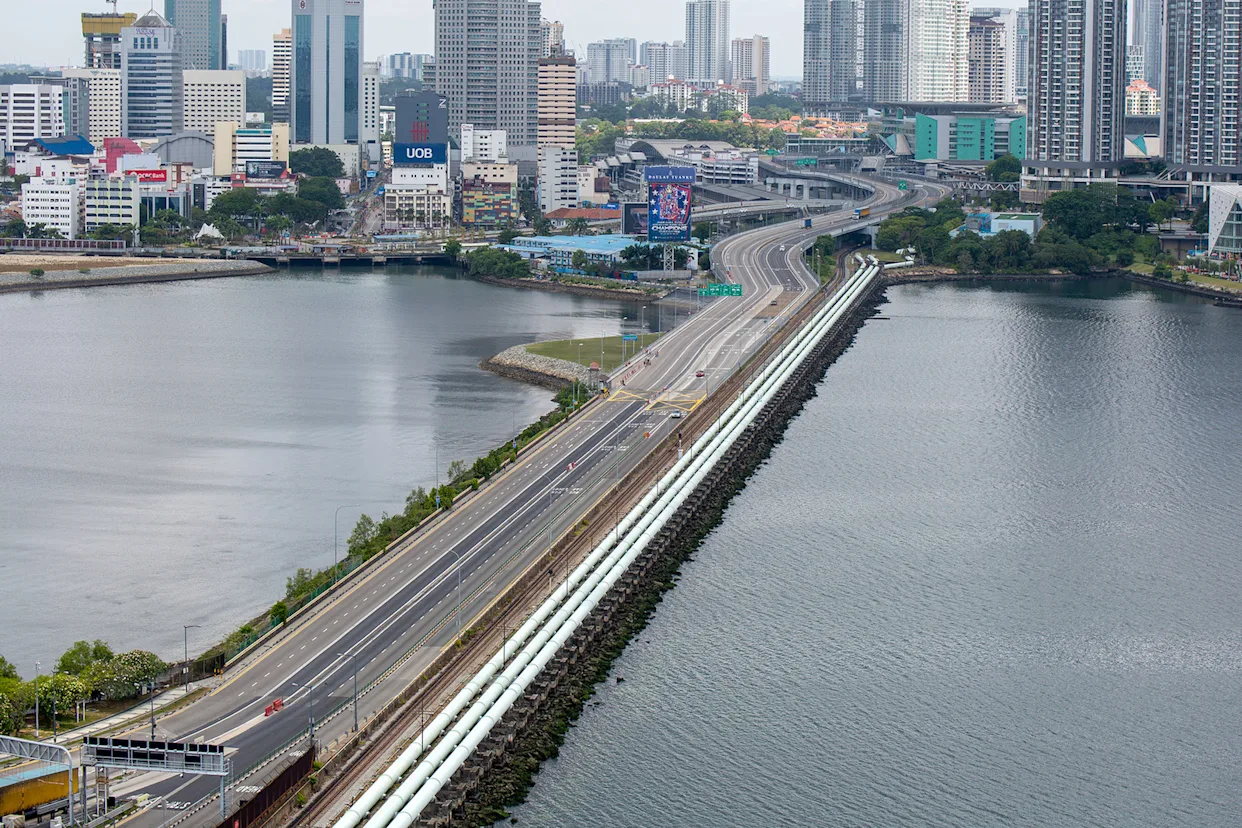
For the past few months, a steady stream of household names has been packing up and heading north across the Causeway.
Gardenia — the bread brand everybody in SEA loved since 1978 has announced on May 20 that it would shut its Pandan Loop bakery and retrench 141 workers.
In the following weeks, H&M — the Swedish fashion giant — announced in May that it would relocate its Southeast Asia regional headquarters from Singapore to Kuala Lumpur.
Even Yeo Hiap Seng and Asia Pacific Breweries Singapore are moving production to Malaysia.
Why Are They Leaving?
Singapore is a small island with sky-high rents and limited land. The government there has been deliberately raising fees for foreign workers and pushing wages up to protect its own citizens. They want to focus on high-end finance, research, and technology — not factories. The city-state is essentially telling manufacturers: if you can't afford to be here, leave.
And they are leaving.
The Johor-Singapore Special Economic Zone (JS-SEZ) is accelerating this trend. While the full masterplan is still pending, firms are already moving to capitalise on incentives, including a special 5% corporate tax rate for 15 years—sharply lower than Malaysia's standard 24%.
What This Means for Malaysia
With Singapore pushing out manufacturing and Malaysia pulling it in through the JS-SEZ, Malaysia is positioning itself as the factory floor for the region.
In March 2025, Johor alone announced a record RM110 billion in investments—the highest ever recorded by any Malaysian state. These projects are expected to create approximately 25,000 jobs in Johor alone. Not just factory floor positions, but technical, managerial, and support roles.
The JS-SEZ is expected to generate 20,000 high-quality, skilled jobs over its first five years, particularly in advanced manufacturing, the digital economy, and clean energy.
For the thousands of Malaysians commuting to Singapore daily—estimated at between 400,000 and 480,000 people—this offers an alternative: working closer to home without the border jam.
Here is where the story gets even more interesting. Some companies are paying their Malaysian workers in Singapore dollars—or at least offering compensation packages that match the higher income of their Singapore counterparts.
That means more disposable income flowing into local communities, not just corporate profits. The "Earn SGD, Spend MYR" model that has long benefited cross-border commuters is now evolving into a model where Malaysians can earn Singapore-competitive salaries while living and spending in Malaysia.
The Other Side of the Coin
Not everything is rosy. Some worry that Malaysia is becoming a "cheap labour destination" rather than a high-value partner. Others point out that the high-value roles—brand management, R&D, supply chain orchestration—still stay in Singapore. Gardenia, for instance, will keep its central hub for brand management, product development, and quality oversight in Singapore.
There are also concerns about competition for resources. Teh Kee Sin of the SME Association of South Johor warned that an influx of foreign firms intensifies competition for skilled workers and industrial land. "There will be stronger competition for workers, pushing wages higher, while industrial rents are also rising," he said. Universiti Kebangsaan Malaysia associate professor Wye Chung Khain similarly warned that a sudden corporate rush for technical and business talent risks driving up wage premiums for elite workers, potentially leaving local Malaysian enterprises behind.
A Reversal We Haven't Seen in Years
Here's the thing: compared to a decade ago when Malaysia was losing factories to Vietnam and China, this is a reversal we haven't seen in years.
For ordinary Malaysians, that means more jobs, better wages, and a stronger economy. The investment flows into construction, logistics, retail, and services. The money doesn't just sit in bank accounts—it circulates.
The great migration is real. And for once, Malaysia is on the winning side.
Singapore's loss is becoming Malaysia's gain. The city-state's deliberate strategy of pushing out manufacturing to focus on high-end finance and technology is creating an opportunity that Malaysia is finally seizing.
But Malaysia must be careful. To avoid becoming merely a "cheap labour destination," the country needs to invest in upskilling its workforce, improving infrastructure, and ensuring that the benefits of this influx flow to ordinary Malaysians—not just foreign corporations.
For now, though, the direction is clear: the factories are coming back. And for the first time in years, Malaysia is the one saying "welcome home."