
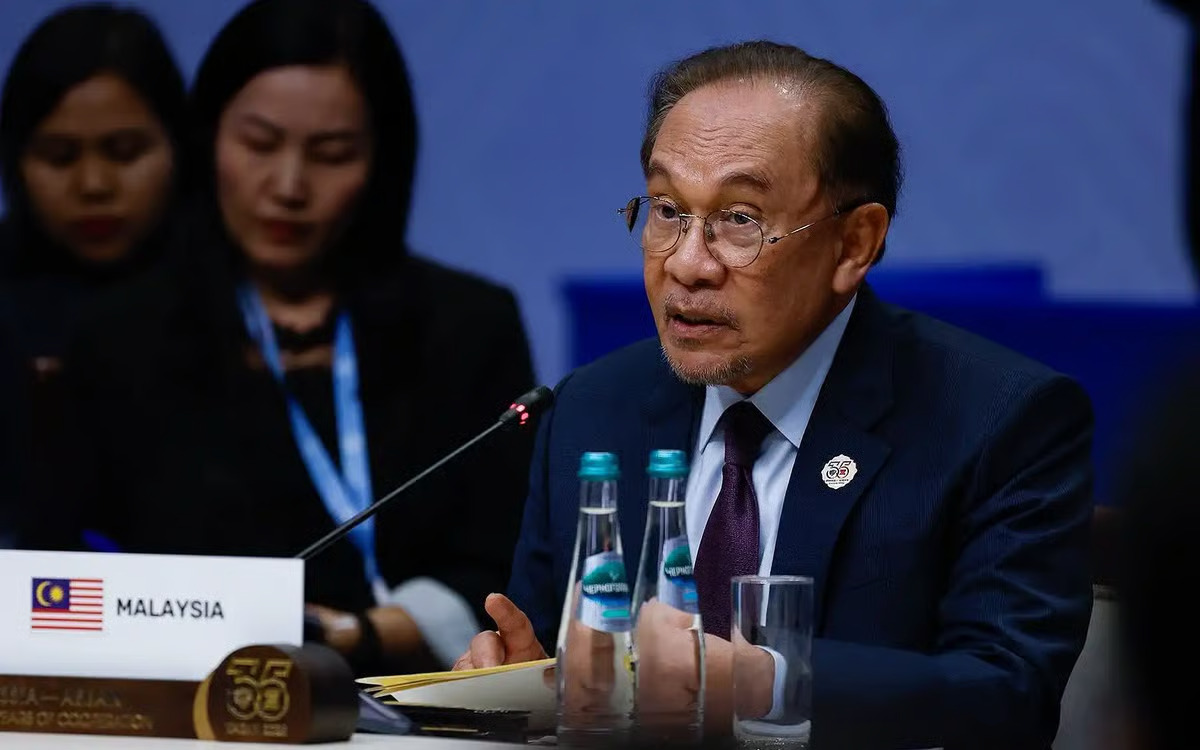
Prime Minister Anwar Ibrahim, in a delegation at the Asean-Russia Commemorative Summit in Kazan, Russia, said Malaysia will “seriously” explore the use of local currencies with its trading partners to reduce exposure to foreign exchange risks.
His remarks reflect Malaysia’s attempt to move beyond traditional payment systems and build more flexibility into its economic relationships at a time when countries are increasingly questioning their dependence on a single dominant currency.
The idea is not entirely new. Countries around the world have been exploring ways to conduct trade without relying fully on the US dollar, which has dominated global commerce for decades.
The dollar remains the most widely used currency for international trade and finance, but concerns over currency volatility, geopolitical tensions and the risks of relying too heavily on one financial system have encouraged governments to look for alternatives.
For Malaysia, the question is not whether the ringgit can replace the dollar. That is unlikely in the near future.
The more realistic question is whether the ringgit can become more useful within the region, especially among countries that already have strong trade relationships with Malaysia.
Malaysia’s experience with China offers an early example of how such arrangements can work.
Anwar said trade settled in local currencies with China has grown to around 22 to 23% of total bilateral trade, compared with about 16% a few years ago.
Since China is one of Malaysia’s largest trading partners, increasing the use of the ringgit and yuan in trade could reduce the need for businesses to constantly convert payments through the US dollar.
The immediate benefit is greater stability. When Malaysian companies trade in US dollars, changes in the value of the dollar can affect costs and profits even when the underlying trade relationship remains unchanged.
Settling transactions directly in ringgit and yuan can help reduce some of that uncertainty, allowing businesses to plan more effectively and avoid being overly exposed to movements outside their control.
For China, the benefits are also significant. Beijing has spent years encouraging greater international use of the yuan as part of a wider effort to strengthen its role in global trade. China’s position as one of the world’s largest economies and trading nations gives it a strong foundation to promote yuan-based transactions. If more countries accept the yuan for trade, China becomes less dependent on a system where the US dollar remains at the centre.
However, China’s experience also shows that creating an international currency is not a simple process.
A currency becomes widely accepted not only because of the size of the economy behind it, but because businesses and investors trust it.
The strength of the dollar comes from decades of use, deep financial markets and confidence that it can be easily exchanged around the world. The yuan has become more influential, but it still faces challenges before it can match the dollar’s global reach.
India presents another important comparison.
Anwar said India has agreed to begin using its currency for trade or explore barter arrangements.
Like Malaysia and China, India has been looking for ways to increase the use of its own currency in international transactions.
For India, wider use of the rupee could reduce dependence on external currencies and support its ambitions as a growing economic power.
The interest in barter trade also shows that countries are still experimenting with different ways to make trade work outside traditional systems.
While barter can help maintain economic links when currency arrangements become difficult, it is not always simple. Modern trade involves complex supply chains, and businesses generally prefer payment systems that are predictable and easy to manage.
Russia’s involvement adds another dimension to the discussion.
Moscow has been looking for ways to maintain economic connections with partners outside Western financial systems, especially as restrictions have affected its access to some traditional channels.
Malaysia’s discussions with Russia, including cooperation on long-term energy supplies, show how currency arrangements are increasingly connected with wider economic priorities such as energy security and trade continuity.
For Malaysia, expanding local currency trade could bring several advantages. A stronger role for the ringgit in regional transactions could strengthen Malaysia’s position as a financial centre and create more opportunities for local banks and companies.
If foreign businesses become more comfortable using the ringgit, it could increase demand for Malaysian financial services and deepen economic links with neighbouring countries.
But there are also challenges. Moving away from the dollar does not automatically guarantee greater independence if a country becomes too reliant on another major currency or trading partner.
Reducing one form of dependence only works if it is replaced with a more balanced network of relationships.
The success of local currency arrangements will also depend on whether businesses actually want to use them.
Government agreements can create the foundation, but companies must see practical benefits. They need confidence that the currency is stable, accessible and useful beyond a single trade agreement.
This is where ASEAN could become important.
Malaysia’s existing arrangements with countries such as Indonesia and Thailand suggest that local currency settlement could become part of a wider regional trend.
Southeast Asian economies already trade heavily with each other, and a stronger regional payment system could make it easier for businesses to trade within ASEAN without depending entirely on currencies from outside the region.
Ultimately, Malaysia’s push is not about trying to challenge the US dollar directly. It is about preparing for a world where economic relationships are becoming more diverse and where countries want more control over how they trade.
The move reflects a broader shift among emerging economies that want more flexibility while navigating an uncertain global environment.
The ringgit may not become a major global currency anytime soon, but its growing use in regional trade could mark an important step in Malaysia’s economic development.
The real test will be whether the ringgit can gain something every successful international currency needs: trust.