
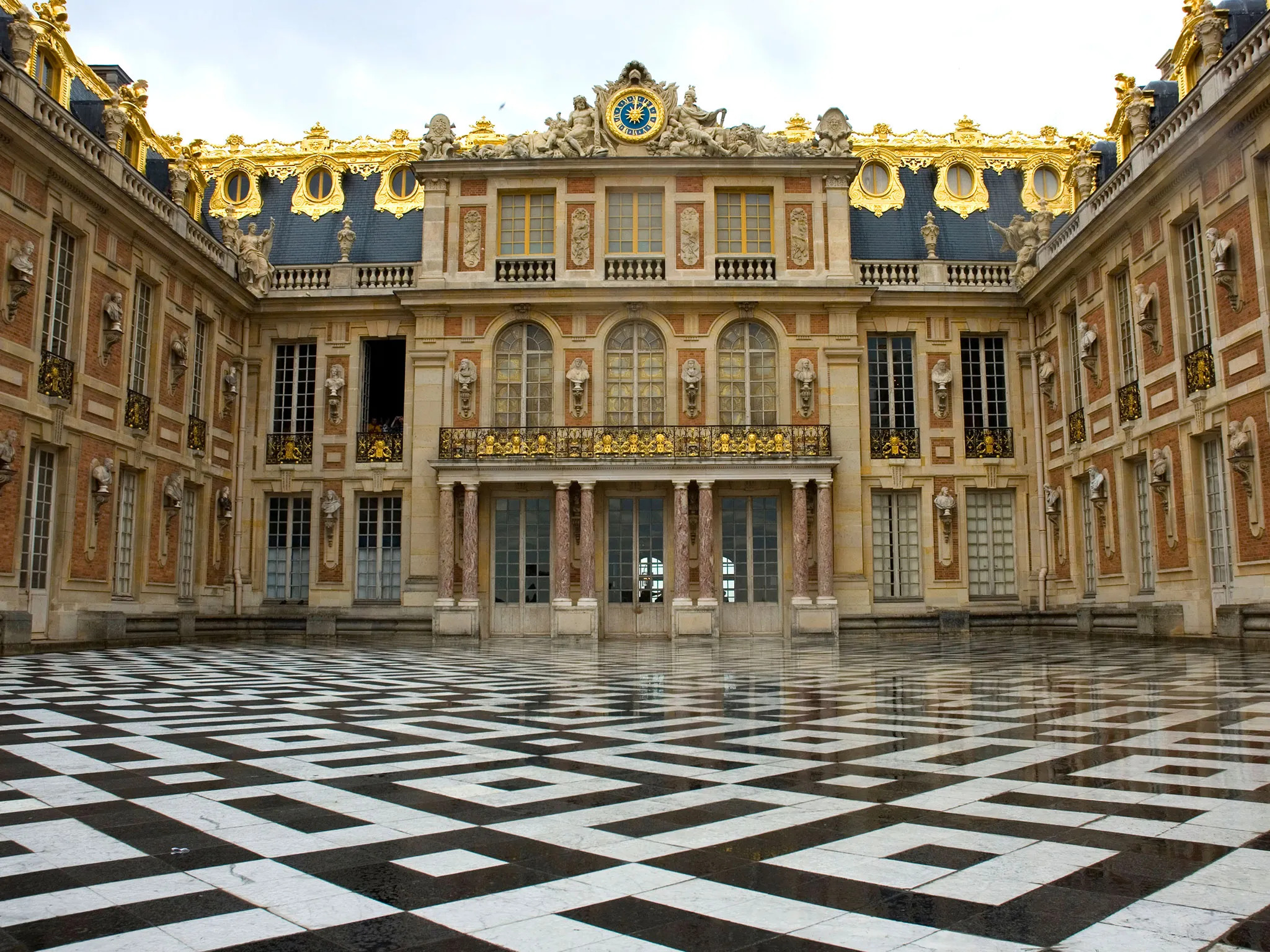
The US–Iran 14-point agreement is being described as a diplomatic breakthrough, but the real significance may not be the agreement itself. The more revealing story may be the place associated with the deal, the Palace of Versailles.
For centuries, Versailles has represented power, diplomacy and the creation of new political orders. Once the centre of French royal authority, the palace later became one of the world’s most recognisable stages for international negotiations.
The reason is simple. Versailles is where leaders have repeatedly tried to end wars and decide what comes next.
The most famous example is the Treaty of Versailles, signed on June 28, 1919, in the Hall of Mirrors at the Palace of Versailles.
The agreement officially ended the state of war between Germany and the Allied Powers after World War I. But it did more than end a conflict. It attempted to redesign Europe and create a new international system.
Germany was forced to accept territorial losses, military restrictions, financial reparations and the controversial “War Guilt” clause, which placed responsibility for the war on Germany.
The treaty also created the League of Nations, an early attempt to build a global structure that could prevent future conflicts. The agreement entered into force on January 10, 1920.
Yet Versailles became one of history’s most debated settlements.
The treaty was designed to create stability, but many historians argue that its harsh conditions contributed to economic hardship and political resentment in Germany.
Those frustrations were later exploited by extremist movements, including Adolf Hitler’s Nazi Party, helping create the conditions that eventually led to World War II.
That is why Versailles remains a complicated symbol. It represents both the hope of diplomacy and the danger of settlements that fail to address the deeper causes of conflict.
That historical background explains why the US–Iran agreement immediately attracted comparisons.
The 14-point agreement is not another post-war settlement on the scale of 1919. It does not redraw borders or formally end a world war.
But symbolically, it raises a similar question. Can diplomacy successfully close a long-running conflict, or does it simply move the problem into the future?
The reported agreement includes steps to halt military confrontation, prevent further escalation, reopen key trade and energy routes and create a framework for future negotiations.
The Strait of Hormuz, one of the world’s most important energy corridors, is a central issue because instability there affects global markets.
However, the agreement does not immediately resolve the most difficult disputes between Washington and Tehran.
The nuclear issue remains at the centre of the relationship. Future negotiations are expected to determine how restrictions, verification and enforcement mechanisms will work.
This is where the political divide begins.
Many Democrats and supporters of diplomacy view the agreement as evidence that negotiation can achieve what years of pressure failed to accomplish. From this perspective, reducing the risk of war and creating channels for communication are strategic gains.
Many Republicans and foreign policy makers see the deal differently. They argue that Iran receives benefits before making irreversible concessions and worry that sanctions relief could strengthen Tehran without resolving the underlying conflict.
The disagreement is not only about Iran. It is also about what strength means in foreign policy.
One view says strength comes from maintaining pressure until an opponent gives up major demands. Another says strength comes from knowing when pressure has reached its limit and turning confrontation into negotiation.
The Versailles comparison, then, is less about claiming the US-Iran deal will repeat history. It is about recognising the uncertainty of diplomatic moments.
Every major agreement looks different on the day it is signed than it does decades later.
Versailles was celebrated as the end of a devastating war before becoming a symbol of unintended consequences.
But the easiest comparison between the Iran deal and Versailles is also the least useful one.
Versailles does not show that diplomacy itself is a mistake. It shows that diplomacy does not end when leaders sign a document. The real challenge begins afterward, when governments must turn promises into a stable political reality.
The Treaty of Versailles became controversial not simply because leaders negotiated, but because the settlement left behind resentment, instability and unresolved tensions. A peace agreement can stop fighting while still failing to create lasting stability.
That is the question now facing the US–Iran agreement.
The United States and Iran do not need to become allies for diplomacy to matter. Rival states have historically managed competition through agreements, not because they trust each other completely, but because they recognise the cost of endless confrontation.
The strength of this agreement will not be measured by the ceremony at Versailles or the symbolism surrounding it.
It will depend on whether Washington and Tehran can maintain commitments when domestic politics, security concerns and strategic interests begin pushing them in opposite directions.
If the agreement reduces escalation, opens space for further negotiations and creates a workable framework between two rivals, it may eventually be remembered as an example of diplomacy succeeding in one of the world’s most difficult relationships.
If it collapses because neither side believes the other will honour its commitments, Versailles will become more than a historical backdrop. It will become a reminder that peace agreements are judged not by the day they are signed, but by the world they create afterward.
The Iran agreement will not be decided by the ceremony, the location or the headlines.
Like every major settlement before it, history will judge it by what happens after the signatures.