
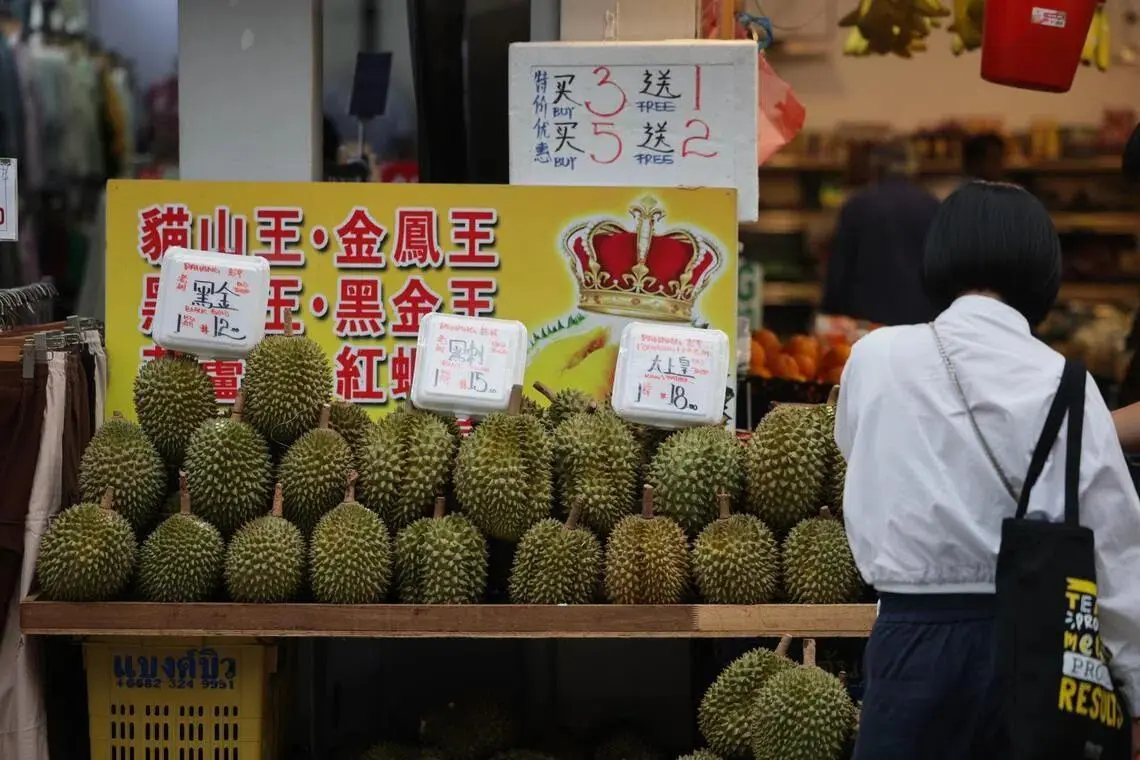
Five ringgit for a kilo of Musang King.
Back then, a single Musang King durian could cost RM100 or more. The taste. The creamy, bittersweet custard. The soft, tender texture that melts in your mouth. People paid big money for that experience. And they'd fight for it. Durian stalls would sell out within hours. "Habis, boss. Come back next season." That was the typical answer.
But lately? Something's changed.
Since last year, there's been a massive surge of durian stockpiles in Malaysia. It's not that people don't eat them anymore — they do. Tourists still fly in just to sink their teeth into the king of fruits.
But right now? We have so much durian that sellers are practically giving them away. As low as RM2 per kilogram. Even Musang King — the crown jewel — is selling for just RM5 per kilogram.
So what happened? Why the sudden glut?
The Season That Never Ends
A few years ago, durian was strictly seasonal. You had to wait for the monsoon to end, then scramble to buy before supplies ran out. That scarcity drove prices sky‑high and created a sense of urgency. People bought like crazy because they knew they'd have to wait months for the next harvest.
But now? Advanced planting techniques and better farming methods mean durian trees fruit all year round. We literally have a lifetime supply. The word "season" doesn't mean the same thing anymore.
When supply becomes stable, something interesting happens to consumer behaviour. People lose that sense of urgency. When something is always available, you don't feel the need to buy it immediately.
Look at apples — they're available all year, so you buy them casually, once in a while. The same thing is happening with durian. It's becoming... ordinary.
The Export Pipeline and Its Leftovers
But here's the part nobody wants to admit. One major reason we're drowning in cheap durian is that a lot of it didn't meet export standards.
Malaysia's durian exports are held to strict quality requirements — size, shape, colour, ripeness, and freedom from pests and diseases.
The A‑grade fruits get shipped to China, Hong Kong, and Singapore. The B and C grades? They stay here. And that's what ends up at your local stall for RM5 a kilo.
As mean as it sounds, we're getting the "rejects" — not bad fruit, just not pretty enough for export. And now there's so much of it that prices have collapsed.
The China Factor
The durian glut didn't happen in a vacuum. China's economy has been slowing, and its property crisis has tightened household spending.
Chinese consumers, once willing to pay premium prices for luxury fruits, are now tightening their belts. Demand from China, Malaysia's largest durian export market, has weakened.
In early 2025, reports emerged that Malaysia was sitting on 400 tonnes of unsold durian due to cooling Chinese demand. Durian farmers and sellers were forced to pivot to the domestic market, flooding local stalls with supply that simply couldn't be absorbed.
There were even allegations that some Chinese traders were reneging on contracts, buying unsold durians at lower prices.
The Malaysian Durian Council noted that cultivation area for durian more than doubled from 72,000 hectares to 155,000 hectares in 2023 — an expansion driven entirely by anticipated Chinese demand that never fully materialised.
The Bittersweet Reality
So should we feel bad? Probably. Durian farmers are struggling to sell their crop. The sudden glut has squeezed their margins, and many are wondering whether the durian boom was a bubble waiting to burst.
Durian farmers are suffering. The export boom that promised riches has left many with unsold stock and falling prices. The fruits that don't make the grade — the slightly imperfect ones, the ones that don't meet China's stringent aesthetic standards — now flood local markets at rock‑bottom prices.
But there is something undeniably satisfying about watching a fruit that was once reserved for special occasions become something you can buy casually on your way home from work.
After years of paying premium prices for a luxury that was never really that rare, Malaysians are finally getting a taste of what durian was always meant to be — accessible, abundant, and wonderfully ordinary.
Whether this is a temporary correction or a permanent shift remains to be seen. For now, though, grab a Musang King while it's cheap. The king may be in exile. But his subjects are feasting.