
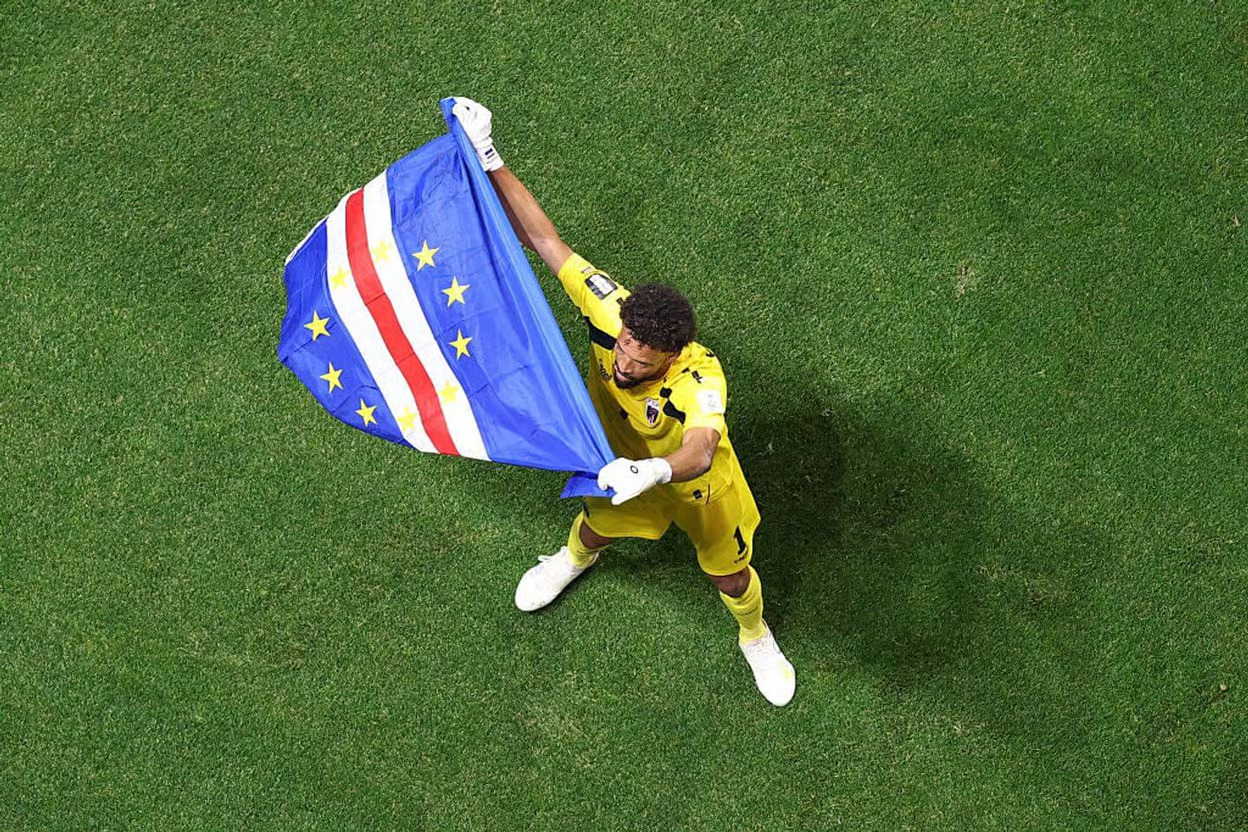
Cape Verde was never supposed to be one of the main stories of this World Cup.
A country of just over 500,000 people, a nation made up of small islands in the Atlantic Ocean, a team without the history, resources or global attention of football giants.
But now, Cape Verde has done something historic. They have reached the knockout stage of the World Cup in their first ever appearance at the tournament.
And the interesting part is, this did not happen by accident.
For years, Cape Verde has been building towards this moment. Unlike bigger football nations that have large domestic systems and generations of players to choose from, Cape Verde had to look beyond its own borders.
The country’s diaspora became a major part of their football identity. Many players in their squad were born outside Cape Verde, especially in countries like Portugal and the Netherlands, but still had strong connections to their roots.
Instead of seeing that as a challenge, Cape Verde used it as an advantage. They created a team that represented not just the people living on the islands, but Cape Verdeans around the world.
That alone, however, was not enough.
A good group of players does not automatically create a good team.
What separated Cape Verde was the work behind the scenes. The planning, the structure and the belief that they could actually compete at this level.
Under coach Bubista, Cape Verde developed a clear identity. They are organised, disciplined and they understand their strengths.
They are not trying to copy the biggest teams in the world.
They know exactly who they are.
Before this World Cup, Cape Verde had already started showing signs that they were becoming a serious football nation. Their performances in African competitions proved they were capable of challenging stronger opponents.
But the World Cup is different.
This is where expectations are usually controlled by the biggest names, the teams with decades of history, the teams that always seem to be there.
Cape Verde entered the tournament as the underdog, but they quickly changed the conversation.
Their opening match against Spain showed that they were not just there to make up numbers. They held their own against a former world champion and showed incredible discipline.
Then came their match against Uruguay, another country with a deep football history and two World Cup titles. Cape Verde did not just survive, they competed.
That is what makes their run impressive.
They are not winning because of one lucky moment.
They are performing because they have built a team that believes they belong here.
The moment that captured their entire journey came after their final group match. The players were waiting together, watching the result of another game that would decide their qualification.
When it was confirmed, the reaction said everything.
For the players, it was not just about reaching the next round. It was proof that years of planning and belief had finally turned into something real.
Now, reality comes in.
Their reward is a match against defending champions Argentina.
On paper, it is a huge challenge. Argentina has World Cup history, global stars and one of the strongest football cultures in the world.
Cape Verde is facing a team that has already been where they are trying to go.
But that is also the beauty of this sport.
Underdogs do not need to be favourites to create a moment.
Whatever happens next, Cape Verde has already changed how people see them. They are no longer just a small nation making an appearance at the World Cup.
They have shown that a country’s size does not decide its ambitions.
Sometimes, the biggest stories come from the places people least expect.