
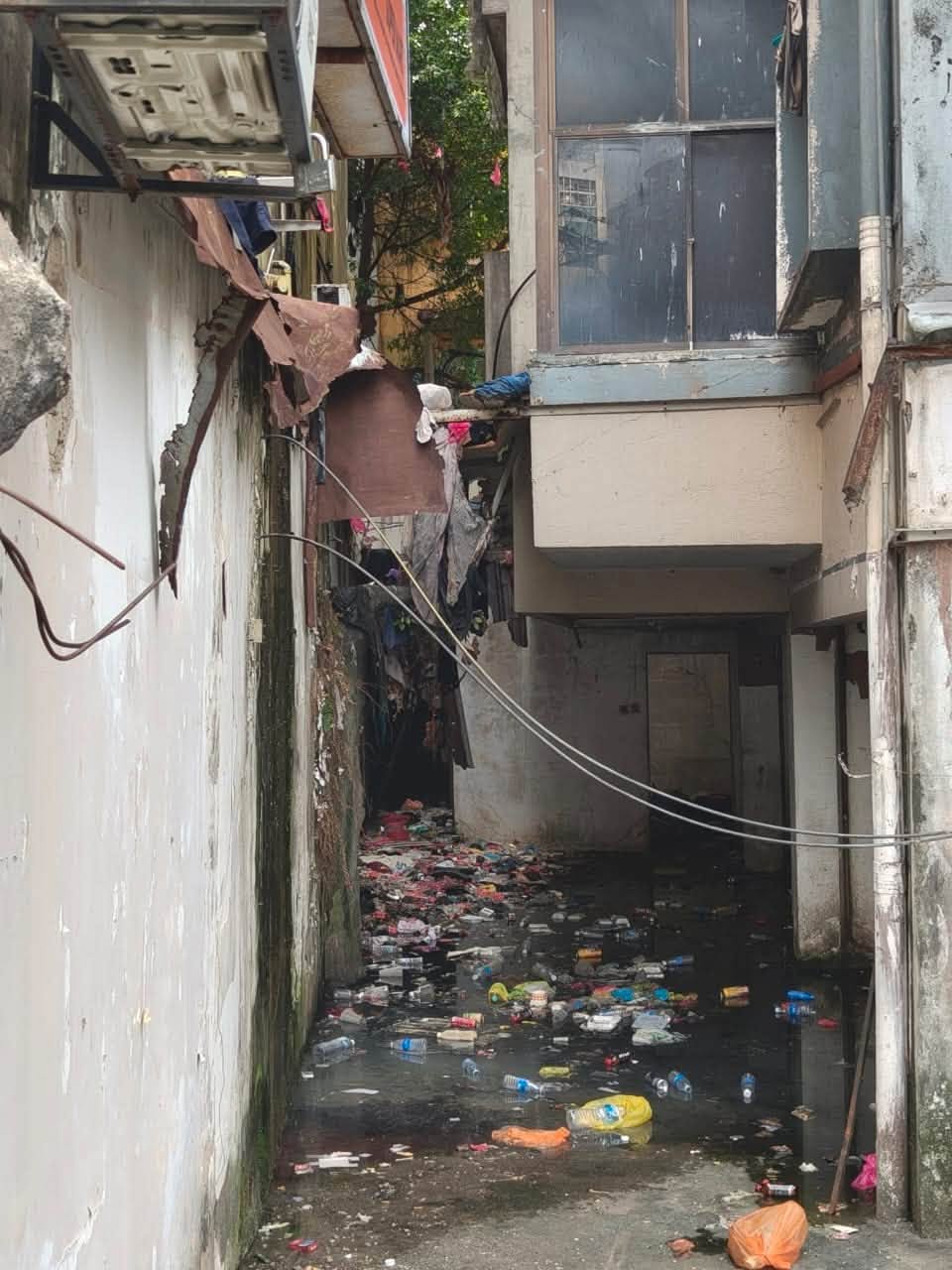
Before an Australian travel vlogger walked through the corridors of Hicks Flats with a camera a year ago, Kuala Lumpur already knew the building existed.
This wasn't a forgotten apartment block suddenly discovered by a foreign tourist.
Hicks Flats has been on the radar of authorities for years.
In 2024, enforcement agencies raided the aging strata property in Bukit Bintang, detaining dozens of undocumented migrants while uncovering conditions that were already difficult to ignore like overflowing rubbish, foul-smelling corridors, neglected common areas and overcrowded units.
The raid made headlines. There were clean-up operations, enforcement action and assurances that follow-up measures would be taken.
Then the story disappeared.
This week, it returned after Australian YouTuber Marco Roams revisited the building to see whether anything had improved. Instead, he found much of what he had documented during his previous visit still there.
The video spread quickly across social media, prompting Kuala Lumpur City Hall (DBKL) to send workers to clean the premises and announce another round of meetings with the building's Joint Management Body.
On the surface, this looks like another story about an embarrassingly dirty building in one of Kuala Lumpur's busiest tourist districts.
In reality, Hicks Flats represents something much bigger.
The building did not suddenly become filthy because someone pointed a camera at it.
Authorities had already inspected it. Journalists had already reported on it. Residents had already been living with the conditions.
The latest video simply reminded everyone of a problem that had never really gone away.
That is what makes this issue so uncomfortable.
It is tempting to reduce the discussion to rubbish, undocumented migrants or overcrowding. Those are visible symptoms, but they are unlikely to be the root cause.
Buildings do not deteriorate overnight, nor do they remain neglected for years because of a single enforcement failure.
They decline when the systems responsible for maintaining them gradually stop working.
Unlike public housing, Hicks Flats is a privately owned strata development.
Responsibility is shared between unit owners, the Joint Management Body (JMB), residents and regulators.
Owners are expected to pay maintenance charges. The JMB is responsible for maintaining common property. The Commissioner of Buildings oversees strata governance, while DBKL enforces municipal laws affecting health, safety and public cleanliness.
When each part performs its role, even aging buildings can remain safe and liveable.
When several parts fail simultaneously, decline becomes inevitable.
That is what Hicks Flats appears to illustrate.
Cleaning the corridors is relatively straightforward. Restoring governance is considerably harder.
If maintenance charges go unpaid, the JMB loses the resources needed to repair lifts, maintain common facilities and manage waste.
If absentee owners continue collecting rental income while neglecting their responsibilities, the burden shifts onto a shrinking number of compliant owners.
Over time, deteriorating conditions drive away residents who have the means to leave, while the building becomes increasingly attractive to tenants seeking the lowest possible rents.
The cycle feeds on itself until neglect becomes normal.
No amount of sweeping can reverse that process on its own.
This is also why repeated enforcement operations have struggled to produce lasting improvements.
Enforcement can remove undocumented migrants, issue notices or clear accumulated rubbish, but it cannot permanently repair a governance structure that has already weakened.
Unless the underlying management issues are addressed, every clean-up risks becoming temporary.
There is another aspect of this issue that deserves attention.
The renewed urgency did not come because Hicks Flats was newly discovered. It came because the latest video reached a global audience.
That should give us pause.
Increasingly, public attention appears to determine the speed of official action.
Across many cities, potholes are repaired after they trend online, illegal dumping is cleared after drone footage goes viral and neglected neighbourhoods receive attention only after social media amplifies their condition.
Viral content has become an unofficial reporting mechanism and in some cases, it is beginning to resemble an unofficial enforcement mechanism as well.
That is not how public administration should function.
Effective governance depends on institutions identifying and addressing persistent problems before they become international talking points.
A city's maintenance standards should not rise and fall according to whether an algorithm decides a video deserves millions of views.
To be fair, DBKL cannot shoulder responsibility for every failure inside a privately owned strata building. The law rightly places significant obligations on owners and the Joint Management Body.
But public authorities also have a responsibility to ensure those legal frameworks are enforced consistently, not only when public embarrassment reaches a tipping point.
Hicks Flats will almost certainly look cleaner over the next few weeks.
Whether it remains cleaner a year from now will determine whether this was a genuine turning point or simply another cycle of attention, clean-up and neglect.
Because the real story was never just about the rubbish.
The real story is how a building that everyone already knew about continued to deteriorate in plain sight until another viral video reminded us it was still there.