
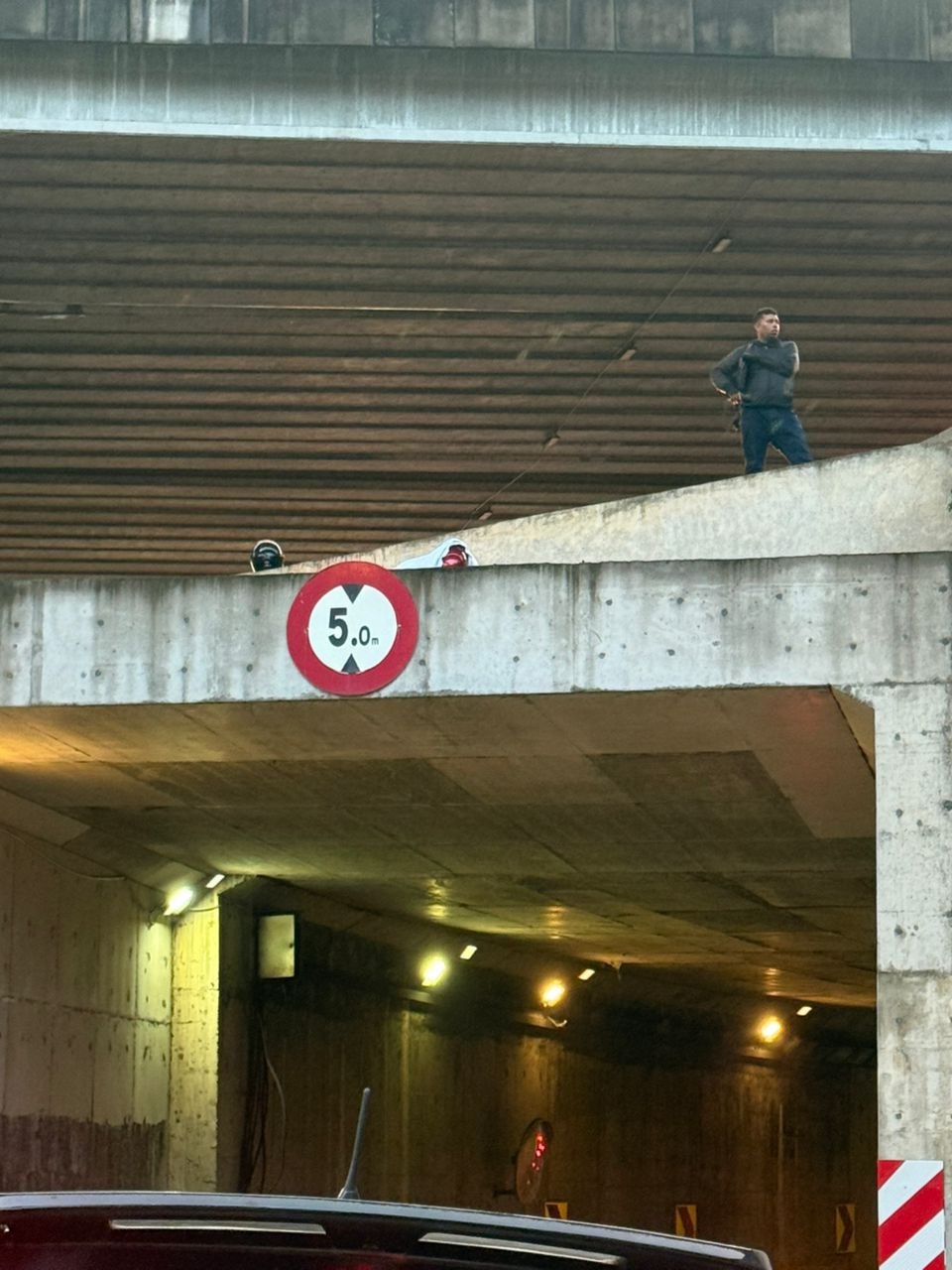
It is time we talk about what happens when it rains.
Because every downpour forces thousands of motorcyclists into a decision they should never have to make.
Do they continue riding through blinding rain, where visibility drops dramatically and roads become slippery? Or do they pull over under the nearest flyover or bridge, hoping it will be enough to keep them out of danger?
The tragic death of 31-year-old Muhammad Shafeeq Hashim on the Setiawangsa-Pantai Expressway (SPE) has once again brought that question into focus.
According to police, he was among several riders sheltering beneath a flyover during heavy rain when a vehicle lost control, crashed into the motorcycles and threw him about 30 metres off the flyover.
He died at the scene.
The driver has since been charged and the legal process should take its course.
But while questions surrounding liability are important, focusing only on the individual crash risks missing the bigger issue.
Why are motorcyclists repeatedly finding shelter under flyovers in the first place?
The answer is simple because, for many of them, there is nowhere else to go.
Malaysia experiences thunderstorms throughout the year. They are often sudden, intense and capable of reducing visibility within seconds.
For someone driving a car, slowing down while remaining inside a protected vehicle is usually possible. For someone on a motorcycle, the situation is entirely different.
Heavy rain does not simply make the ride uncomfortable. It limits visibility, reduces tyre grip, obscures potholes, increases the risk of aquaplaning and makes riders significantly harder for other motorists to see. Continuing the journey can quickly become dangerous.
Stopping, therefore, is not an act of convenience. It is often an attempt to survive worsening road conditions.
Unfortunately, on many Malaysian highways, riders looking for a safer place to wait out the storm find only one option: the space beneath a bridge or flyover.
These locations may offer protection from the rain, but they were never designed to function as emergency waiting areas.
They sit dangerously close to live traffic, often with little or no physical barrier separating stationary motorcycles from vehicles travelling at highway speeds.
If a car loses control because of wet roads, poor visibility or another emergency, the shoulder is frequently the first place it enters.
That transforms what appears to be a shelter into one of the most dangerous places on the highway.
The SPE tragedy is not an isolated incident.
Similar crashes have occurred on other major expressways over the years, including the North Klang Valley Expressway (NKVE), where riders sheltering beneath overhead structures have also been struck by out-of-control vehicles.
Every time it happens, public attention briefly returns to the issue before fading until the next tragedy.
This cycle suggests that the problem is no longer one of awareness. It is one of acceptance.
Authorities have repeatedly advised motorcyclists not to stop beneath flyovers. The warning is understandable. These areas are undeniably hazardous.
But warnings alone cannot solve a problem when people have no practical alternative.
Telling riders not to shelter under bridges raises an obvious question. Where should they go instead?
Should they continue riding despite barely being able to see the road?
Should they stop along an exposed emergency lane?
Should they attempt to reach the next exit, even if it is several kilometres away through heavy traffic and torrential rain?
Without safe alternatives, these recommendations become difficult to follow.
This is where the discussion must shift from individual behaviour to infrastructure.
Malaysia has one of the highest rates of motorcycle use in Southeast Asia.
Millions rely on motorcycles not only because they are affordable, but because they are essential for commuting, deliveries, shift work and countless other daily activities.
Yet much of our highway infrastructure continues to prioritise the needs of four-wheeled vehicles.
Road safety discussions often focus on helmets, speeding, enforcement and driver behaviour. These remain critical.
However, infrastructure also shapes behaviour. People make decisions based on the options available to them.
If the only dry place within reach during a storm is beneath a flyover, many riders will naturally choose it.
That does not necessarily mean it is safe. It means it is the least dangerous option they can see.
Other countries facing similar challenges have recognised that weather itself should be considered in road design.
In Taiwan, where scooters dominate urban transport and heavy rain is a regular occurrence, some expressways and major roads include designated lay-bys and protected waiting areas that allow riders to stop away from moving traffic.
These facilities are not everywhere, but they acknowledge that motorcyclists sometimes need a safe place to wait rather than continue riding through dangerous conditions.
Indonesia has also introduced motorcycle rest areas and sheltered stopping points along selected toll roads and high-traffic corridors, particularly where motorcycle use is extensive.
While implementation remains uneven, the principle is important. If riders are expected to stop safely, the infrastructure should make safe stopping possible.
Japan offers another useful lesson. Although motorcycles are less dominant than in Malaysia, expressways incorporate frequent service areas, rest stops and emergency facilities that provide motorists with accessible places to wait out severe weather.
Safety planning does not begin only after an accident occurs. It anticipates the situations that road users are likely to face.
Malaysia has already shown that such infrastructure is possible. Some highway concessionaires have constructed motorcycle shelters along selected stretches of road. Riders use them because they work.
The problem is that they remain the exception rather than the standard.
As climate patterns become increasingly unpredictable, heavy rainfall is unlikely to become less frequent.
If anything, sudden downpours are becoming a more common feature of daily travel. Road safety planning must evolve alongside these realities.
This should begin with identifying highway sections where riders regularly seek shelter and treating them as known risk zones.
Dedicated motorcycle shelters, protected from live traffic by physical barriers and located where they are easily accessible, should become part of future highway planning rather than optional additions.
Existing expressways should also be assessed to determine where similar facilities can be retrofitted.
At the same time, clearer guidance is needed for riders during severe weather.
Public messaging should not stop at telling people what they should avoid. It should tell them where they can go safely instead.
Most importantly, this conversation should not end once headlines move on.
Every time heavy rain falls across Malaysia, thousands of motorcyclists will once again face the same impossible decision. Keep riding through dangerous conditions or stop somewhere that was never meant to keep them safe.
That is not merely an unfortunate consequence of bad weather.
It is the result of infrastructure that has failed to keep pace with the realities of how Malaysians travel.
No one should lose their life simply because they were trying to wait for the rain to pass.
If a routine afternoon downpour can repeatedly turn highway shelters into death traps, then perhaps the problem is no longer the weather.
It is the way we have designed our roads to respond to it.