
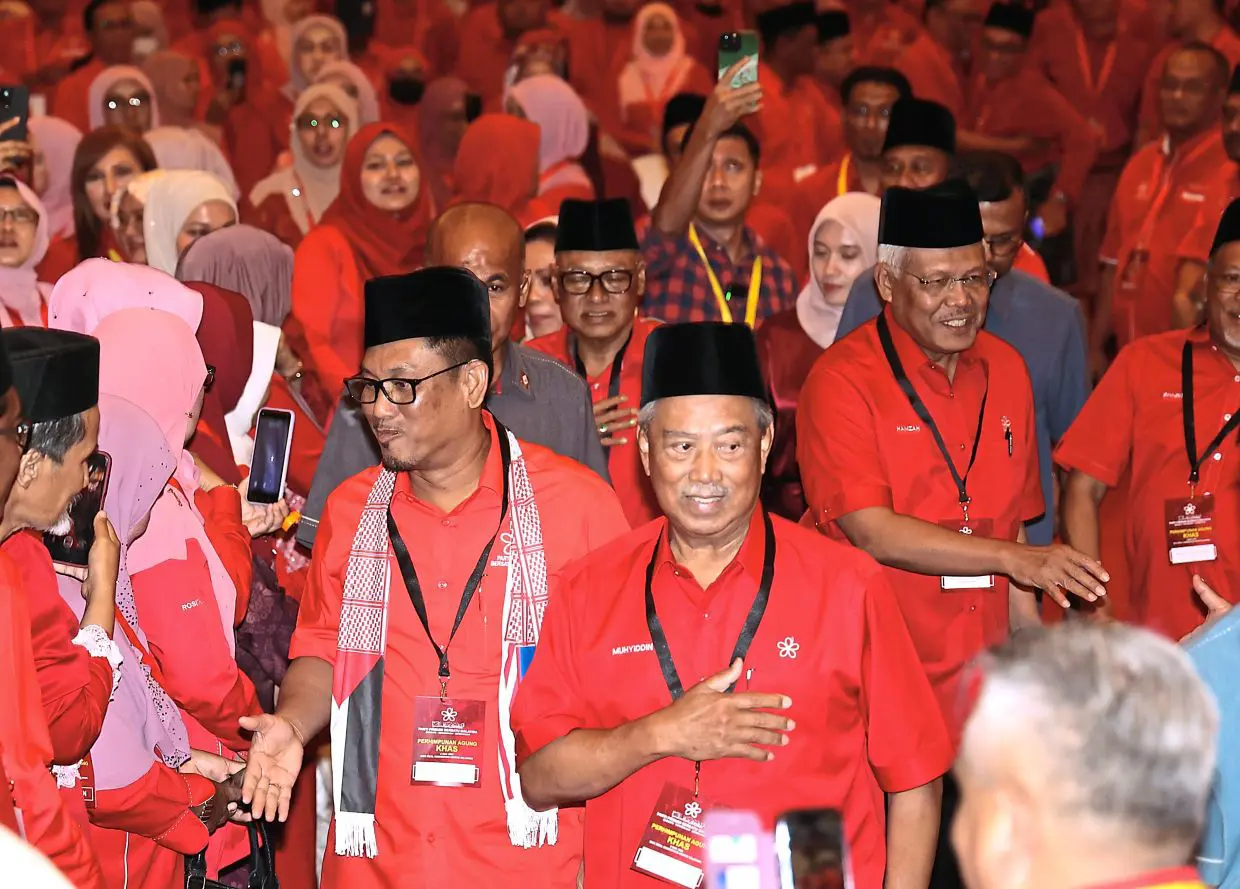
Bersatu. A lone wolf. A once-mighty warrior, now ousted and sidelined by the very coalition it helped build. Fighting alone.
How did the party that once shook Malaysian politics end up here?
Bersatu was founded by Tun Dr Mahathir Mohamad and Muhyiddin Yassin after they left Barisan Nasional. Their main goal? Create a new alternative for the Malay community — a direct contest against Umno.
Making a new party is no easy feat. It takes guts. A big gamble to prove a point. You can look at Rafizi's Bersama as a recent example of just how hard it is. Building a party from scratch, attracting members, securing funding, and convincing voters to take a chance on something new — it is an uphill battle from day one.
But Bersatu had something else going for it. It had Mahathir. The man who had been Malaysia's longest-serving prime minister. The man who had built Umno into a political machine. When he walked away and started a new party, people paid attention.
The 2018 Miracle
Together, Bersatu worked with PKR, DAP, and Amanah to take down BN. And it worked. In 2018, they won by landslide — a tsunami. Pakatan Harapan swept the country.
Bersatu played a crucial role in that victory. It provided the Malay credibility that PH needed to convince conservative voters that it was safe to abandon Umno. Without Bersatu, the coalition might never have crossed the finish line.
For a brief moment, Bersatu was on top of the world. It had helped bring down the regime that had ruled Malaysia for six decades. It had proven that Umno was not invincible. It had rewritten the rules of Malaysian politics.
The Sheraton Move Gambit
Then came the Sheraton Move in 2020. Pakatan Harapan collapsed. And Bersatu gambled again — this time, to make themselves the government. It worked, briefly. Muhyiddin became prime minister for a short while.
But the coalition that Bersatu built was fragile. It was held together by convenience, not conviction. It was a marriage of political survival, not shared values. And like all such marriages, it was destined to end badly.
Muhyiddin's tenure as prime minister was marked by constant pressure, internal dissent, and a narrow majority that could collapse at any moment. He survived, but just barely.
The Internal Collapse
Then came the internal turmoil. Muhyiddin stepped down as PN chairman in December 2025 under internal pressure. Following that, the party's disciplinary board expelled Hamzah Zainudin in February 2026.
Rumours said there was a power struggle between the two. Was it driven by ego? By fear of being replaced? We may never know for sure. But what we do know is that the party was tearing itself apart from within.
Hamzah was not just any member. He was the deputy president. He was the heir apparent. Expelling him was a declaration of war against an entire faction of the party. And it was a war that Bersatu could not afford to fight.
And now? The collapse is complete.
On June 8, PAS severed ties with Bersatu. On paper, Bersatu is still in PN. But in practice, it has been completely sidelined.
On July 15, Muhyiddin announced that Bersatu would contest the Negeri Sembilan election using its own logo – not the PN banner. The reason? Bersatu was excluded from seat negotiations and wasn't even invited to the PN Supreme Council meeting that finalised allocations. The party was essentially told it wasn't part of the coalition's plans anymore.
This is the ultimate humiliation. The party that helped build PN is now being locked out of its own coalition. The party that brought PAS into the fold is now being abandoned by it.
What's Left of Bersatu?
So what's left of Bersatu?
They're now a former shell of themselves. Losing their grassroots to PAS. Losing their powerful politicians to Hamzah's new party. Their gamble has failed. Even backfired on them.
Bersatu is now in a fight for survival. Can they rebuild? Can they find new allies? Or will they slowly fade into irrelevance?
The answers are not encouraging. Without PAS's grassroots machinery, Bersatu is exposed as a party without a real base. Without Hamzah and his faction, it is a party without a clear direction. Without a seat at the PN table, it is a party without a purpose.
Bersatu was founded on a gamble. It gambled that it could take on Umno and win. It did. It gambled that it could form a government without PH. It did. It gambled that it could survive without Mahathir. It didn't.
Bersatu is a cautionary tale about what happens when a party is built on personalities rather than principles, on ambition rather than ideology, on convenience rather than conviction.
When the personalities fade, when the ambition is satisfied, when the convenience runs out, there is nothing left to hold the party together.
Whatever happens next, one thing is certain: the party that once dared to take on Umno is now fighting just to stay relevant.
And in Malaysian politics, irrelevance is a death sentence.