
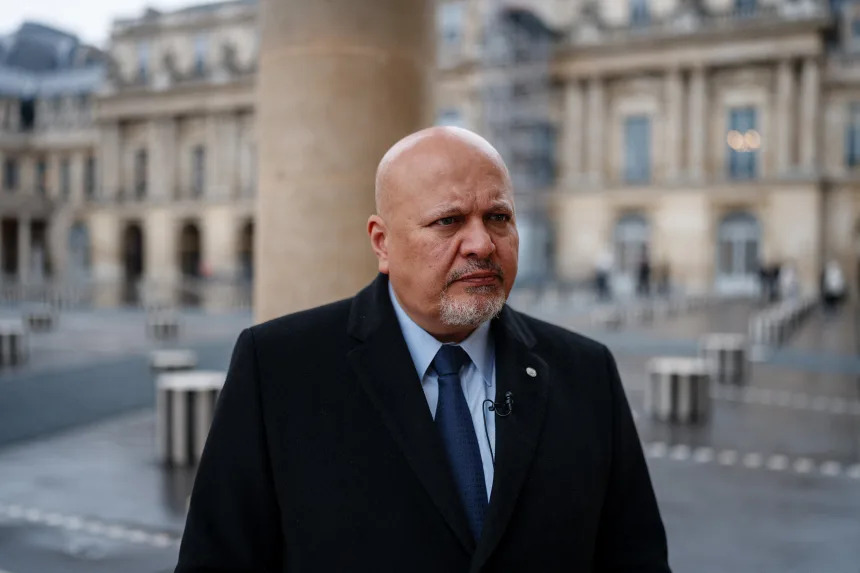
Karim Khan, the chief prosecutor of the International Criminal Court (ICC), was removed from his position on July 24 following disciplinary proceedings over allegations of sexual misconduct.
The case has drawn attention in Malaysia because one of the lawyers who made allegations against Khan is Malaysian.
Khan is a British barrister who became the ICC’s chief prosecutor in 2021.
The ICC prosecutes individuals for some of the world’s most serious crimes, including war crimes, crimes against humanity and genocide.
During his time as prosecutor, Khan became one of the court’s most prominent figures.
In 2023, the ICC issued an arrest warrant for Russian President Vladimir Putin.
Then, in May 2024, Khan announced that he was seeking arrest warrants for Israeli Prime Minister Benjamin Netanyahu and former Defence Minister Yoav Gallant over alleged crimes connected to the war in Gaza.
The move brought intense political pressure on Khan and the ICC. The US later sanctioned Khan and other ICC officials, while Israel strongly opposed the warrants.
Around the same time, allegations of sexual misconduct emerged against Khan.
A Malaysian lawyer who had worked at the ICC since 2017 and became Khan’s direct assistant in February 2023 made allegations of sexual misconduct against him.
She has since spoken publicly under the name Sarah.
Sarah alleges that Khan’s behaviour towards her escalated over roughly a year and that some of his conduct was non-consensual.
Khan has denied the allegations.
The ICC subsequently asked the United Nations Office of Internal Oversight Services (OIOS) to investigate.
The UN watchdog’s report said there was a factual basis supporting Sarah’s allegations.
However, a separate panel of judicial experts appointed by the ICC reached a different conclusion in March 2026.
The panel said there was insufficient evidence to establish misconduct beyond a reasonable doubt.
Khan’s lawyers continued to deny the allegations and argued that the investigation process had been unfair.
A second woman also came forward with separate allegations concerning Khan, relating to when she worked as an intern with his team in 2009. Khan’s lawyers denied those allegations as well.
The allegations against Khan emerged amid political controversy surrounding his work on Israel and Palestine.
Khan and some of his defenders suggested that the allegations were part of an effort to discredit him because of his pursuit of arrest warrants against Israeli officials.
The UN investigation also examined that possibility. According to its findings, multiple witnesses rejected the idea that Sarah was working for Israeli intelligence.
Sarah has denied any such connection.
While the allegations and investigations were unfolding, the ICC also had to decide what action to take against its prosecutor.
On June 8, the ICC’s governing Bureau reviewed the OIOS investigation, the evidence, the judicial experts’ conclusions and written submissions.
It suspended Khan from duty and referred the disciplinary proceedings to the full Assembly of States Parties, the ICC’s governing body made up of its 125 member states.
On July 24, representatives of the member states met at the United Nations headquarters in New York.
A total of 82 states voted to remove Khan from office.
The Assembly said Khan had committed serious misconduct and a serious breach of duty.
Khan is now out of the job after five years as ICC prosecutor, and the court will have to elect his replacement.
The decision marks an unusual moment for the court, which was established to hold individuals accountable for some of the world’s most serious crimes.
This time, the person facing disciplinary action was the head of its prosecution office.