
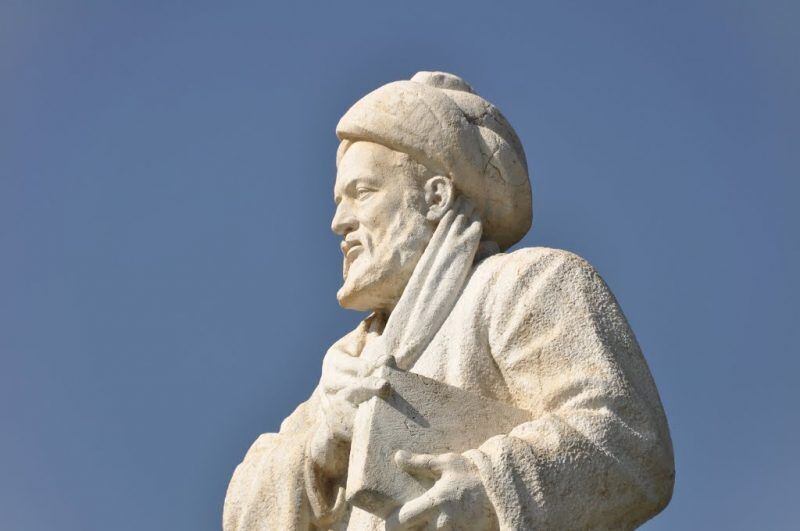
Every now and then, a post circulates on social media complaining about how Avicenna is actually Ibn Sina. Averroes is Ibn Rushd. The message? Stop Latinising the names of Arab and Persian scholars.
But here is the thing – there is nothing wrong with that.
We do the same thing all the time. In much of the Islamic world, we refer to Aristotle as Arastu. Plato as Aflatun. Hippocrates as Bokrat. Even Socrates becomes Suqrat. That is no disrespect. It is practicality.
Alexander became Sikandar in Arabic because of how articles work in the language. The Greeks themselves do not pronounce Hippocrates the way English speakers do. We have all been localising names for centuries. It is just how language works.
The Localisation We All Do
When was the last time you called Finland "Suomi"? Or South Korea "Daehan Minguk"? Those are what the locals call their countries. But we do not accuse anyone of erasing identity when we say Finland instead of Suomi.
Even within languages, names shift. Mumbai was Bombay. Chennai was Madras. Kyoto was once Heian-kyo. Names change, adapt, and localise based on who is speaking and when. And it has been happening for centuries.
We also do this with religious figures. The same person is called Yesu in Malayalam, Isa in Arabic, and Jesus in English. Nobody calls that erasure.
And let us be honest – most people who use the name "Avicenna" know exactly who they are talking about. They know he was a Persian scholar. They just cannot always pronounce "Ibn Sina" the way a native Arabic speaker would. And that is okay.
What matters is that we recognise the contribution, not whether we say the name exactly right.
The Real Problem: Erasing the World Behind the Name
But here is where the real issue lies.
The latinisation persists to this day in the Western world. And it contributes to a persistent erasure of the context within which these scholars formulated their ideas.
It is not just about the name. It is about the framing. When Western institutions present "Avicenna" or "Averroes" without any mention of the Islamic Golden Age, the cities of Baghdad or Cordoba, or the intellectual traditions that nurtured them, they strip away the very environment that made their work possible.
It creates a false impression – that these ideas emerged in a vacuum, or worse, that they were merely precursors to Western thought rather than contributors to a global intellectual tradition.
Instead of acknowledging their very much non-Western cultural backgrounds, a lot of Western philosophy continues to perceive these cultures as "backwards" or "delayed," while only using "Avicenna" in a Western-watered-down version. The full richness of their civilisations, their debates, their breakthroughs – all reduced to a single Latinised syllable.
The Double Standard
There is also a subtle double standard at play. When Western scholars use "Avicenna" and "Averroes", they are engaging in a form of intellectual appropriation: taking the ideas but erasing the identity of the thinkers.
When we use "Arastu" and "Aflatun", we are doing the same thing. But somehow, one is seen as acceptable and the other as an act of erasure.
The difference is power and narrative. The West has spent centuries presenting itself as the inheritor of all great ideas, while casting the Islamic world as a mere bridge — a conduit for Greek wisdom to reach Europe, rather than a civilisation that produced its own original thought.
Ibn Sina was not just a translator of Aristotle. He was a philosopher, a physician, a polymath who developed his own system of thought that influenced both the Islamic world and Europe for centuries. Ibn Rushd was not just a commentator on Aristotle. He was a jurist, a physician, and a philosopher who shaped the intellectual landscape of both the Islamic world and medieval Europe.
Reducing them to Latinised names without context is not just a linguistic choice. It is a historical erasure.
The Bigger Picture
The latinisation of Islamic scholars' names is not an isolated phenomenon. It is part of a broader pattern in which the contributions of non-Western civilisations are either minimised, appropriated, or presented as footnotes to Western progress.
Consider the history of science. Most people know that Copernicus proposed a heliocentric model of the solar system. Fewer know that Islamic astronomers had been challenging the Ptolemaic model for centuries before Copernicus. Fewer still know that the mathematical tools Copernicus used were developed in the Islamic world.
Consider medicine. Most people have heard of Hippocrates and Galen. Fewer know that Ibn Sina's Canon of Medicine was the standard medical textbook in Europe for over 500 years. Fewer still know that hospitals as we understand them — institutions where the sick are treated regardless of their ability to pay — were first developed in the Islamic world.
The latinisation of names is a symptom of a deeper problem: the systematic erasure of non-Western contributions to global knowledge.
The Path Forward
The solution is not to stop using Latinised names. That is a superficial fix that ignores the real problem. The solution is to tell the full story.
When we talk about Ibn Sina, we should also talk about the Islamic Golden Age. When we mention Ibn Rushd, we should also mention Cordoba and the intellectual traditions of Al-Andalus. When we discuss their ideas, we should acknowledge the civilisation that produced them.
This is not about political correctness. It is about intellectual honesty. It is about giving credit where credit is due. It is about recognising that knowledge is a collective human endeavour, not a Western monopoly.
Of course, the names of Islamic scholars are not household names in the West like Aristotle might be. But that is not because of latinisation. That is because people need to read more books. Not just about the names – but about the worlds behind them.
So yes, call him Avicenna if that is easier. Call him Ibn Sina if you prefer. But whatever name you use, make sure you also know the world he came from. Because that is where the real knowledge is.