
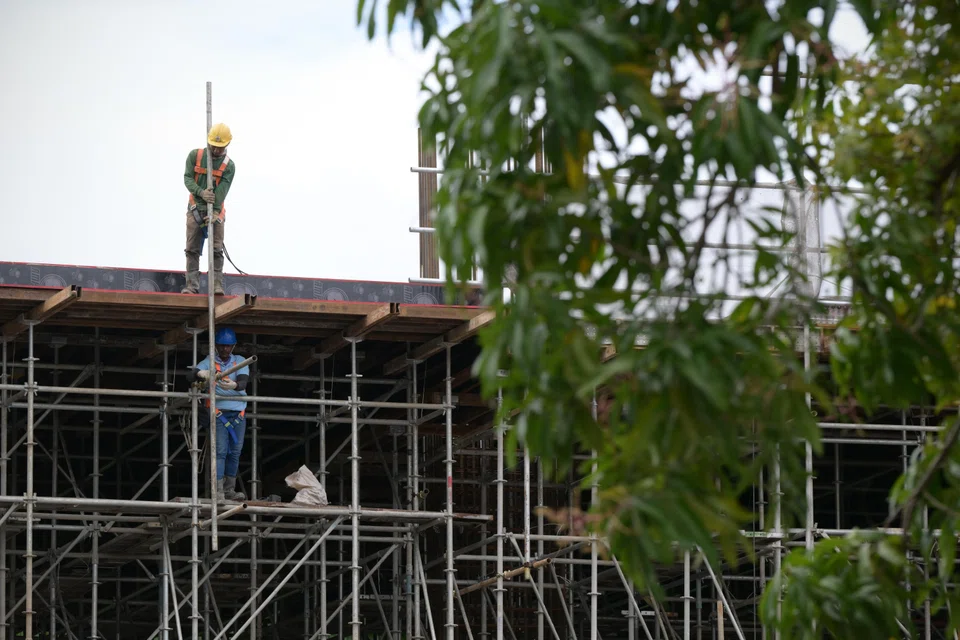
Singapore's population hit 6.11 million as of June 2025, a 1.2 percent increase from the previous year driven mainly by growth in the non-resident population. Of that total, nearly 1.6 million are foreign workers, making up roughly 40 percent of the total labour force—the highest share in Asia outside the Gulf states.
The non-resident population alone reached 1.91 million, up 2.7 percent from June 2024, with the increase coming primarily from Work Permit holders, followed by migrant domestic workers.
Singapore's foreign workforce is not just filling high-skilled roles. In 2024, non-resident employment growth was driven mostly by Work Permit holders filling blue-collar jobs that residents are less likely to take—construction, manufacturing, services, domestic work. The jobs that keep the city running, but that locals often don't want.
The Push for Quality Over Quantity
Now, Singapore is trying to shift gears. They are pushing for more high-skilled positions—AI, finance, tech. The message is clear: we want the best, not just the many.
The government has tightened the COMPASS (Complementarity Assessment Framework) for Employment Pass holders. Effective January 1, 2026, Singapore's Ministry of Manpower implemented updates to two scoring criteria under the points-based system used to evaluate EP applications. Applicants must score at least 40 points across four foundational criteria—salary, qualifications, diversity, and support for local employment—and two bonus criteria.
The S Pass qualifying salary was increased to $3,300 from $3,150, with the financial services sector seeing a higher threshold of $3,800. The Employment Pass minimum qualifying salary had already been raised from $5,000 to $5,600 per month—and for the financial services sector, from $5,500 to $6,200. These changes apply to new applications from January 2025 and renewals from January 2026.
From July 2025, Singapore also abolished the maximum employment period for foreign workers, which previously ranged from 14 to 26 years depending on sector, skill level, and country of origin. The maximum employment age for work permit holders was raised from 60 to 63.
The Employer's Dilemma
But here's the tension. Even with these tighter policies, employers are still struggling to fill key roles.
The Singapore National Employers Federation (SNEF) has called for more foreign manpower flexibility, warning that persistent local manpower shortages remain a real problem. According to the federation, 72 percent of 238 employers surveyed reported uncertain business prospects for 2025, up from 58 percent a year earlier.
SNEF president Tan Hee Teck said the proposals for Budget 2026 are aimed at easing manpower and cost pressures, while helping businesses adapt to a more digital and AI-enabled economy. The federation proposed offering greater flexibility in hiring foreign manpower to employers that adopt progressive employment practices—such as flexible work arrangements or hiring and retaining senior workers.
More than 4 in 5 employers in Singapore report difficulty finding the skilled talent they need in 2025—a figure that has doubled since 2019. To tackle rank-and-file hiring challenges, 36 percent hire foreign workers while 20 percent raise pay to fill such roles.
The irony is stark. The government tightens the rules. The employers plead for flexibility. And the foreign workers—the ones caught in the middle—keep coming because the money is still worth it.
The Service Sector's Dependency
Singapore is famous for its port, its logistics, its role as a regional hub. That does not run on locals alone. It runs on the backs of workers who keep the ships moving, the warehouses stocked, and the airport humming.
But Singapore is also trying to expand beyond just being a service port. They want to be a tech hub. An innovation centre. A leader in AI and green finance. The question is: can they make that transition while reducing their reliance on foreign labour?
The numbers suggest the transition is far from complete. As of March 2026, Employment Pass holders numbered approximately 196,200—up from approximately 192,800 at the end of 2025. The foreign workforce continues to grow, not shrink.
The Kra Canal Question—Now Dead
Now, here's where it gets interesting. There have long been speculations about an artificial channel cutting through Malaysia and Thailand—the Kra Canal project. A shortcut that would bypass the Strait of Malacca and, potentially, Singapore's strategic chokehold on regional shipping.
But as of July 2026, that project—and its alternative—are effectively dead.
On July 24, 2026, Thailand announced plans to scrap its proposed US$38.3 billion (S$38.3 billion) land bridge mega-project that would have linked the Gulf of Thailand and the Andaman Sea. A government study found it was no longer economically viable and posed significant environmental risks.
The study found the project would lose money overall, compared with an earlier assessment that projected substantial economic gains. The expected financial return had fallen to 4.8 percent from 8 percent, while cargo volumes were projected to be as much as 16 percent lower than previously estimated. Nine of the world's 10 largest shipping lines have already invested in competing projects, leaving limited interest in the land bridge proposal.
The project had already replaced a decades-old Thai proposal to dredge a canal through the Kra Isthmus. Now, both are off the table.
For Singapore, this is good news. Because if that canal or land bridge had ever been built, Singapore's status as the region's premier port could have been seriously threatened. The city-state's strategic position—and its economic leverage—remains intact, at least for now.
So will we ever see a decline in Singapore? Only time will tell.
The city-state has survived against all odds—independence, resource scarcity, regional competition. It has adapted before. It will adapt again.
But the foreign worker question isn't going away. And as Singapore pushes for higher-skilled, higher-productivity growth, the tension between wanting the best and needing the many will only grow sharper.
Because here is the thing about relying on foreign workers: they come for the money. And they can leave for the same reason.
The Kra Canal may be dead. The land bridge may be scrapped. But the fundamental challenge Singapore faces—how to maintain its economic miracle without becoming permanently dependent on a workforce it cannot fully integrate—remains unresolved.
Singapore wants to be a global city. But global cities need global workers. And global workers, by definition, are not permanent. They come. They work. They leave.
The question is not whether Singapore can survive without foreign workers. It cannot. The question is whether Singapore can find a way to need them less—or whether it will remain forever dependent on the very people it cannot fully accept.