
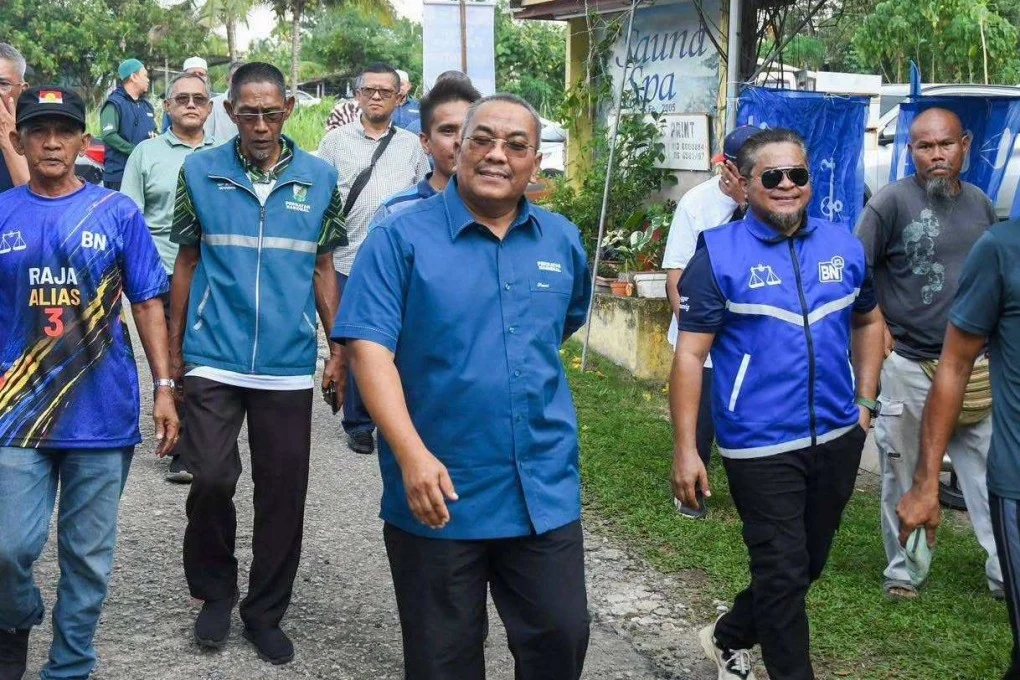
On July 29, 2026, Kedah Menteri Besar Datuk Seri Muhammad Sanusi Md Nor announced that the state had finalised its legal grounds and historical documentation to push for a review of Penang's annual "lease" payment. His target: RM300 million annually from the Federal Government.
Penang Chief Minister Chow Kon Yeow's response was characteristically unbothered: "We will wait for the demand and respond once it reaches the courts or the state government".
This is not a new fight. Sanusi has been pushing this claim since at least 2021. The demand has fluctuated from RM100 million to RM300 million. And the fundamental question remains: does Kedah actually have a legal leg to stand on?
What Kedah Actually Wants
Let's be clear about what Sanusi is asking for. He is not demanding that Penang pay Kedah directly. He is demanding that the Federal Government increase its annual payment to Kedah.
Currently, the Federal Government pays Kedah two separate amounts:
- - RM10,000 per year under Article 167(7) of the Federal Constitution
- - An additional RM10 million per year special contribution approved by the Pakatan Harapan federal government in 2018
Sanusi wants that bumped to RM300 million.
Why? His argument rests on two pillars.
First, historical grievance. Sanusi claims that research into 200‑year‑old records reveals that the British "deceived" the Sultan of Kedah and "never held legitimate ownership rights over Penang before transferring it". He argues that the British lacked the authority to transfer what they never owned.
Second, constitutional obligation. Sanusi insists the payment is a "legitimate right, not 'free money', under Article 167 of the Federal Constitution".
What Article 167(7) Actually Says
This is where the legal argument gets interesting — and where Sanusi's interpretation faces serious challenges.
Article 167(7) of the Federal Constitution requires the Federation to continue making the same annual payments that were made before Independence Day. The original payment was RM10,000 annually.
Constitutional lawyer and political commentator Datuk Dr Sivasampoh Kannikuddy points out a crucial detail: Article 167(7) does not declare that Penang remains leased land. It does not provide any market‑value revision formula. And it does not entitle Kedah to RM300 million.
In other words, the Constitution obligates the Federation to pay what was being paid before 1957 — not whatever Kedah decides the "market rate" should be today. The RM10,000 figure is constitutionally mandated. The RM10 million was a unilateral federal policy decision, not a court‑assessed lease rental.
Penang's position is even more straightforward: Penang owes Kedah nothing. Based on the 1869 Agreement between the British and Kedah, as well as Articles 167(7) and 169(a) of the Federal Constitution, any annual payment commitments that existed during British administration were transferred to the Federal Government. Penang has no obligation to pay any form of rental, compensation, or payment to Kedah.
Why Won't This Issue Die?
If the legal position is so clear, why does Sanusi keep raising this? And why does it keep getting attention?
First, because it works politically. Sanusi knows exactly what he is doing. By framing this as a fight for Kedah's rightful due against a Penang government led by DAP, he rallies his base. He has even suggested delaying the claim until Perikatan Nasional takes over Putrajaya, saying: "If the federal government remains stubborn and refuses to pay or consider Kedah's application, we will change the federal government".
Second, because the water issue is real. Penang draws approximately 80 percent of its raw water from Sungai Muda, which flows from Kedah. This creates genuine leverage. Sanusi has repeatedly demanded that Penang pay Kedah for extracting this water. An expert has even suggested that a RM400 million water deal might be Penang's best option.
Third, because the historical narrative resonates. Regardless of its legal merit, the story of a sultan deceived by the British, of a land taken unjustly, is emotionally powerful. It taps into a sense of historical grievance that transcends legal technicalities.
The Political Calculus
Sanusi has been remarkably transparent about his political strategy. He admitted that previous Kedah leaders — who belonged to the same party as the Prime Minister — were "afraid to speak up". He raised the RM300 million proposal with then‑Prime Minister Muhyiddin Yassin during the PN administration, but the supporting documents were not ready for formal submission at the time.
Now, with documents "fully approved" by the state executive council, Sanusi is waiting for a "more neutral situation" — meaning, presumably, a federal government more sympathetic to his cause.
Sivasampoh has pointed out the contradiction: if Kedah's case was already so strong, why did the friendly PN government neither pay the demand nor take it to court?
Should Penang Pay?
Legally, Penang is in the clear. The 1869 Agreement, the Federal Constitution, and the 1985 Kedah and Penang (Alteration of Boundary) Act all support Penang's position that it is a sovereign state within the Federation, not leased land.
Politically, however, the issue is not going away. Sanusi has shown he is willing to weaponise this claim for as long as it serves his political interests. The water dependency gives Kedah genuine leverage. And the historical narrative, however contested, has emotional staying power.
The Federal Government faces a choice. It can continue with the current arrangement — RM10,000 constitutionally, RM10 million as a goodwill gesture — and risk Sanusi escalating the issue. Or it can negotiate a higher payment to defuse the conflict, potentially setting a precedent that other states might seek to follow.
Neither option is clean. Neither is cheap.
The Bottom Line
The RM300 million claim is not about law. It is about leverage.
Sanusi knows that Article 167(7) does not entitle Kedah to RM300 million. He knows that the Federal Constitution recognises Penang as a sovereign state. He knows that no court has ever ruled that Penang remains leased from Kedah.
But he also knows that Penang needs Kedah's water. He knows that the historical narrative resonates with his base. And he knows that the longer he keeps this issue alive, the more pressure he exerts on both Penang and Putrajaya.
Penang Chief Minister Chow Kon Yeow has rightly said that Penang will defend its sovereignty in court if necessary. That is the correct legal position.
But the political reality is messier. This issue will not disappear simply because the law is clear. It will persist as long as it serves a political purpose. And that, ultimately, is the real tragedy: a constitutional question being used as a political football, while the people of both states deserve better.