
Issues involving the display of the Jalur Gemilang have often attracted public attention when mistakes occur, whether the flag is flown upside down or fails to meet the required specifications.
In some cases, such incidents have gone beyond criticism of the mistake itself, spilling into the political arena and becoming ammunition for attacks against the government, while some controversies have also taken on racial overtones.
The latest incident, however, has drawn particular attention because it occurred in Terengganu, a state governed by PAS and part of the federal opposition.
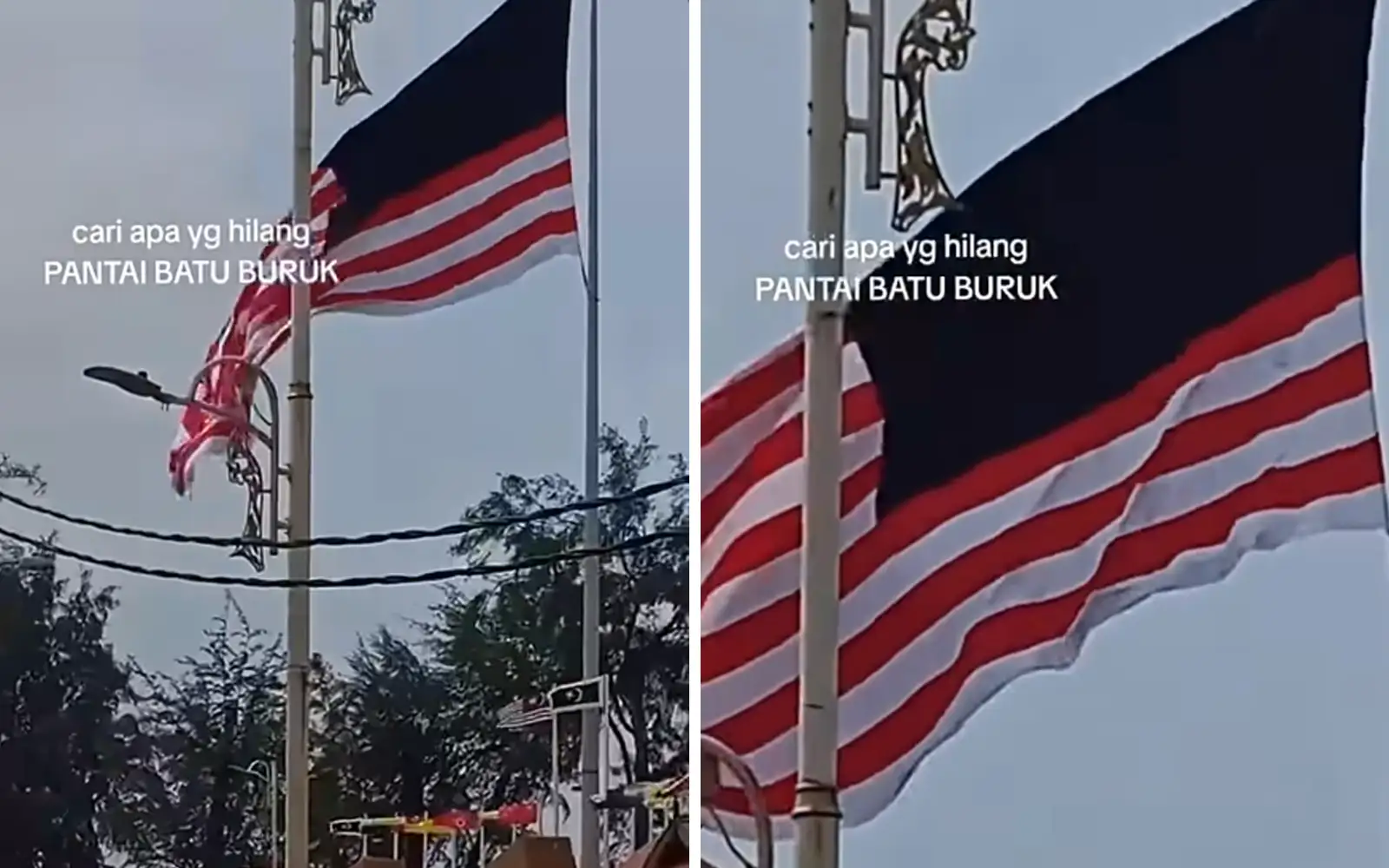
A video showing a Jalur Gemilang without its crescent and star at Dataran Batu Buruk went viral on social media last Friday, prompting questions over how such an incomplete flag could have been displayed.
Terengganu Menteri Besar Datuk Seri Dr Ahmad Samsuri Mokhtar has since described the incident as isolated and unintentional, saying the state government would investigate the matter and ensure it did not happen again.
Kuala Terengganu mayor Lizan Che Mat subsequently explained that the flag had originally carried the crescent and star, but the section bearing the symbols had become detached from its stitching following strong winds.
The Kuala Terengganu City Council (MBKT) removed the flag on Friday and replaced it with a new one.
Lizan also said the council would no longer use flags of the same stitched type, opting instead to purchase fully finished flags to reduce the risk of a similar incident recurring.
But while the explanation may have settled the immediate question of what happened to the flag, the incident has sparked a different conversation online.
Some social media users have invoked the name of Umno Youth chief Datuk Dr Muhamad Akmal Saleh, who was particularly vocal during a Jalur Gemilang controversy in Kepala Batas, Penang, last year.
Others have turned their attention to the PAS-led Terengganu government, with some sarcastically questioning whether the same political arguments used in previous flag controversies would now be directed at DAP.
The references to Akmal stem from an incident in August last year involving a 59-year-old hardware shop owner in Kepala Batas, whose Jalur Gemilang was displayed upside down.
Akmal had strongly criticised the incident and announced that he would go to the shop to show the owner how to properly display the flag.
The issue escalated when Akmal later led a gathering near the shop, despite police advice against holding the event.
The episode drew criticism from opposition politicians and other groups, who accused Akmal of intimidating or bullying the shop owner and argued that such matters should be dealt with through the proper authorities.
Akmal rejected the characterisation, maintaining that the issue was about defending the dignity of the national flag.
The Kepala Batas controversy came amid a wider debate over how Malaysia should respond to mistakes involving the Jalur Gemilang.
In April 2025, the Yang di-Pertuan Agong Sultan Ibrahim also stressed that the national flag was a symbol of the country's sovereignty and identity, following an error involving a Jalur Gemilang illustration published by Chinese-language daily Sin Chew Daily.
The newspaper had depicted a Malaysian flag without the crescent and subsequently apologised, describing it as a technical error.
Sultan Ibrahim said at the time that mistakes involving the Jalur Gemilang could cause public sensitivity and should not be taken lightly.
The differing reactions to such incidents raise a broader question. When an error involving the national flag occurs, should the response depend on who is responsible or which political side governs the area?
In Terengganu, the response so far has focused on determining what caused the flag to become incomplete, replacing it and taking measures to prevent a recurrence.
That approach stands in contrast to the more confrontational response seen during the Kepala Batas episode, where a mistake by a private individual became the subject of a highly public political dispute.
Ultimately, the latest incident also serves as a reminder that the Jalur Gemilang is more than a piece of fabric. It is a national symbol that represents the country’s history, sovereignty and the shared identity of Malaysians.
The Jalur Gemilang is an important national symbol, and mistakes in displaying it should be called out and addressed. But once an error is identified, the priority should be to hold those responsible accountable, correct the mistake and ensure it does not happen again, rather than allow it to become an unnecessary controversy.
As Malaysia prepares to celebrate National Day, the emphasis should be on treating the Jalur Gemilang with the respect it deserves and on encouraging Malaysians of all backgrounds to fly it with pride, care and a shared sense of patriotism.