
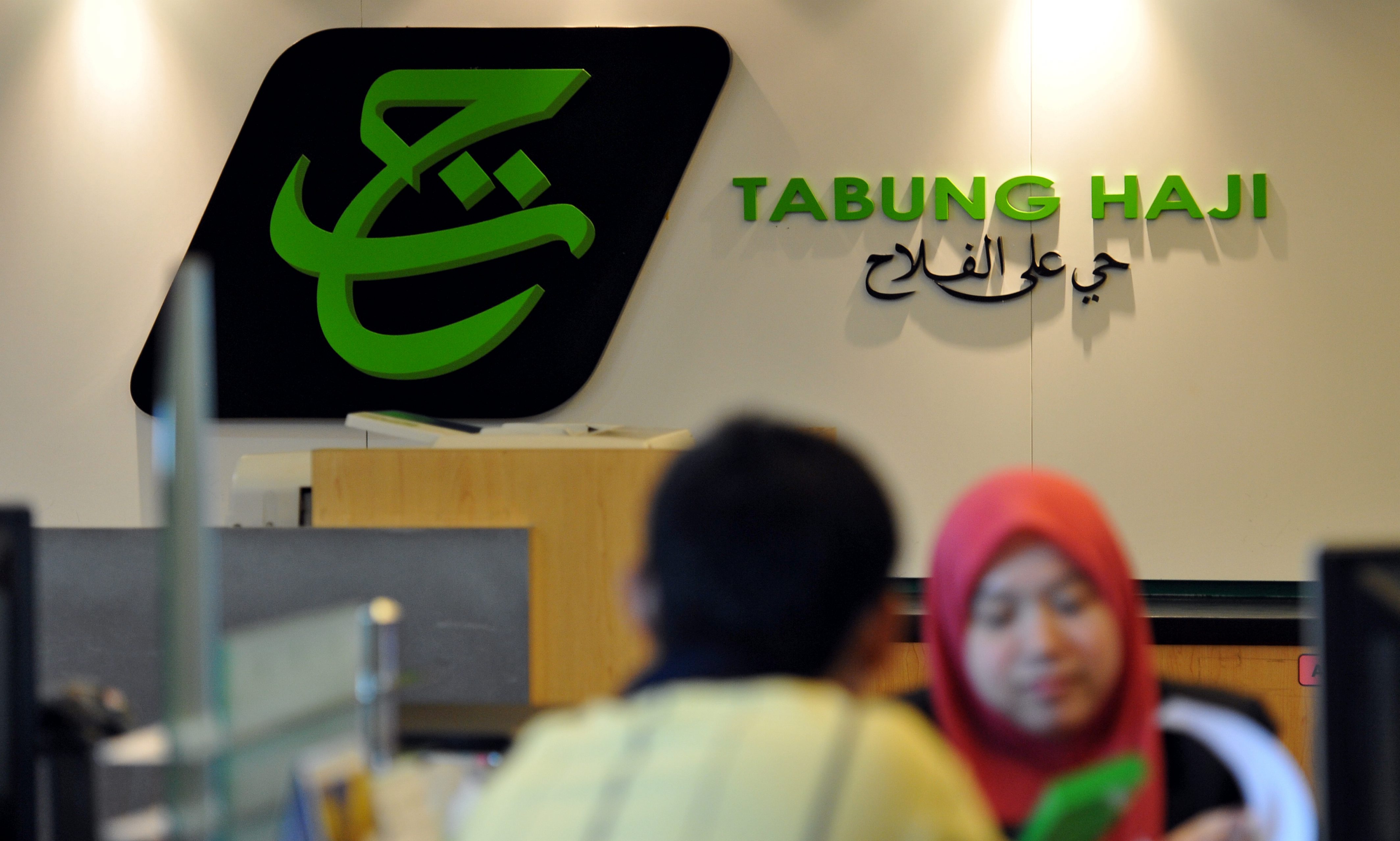
The most telling moment of today’s special Dewan Rakyat sitting on the Tabung Haji Royal Commission of Inquiry (RCI) was not found in any financial statement.
It came when Opposition MPs chose to walk out.
Parliament had been specially convened to examine what went wrong at an institution entrusted with the savings and religious aspirations of millions of Muslims. Yet instead of staying in the House to question ministers, challenge the government and scrutinise the RCI findings, the Opposition turned its attention to one issue: Prime Minister Datuk Seri Anwar Ibrahim was not there.
That became grounds for a boycott.
The argument was that because Anwar had requested the special sitting under Standing Order 11(3), he should personally attend and answer for it. Speaker Tan Sri Johari Abdul rejected the request for a postponement, pointing out that Deputy Prime Minister Datuk Seri Ahmad Zahid Hamidi and Cabinet ministers were present and that proceedings could continue. Anwar was recovering under medical supervision.
The Opposition was free to disagree with the Speaker.
But disagreement with procedure is one thing. Abandoning scrutiny of Tabung Haji is another.
And this is where the political contradiction becomes difficult to ignore.
For parties that repeatedly present themselves as defenders of Malay and Muslim interests, few issues should matter more than the management of Tabung Haji.
This is an institution managing the savings of more than nine million depositors, many of whom put aside money over years in the hope of fulfilling the fifth pillar of Islam.
Yet when Parliament set aside an entire special sitting to examine what had happened to that institution, the political priority somehow became Anwar’s chair being empty.
That is an extraordinary choice.
What exactly were they walking away from?
The RCI findings were not about a minor accounting disagreement.
Parliament was told that Bank Negara Malaysia had issued five warning letters to Tabung Haji’s chairman and the minister responsible over the widening gap between its assets and liabilities. According to the ministerial briefing, those warnings called for immediate corrective action, yet were ignored by the leadership at the time.
The Auditor-General subsequently raised concerns over changes to impairment policies, including changes made twice in 2017 which had the effect of showing higher profits. PwC was later brought in to reassess Tabung Haji’s financial position.
The RCI concluded that if proper accounting standards had been fully applied, Tabung Haji would have recorded an estimated RM1.4bil net loss in 2017, instead of the RM3.4bil profit reflected in its financial statements. The commission identified “creative accounting practices” among the factors behind the crisis.
These are precisely the findings an Opposition should want to interrogate.
Who knew?
Who approved the decisions?
Why were warnings ignored?
Were depositors misled?
Was the law breached?
Who should be held responsible?
Those are Opposition questions.
Walking out answers none of them.
If Anwar is the problem, question him later
The Opposition’s procedural complaint also does not withstand much scrutiny as a justification for abandoning the sitting altogether.
Anwar’s absence did not make the RCI findings disappear.
It did not prevent the minister responsible for religious affairs from answering questions.
It did not prevent MPs from placing objections, evidence and demands for further investigation on the parliamentary record.
The Speaker also made clear that proceedings were recorded and could subsequently be scrutinised through the relevant parliamentary select committees.
If the Opposition believed Anwar had questions to answer, it could demand that he answer them when he returned.
Instead, it effectively made the Prime Minister’s attendance more important than Tabung Haji itself.
That is why Anwar’s response struck a nerve.
He asked whether the Opposition wanted to debate him or debate Tabung Haji, and questioned how parties that speak loudly about Malay and Muslim interests could walk away from a discussion involving the savings of fishermen, farmers, teachers, policemen, soldiers and retirees.
It was a political attack, certainly.
But it was an attack made possible by the Opposition’s own decision.
The RCI also raised an awkward issue: political interference
There is another reason why walking away looks particularly poor.
The RCI identified weaknesses in the appointment of Tabung Haji’s leadership, including appointments made without sufficiently specific criteria and with political influence.
The minister told Parliament that the commission had highlighted the appointment of active politicians among the governance weaknesses that should not be repeated.
That should have triggered a serious parliamentary discussion about political appointments, governance and how institutions managing public funds should be protected from political interests.
Instead, the morning began with political theatre over whether the Prime Minister was physically present.
The irony is difficult to miss.
A report warning that political interests must never again override the interests of Tabung Haji depositors was met with politicians allowing a political dispute to overshadow discussion of the report itself.
Opposition means staying and fighting
There are legitimate questions for the government.
Why did a report dated July 19, 2022 and presented to the Yang di-Pertuan Agong on Aug 30, 2022 only become public on July 29, 2026?
Why did Malaysians have to wait four years?
What action will now be taken against those responsible?
Will every RCI recommendation be implemented?
Will investigations lead to prosecutions where evidence supports them?
These are difficult questions, and the government should not be allowed to avoid them.
But that is precisely why an Opposition exists.
Its job is to remain in Parliament and make the government uncomfortable.
To interrogate.
To expose contradictions.
To demand documents.
To force ministers to answer.
To insist that wrongdoing has consequences.
Walking out may produce photographs, headlines and social-media clips.
It does not produce accountability.
And on an issue as sensitive as Tabung Haji, the optics are particularly damaging.
It is difficult to repeatedly claim the mantle of defending Islam and Muslim interests, yet leave the chamber when Parliament is examining allegations involving the very institution holding Muslims’ haj savings.
Political principles are easiest to proclaim when the cameras are rolling.
They matter more when staying in the room is inconvenient.
On Tuesday, the Opposition had an opportunity to show that exposing what happened at Tabung Haji mattered more than scoring a political point against Anwar.
It chose the walkout instead.
And for millions of Tabung Haji depositors waiting for answers, that may be the most revealing political statement of the day.