
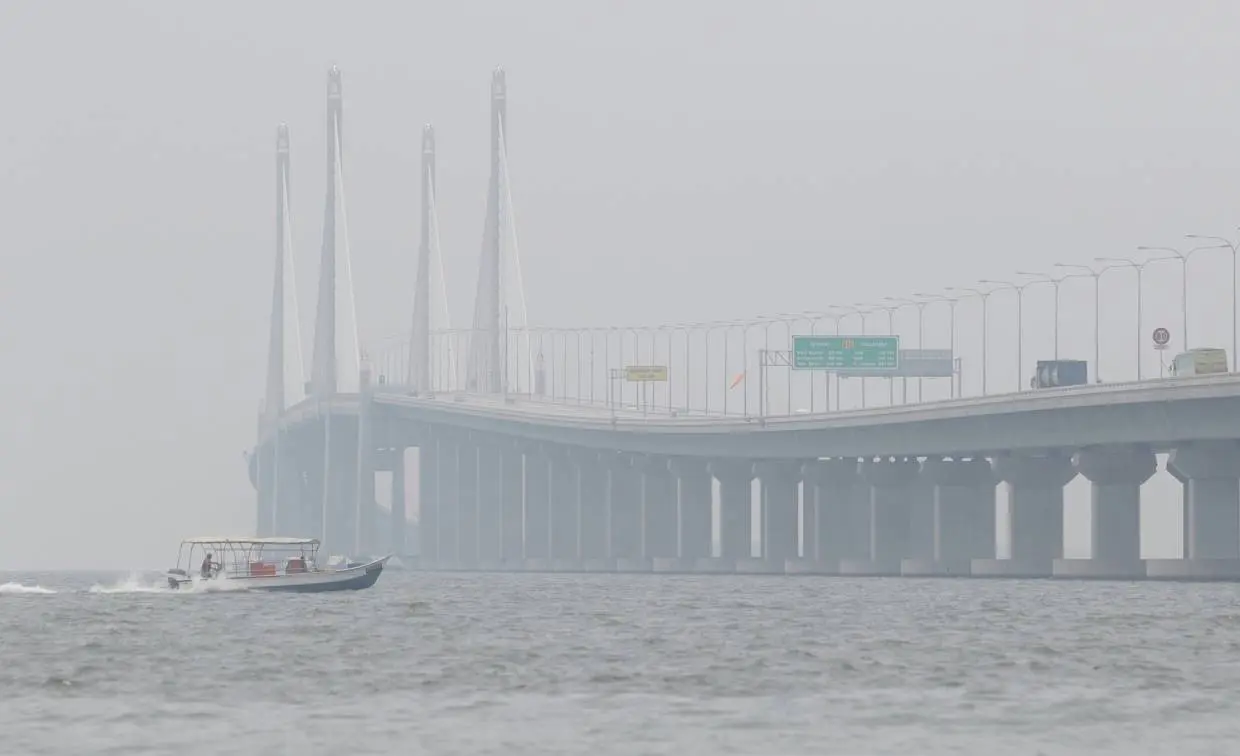
If you stepped outside in Penang this week, you felt it. The sting in your throat. The burning in your eyes. The smell of smoke that clings to your clothes long after you've come indoors.
The haze has returned. And this time, it's worse.
On August 12, Penang recorded an Air Pollutant Index (API) reading of 152—placing it firmly in the "unhealthy" category.
The API measures the concentration of particulate matter in the air. When it exceeds 100, the air is considered unhealthy. When it climbs above 150, it's considered "very unhealthy" and can trigger health warnings for the entire population.
At these levels, fine particles known as PM2.5—small enough to penetrate deep into the lungs and even enter the bloodstream—are abundant. These particles are not just uncomfortable. They are dangerous.
Short-term exposure can cause:
- Irritation of the eyes, nose, and throat
- Coughing and shortness of breath
- Aggravation of asthma and other respiratory conditions
- Increased risk of heart attacks and strokes
Long-term exposure is even more concerning, linked to reduced lung function, chronic bronchitis, and premature death.
The Children Are the Most Vulnerable
Children are particularly at risk. Their lungs are still developing. They breathe more air per kilogram of body weight than adults. And they are more likely to be outdoors.
When the API exceeds 100, schools are advised to stop outdoor activities. When it breaches 200, schools are recommended to close. We are already in the danger zone.
What Is Causing This?
The annual haze is not a natural disaster. It is a man-made crisis. Large-scale land-clearing activities in Indonesia—particularly on Sumatra and Kalimantan—continue to send smoke across the Strait of Malacca.
Malaysia has repeatedly urged Indonesia to ratify the ASEAN Agreement on Transboundary Haze Pollution. Indonesia has not. The same cycle repeats every year: drought, fires, smoke, and political blame games.
But this year feels different. The API readings are climbing earlier. The haze is thicker. And the response from both countries remains inadequate.
What You Can Do
While we wait for governments to act, you must protect yourself.
Stay indoors as much as possible. Keep windows and doors closed. Use air conditioning or air purifiers if available.
Wear a mask when outdoors. N95 masks offer the best protection—they filter out 95 percent of airborne particles. Surgical masks help, but they are far less effective.
Drink plenty of water. Staying hydrated helps your body flush out toxins.
Avoid outdoor exercise. Heavy breathing means more particles entering your lungs. Exercise indoors instead.
Check the API before going out. The Department of Environment provides regular updates. Plan your day around the numbers, not your convenience.
Conclusion
The haze will pass. It always does. But it will return next year. And the year after that. Until Malaysia and Indonesia take transboundary pollution seriously, we will be breathing in poison every August and September.
In the meantime, protect yourself. Protect your family. And when the haze finally lifts, don't forget. Because forgetting means accepting. And accepting means we will do this all over again.