
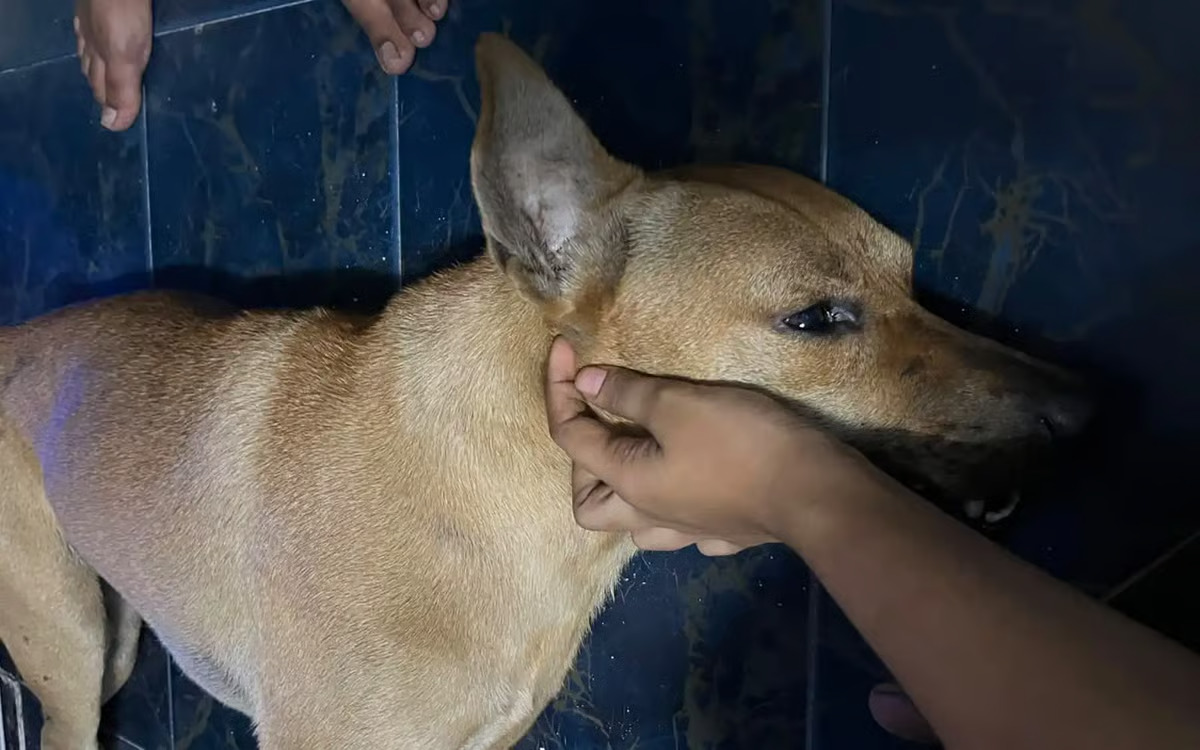
The death of Rocky during a stray-dog operation in Port Klang has sparked a heated debate over animal cruelty, public safety and the role of local authorities.
But beyond the conflicting accounts of what happened that night is a broader issue that deserves attention.
How Malaysia handles stray-animal enforcement and how responsibility is assigned when such an operation goes wrong.
The issue matters because the underlying problem is real.
Local authorities have a responsibility to respond when residents complain about stray dogs, particularly when there are concerns about animals chasing people or creating risks on the road.
MBDK said the July 29 operation at Taman Teluk Gedung Indah was carried out following complaints from residents about stray dogs. The council also maintained that the operation followed its standard operating procedures and used approved capture equipment.
So, the debate should not simply be about whether authorities were right to act. They had a reason to conduct the operation. The harder issue is how that enforcement should be carried out.
Rocky was a stray dog that had been taken in and cared for by a local family. His owner, Rohgini Devi, said she returned home during the operation and found two men restraining Rocky with a loop around his neck.
She said she repeatedly asked them to remove the restraint and offered to carry Rocky into the enforcement vehicle herself.
Rohgini later said she tried to free Rocky after asking her children to bring scissors, but the restraint was made of steel cable and could not be cut. She said that by the time MBDK personnel arrived, Rocky was already dead.
The account from Muhammad Shah Hizam, the man who became the focus of online accusations, is different.
Shah has denied intending to hurt or kill Rocky. His lawyer said Shah was participating as a residents’ representative after receiving a written invitation from the local Rukun Tetangga to assist in an MBDK-led operation.
The lawyer said participants were briefed by MBDK officers and that the neck loop used during the operation was supplied by the council.
He also said the situation became chaotic when Rocky’s owner intervened while the loop was still around the dog’s neck, resulting in a struggle.
The conflicting accounts make one thing clear. The circumstances surrounding Rocky’s death need to be properly established through the ongoing investigations.
But beyond the immediate circumstances, the case also exposes weaknesses that deserve closer examination.
What happens when an enforcement operation becomes unpredictable?
MBDK has said its operation followed standard operating procedures and that its personnel had used specialised equipment and humane methods in previous operations.
If those procedures were in place, their effectiveness ultimately depends on how they are implemented on the ground.
An animal-catching operation can change rapidly when a dog resists, becomes distressed or when members of the public intervene.
That makes training and supervision particularly important.
Everyone physically involved in the capture needs to understand how the equipment should be used, the limits of their role and the appropriate response when an operation becomes difficult.
There also needs to be a clear chain of command.
Participants should know who is responsible for making decisions, particularly when an animal appears to be in distress or when someone claims ownership of it.
A procedure is only as effective as its implementation.
If an operation involves multiple people with different levels of training and authority, those distinctions need to be clear before the operation begins rather than being worked out during a confrontation.
This is ultimately a matter of enforcement management, as much as animal welfare.
The role of residents needs clearer boundaries
The involvement of residents makes the issue more complicated.
Residents clearly have a role to play in addressing stray-animal problems. They can report problem areas, identify dogs that repeatedly cause disturbances and cooperate with local authorities.
But there is a difference between helping authorities identify a problem and physically carrying out an enforcement function.
Shah’s defence brings this distinction into sharper focus.
His lawyer said Shah was participating as a residents’ representative, had been briefed by MBDK officers and was using equipment provided by the council.
If members of the public are physically involved in an official animal-catching operation, the structure surrounding that involvement becomes important.
Their responsibilities need to be clearly defined. Their level of training needs to be appropriate to the tasks they are asked to perform. Trained council personnel need to remain responsible for supervision, while participants need to understand when they should step back and allow authorised personnel to take over.
The same applies when a dog appears to have an owner.
An animal initially identified as a stray may turn out to be cared for by someone living nearby. That possibility needs to be incorporated into the operation's procedures, rather than leaving participants to resolve the situation themselves in the middle of a capture.
The more people involved in an enforcement operation, the more important it becomes to establish a clear division of responsibilities.
Community participation can help authorities deal with local problems, but it should not create uncertainty over who is actually carrying out the enforcement.
The issue is bigger than one person
The intense focus on Shah is understandable given the footage that circulated online and the allegations surrounding Rocky’s death.
But the circumstances described by his legal team also illustrate why accountability should not automatically stop with the most visible individual in an operation.
If Shah was participating as a residents’ representative, had been briefed by MBDK officers and was using council-provided equipment, then his role forms only one part of the wider operation.
That does not determine responsibility for Rocky’s death.
It does, however, mean that the operation itself needs to be examined.
The focus should include the people who organised it, those who supervised it, the procedures that governed it and the way residents were brought into the process.
This is particularly important because an enforcement operation is ultimately a system, not just a collection of individuals.
A system needs to anticipate the situations that can arise during enforcement and establish how they should be handled.
If that system relies partly on members of the public, the need for clear safeguards becomes even greater.
Should stray-dog operations rely on residents?
There is a practical argument for involving residents.
They know their neighbourhoods. They can identify where stray dogs gather and alert authorities to recurring problems. Their cooperation can also make it easier for local councils to understand the scale of a problem before an operation begins.
But physical animal capture is different from community reporting.
It involves equipment, animal behaviour, public interaction and potentially dangerous situations. It therefore requires a level of competence that cannot necessarily be assumed simply because someone lives in the affected neighbourhood.
The Rocky case provides an opportunity for local authorities to reconsider where that line should be drawn.
Residents can remain an important part of the solution without necessarily becoming the people physically responsible for restraining animals.
Where their involvement is necessary, the framework should make clear what training is required, what tasks they can perform and when trained personnel must take over.
That would also make accountability clearer.
An SOP should be measured by its outcome, not just its existence
Selangor has already announced a review of stray-animal management procedures across its local authorities following Rocky’s death.
That review should go beyond checking whether existing SOPs were technically followed.
It should examine whether those SOPs are sufficiently detailed for the situations officers actually encounter on the ground.
A written procedure may specify how an animal should be captured, but an effective system also needs to account for what happens when an owner suddenly appears, when a crowd gathers or when an animal becomes distressed.
It should establish who makes decisions, who has the authority to stop an operation and how responsibility is transferred when circumstances change.
Training should also be considered alongside the SOP itself.
If residents are allowed to participate, their training needs to match their responsibilities. If they are not trained to handle animals directly, then their role should remain limited to supporting the operation in ways that do not put them or the animals at unnecessary risk.
This is where the Rocky case can lead to meaningful reform rather than simply another cycle of public outrage.
Public safety and animal welfare do not have to compete
There is a tendency for debates like this to divide into two camps.
One side focuses on the dangers posed by stray animals and the responsibility of authorities to protect residents.
The other focuses on the treatment of the animals and the responsibility to prevent unnecessary suffering.
Both concerns are legitimate.
A neighbourhood with a genuine stray-dog problem cannot simply be told to tolerate it. Authorities need effective ways to respond to complaints and protect people.
At the same time, the classification of a dog as a stray does not remove the responsibility to handle it humanely.
These responsibilities can exist together.
In fact, effective enforcement should be measured by its ability to achieve both.
A professional system should be capable of removing animals that pose a public-safety concern while ensuring that the people carrying out the operation have the training, equipment and supervision necessary to do so safely.
What should come out of the Rocky case?
The police and veterinary authorities now have to establish what happened to Rocky and whether any offences were committed.
That investigation should be allowed to run its course. But the policy review should look beyond the immediate incident.
The most useful outcome would not simply be identifying an individual to blame. It would be identifying what allowed the operation to reach the point where an animal died and what safeguards could prevent it from happening again.
That could mean clearer rules on public participation, stronger training requirements, tighter supervision or more precise procedures for dealing with animals that are claimed by residents.
It could also mean greater clarity for residents themselves about how to report stray animals and what happens when an operation is carried out in their neighbourhood.
The Rocky case has already generated outrage, competing narratives and online threats against the man at the centre of the controversy.
But social media should not become the mechanism through which accountability is determined.
The facts should come from the investigation, while the lessons should come from examining the system.
But one fact remains regardless of where the investigation ultimately places responsibility: a life was lost.
There may be different views on what led to Rocky’s death and there may be accountability to be determined. But protecting people from the risks posed by stray animals should not mean that another life has to be lost in the process.
That is perhaps the most important lesson from this case.
Rocky’s death should show authorities where the system needs to improve, where responsibilities need to be clearer and where safeguards need to be strengthened.
The debate should therefore move beyond the blame game and the pointing of fingers. The purpose of examining what happened is not simply to determine who was at fault, but to make sure the same failures do not happen again.
Rocky’s death should not become a choice between protecting people and protecting animals.
It should be an opportunity to build an enforcement system capable of doing both.
A life has already been lost. We should not wait for another before deciding that something needs to change.