
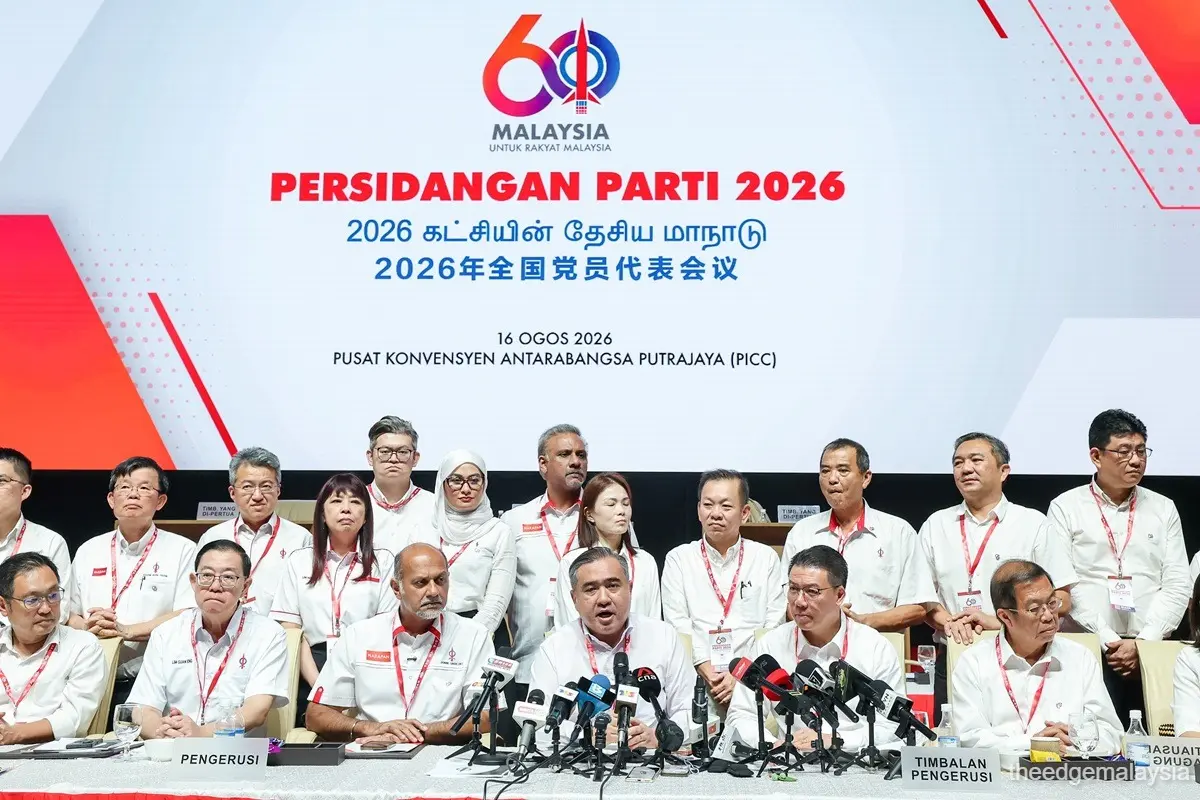
DAP held its party board meeting to decide whether to remain in the Unity Government or walk away. The result was a clear mandate: 1,857 votes in favour of staying until the parliamentary term ends. Leaving the government was never a serious option — but the fact that the question was even raised speaks to the pressure the party is under.
Let's be honest. DAP was always going to stay. Leaving would have been a political earthquake with aftershocks no one could control. It would have destabilised the administration, demoralised supporters, and handed the opposition a gift-wrapped narrative of "chaos and betrayal."
But staying is not a victory. It is a responsibility. And now that DAP has chosen to remain, the party must prove that it deserves the trust voters placed in it.
The Case for Staying: Why Walking Away Was Never an Option
There are three reasons why DAP had to stay and why walking away would have been a mistake.
First, effectiveness requires presence. DAP holds ministries where its leaders have been most visible — transport, housing, local government, and others. Leaving would mean surrendering those portfolios to others who may not share the party's priorities.
The policies, projects, and institutional relationships built over the past few years would have been inherited by whoever replaced them. And in a government approaching the end of its term, there is no time to rebuild from scratch.
DAP has been able to push through significant reforms in areas like public transport, urban development, and housing policy. Walking away would have meant abandoning these initiatives mid-stream, leaving them vulnerable to reversal or neglect. The party would have lost its strongest argument for why voters should trust them with power: that they can actually deliver results.
Second, Millions of Malaysians voted for Pakatan Harapan to govern and reform the country. Transformation takes time. Voters understood that.
But they also expected the parties they elected to fight for as much progress as possible. Walking away before the parliamentary term ended would have sent a dangerous message: that DAP was willing to abandon its responsibilities when things got difficult.
Walking away would have been a betrayal of that trust. It would have told voters that DAP's commitment to governance was conditional — that when things got tough, the party would prioritise its own internal dynamics over the public good.
Third, perception matters. If DAP had left, the opposition would have framed it as a collapse. The public would have seen a government in disarray.
The opposition has been waiting for any sign of weakness in the Unity Government. A DAP walkout would have been that sign. It would have been portrayed not as a principled stand, but as a tantrum.
It would have undermined the very stability that voters are looking for in uncertain times. And it would have given PN exactly the ammunition it needs to argue that the government cannot be trusted to govern.
The Path Forward: What DAP Must Do Now
Now that the party has decided to stay, the work must intensify. Staying is not the end — it is the beginning of a new phase. Here are three priorities DAP must pursue with urgency.
1. Deliver Tangible Results
DAP cannot afford to be seen as a party of promises rather than delivery. Voters need to see real improvements, not just policies on paper. Housing schemes that actually build homes. Education programmes that improve outcomes. Cost-of-living measures that put money back into people's pockets. Local infrastructure that makes daily life easier.
The challenge is that many of these changes take time. But DAP must find visible, quick wins that demonstrate its effectiveness. The public judges results by what they can see and feel. And what they see and feel must be positive.
In transport, DAP has already made strides with the LRT3 finally opening and the MRT network expanding. But these are long-term projects. Voters also want to see improvements in their daily lives, better roads, more efficient public services, and a government that responds to their complaints.
2. Rebuild Grassroots Trust
For too long, DAP has governed from the top. Ministers and MPs have been visible in Parliament and the media, but less visible on the ground. Party members and grassroots supporters need to feel heard, valued, and part of the decision-making process.
A strong party organisation on the ground is essential for the next general election. DAP must invest in outreach, engagement, and listening. It must show that it is not just a party of urban elites, but a party that understands the concerns of ordinary Malaysians — from the hawker to the factory worker to the teacher.
The recent Negeri Sembilan election showed that DAP's grassroots machinery is not as strong as it needs to be. The loss of Chennah, where party secretary-general Anthony Loke lost his seat, was a wake-up call. DAP cannot afford to rely solely on its national leadership to win votes. It must rebuild its local networks, engage with communities, and demonstrate that it is present and responsive.
3. Offer a Clear Narrative for the Future
DAP cannot afford to be seen as just "the party that's not UMNO." That narrative may have worked in 2018, but it is not enough for 2026. Voters need to know what DAP stands for, not just what it stands against.
The party must articulate a compelling vision for the next term. What does it want to achieve? Why does it deserve another mandate? How will it address the concerns of both urban and rural voters? How will it balance the demands of coalition partners while staying true to its own principles?
This narrative must be clear, consistent, and communicated across every platform. It must resonate with the Malay heartland as much as with the Chinese and Indian urban centres. It must speak to young voters and older voters alike. And it must be backed by a record of delivery.
DAP's messaging has often been reactive — responding to opposition attacks rather than setting its own agenda. This must change. The party must take control of the narrative and define what it wants the next election to be about. If it does not, the opposition will define it for them.
The Reality Check
DAP supporters are not monolithic. Some are long-time party loyalists who have been with the party for decades. Others are newer voters who were attracted by the reform agenda. Still others are pragmatic voters who see DAP as the best option among imperfect alternatives.
Each group has different expectations. The loyalists expect the party to stay true to its principles. The reformers expect bold policy changes. The pragmatists expect effective governance. Balancing these expectations will not be easy.
But the alternative — losing these voters to apathy or to other parties — is even worse. DAP cannot afford to be seen as a party that has lost its way.
The Clock Is Ticking
The next general election is not far away. If DAP wants to retain — and grow — its voter base, it cannot afford to waste the remainder of this term.
The choice to stay was the right one. But staying is not enough. Now the work begins. And it must be done with urgency, discipline, and a clear sense of purpose.
Every day counts. Every policy decision matters. Every interaction with voters shapes the party's reputation. DAP must use the remaining time wisely, delivering results that voters can see and feel.
DAP has chosen to stay in the Unity Government. That decision was the easy part. The hard part is what comes next: proving that staying was the right choice. Proving that voters can trust them with power. And proving that they have a vision worth voting for.
The vote is over. The work has just begun.