
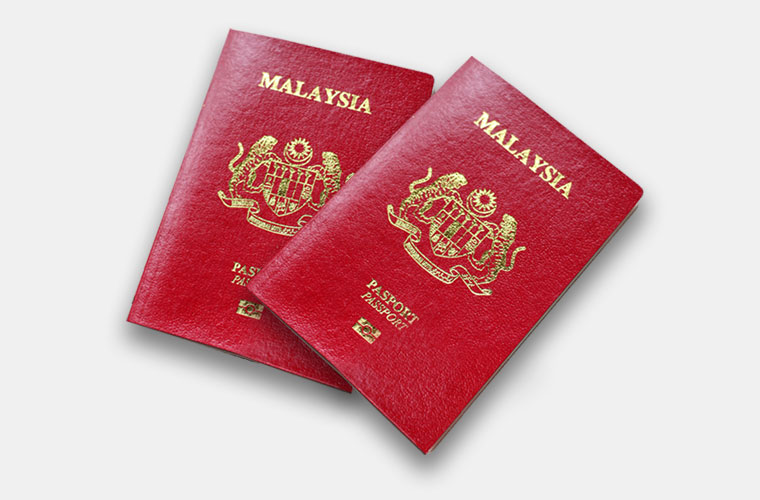
A passport is supposed to make travelling easier, not turn a trip into an unexpected administrative battle.
Yet that is what some Malaysian travellers reportedly experienced when passports with validity periods exceeding 10 years were rejected or flagged during airline check-ins overseas.
The passports were genuine and according to the Immigration Department, their longer validity did not breach international or domestic rules.
Still, some travellers faced difficulties that could result in missed flights, additional accommodation costs and considerable stress.
This raises a question that goes beyond passport validity. Is it enough for a government policy to be legally acceptable if it does not work smoothly in practice?
The Immigration Department has since capped Malaysian international passport validity at 10 years effective immediately.
It has also offered free replacement passports to affected holders and said airlines would be notified of the change. These steps are practical and should help prevent further confusion.
However, the episode also highlights a weakness in policymaking. A rule can be technically sound while still creating problems when it interacts with systems beyond the government's control.
Immigration has said that the International Civil Aviation Organisation does not prohibit passports from having validity periods exceeding 10 years.
From a border-control perspective, therefore, there was apparently no fundamental problem with the longer validity.
The difficulty arose elsewhere.
Airlines and their automated booking or check-in systems may interpret passport information according to their own requirements.
If those systems are not prepared to recognise an unusual validity period, a perfectly genuine passport can become a source of confusion.
For travellers, however, the distinction between a legal problem and a technical problem hardly matters when they are standing at an airport and being told they cannot board.
This is why the controversy should not simply be framed as a question of whether Malaysia's passport policy broke international rules. The more important question is whether the policy was sufficiently tested before it affected travellers.
Were airlines consulted beforehand? Were international booking and check-in systems tested? Were possible misunderstandings identified? And was there a clear plan for travellers who encountered problems overseas?
These are reasonable questions because the consequences ultimately fall on ordinary people.
A traveller who misses a flight because of a passport-validity dispute may have to pay for a new ticket, accommodation or other arrangements. Even if the passport is technically valid, the traveller is the one standing at the check-in counter trying to explain the situation.
Immigration's advice that travellers with 10-year passports purchase tickets directly from airline counters may offer a temporary solution because staff can verify the document manually. But it is difficult to see this as a satisfactory long-term answer in an age when online booking is a normal part of international travel.
Citizens should not have to become experts in airline ticketing procedures simply because government and airline systems interpret passport information differently.
At the same time, the airlines cannot be entirely left out of the discussion.
If automated systems are rejecting documents that are legally valid, those systems may also need to be reviewed.
Governments, airlines and international aviation authorities all have a role to play in making sure that legitimate travellers are not caught between incompatible interpretations.
There is also a lesson here about public trust.
Malaysia's passport is internationally regarded as a strong travel document, with Malaysian citizens enjoying visa-free or visa-on-arrival access to a large number of destinations.
But the strength of a passport is not measured only by how many countries accept it. It is also measured by how reliably travellers can use it.
The government's decision to cap passport validity at 10 years and provide free replacements to affected travellers is therefore a sensible response to the immediate problem.
While it is good that the issue is solved promptly, it never should’ve happened in the first place. This should be taken as a lesson for the next policy to ensure that everything is tested out properly and thoroughly before rolling out.
Good policymaking requires more than checking whether a rule complies with international regulations. It requires anticipating how that rule will operate in the real world.
The passport controversy is a reminder that legal does not always mean practical.
A policy may look perfectly acceptable on paper, but if it creates confusion at airports, the people affected will judge it by what happens when they actually try to use it.
Travellers should not be expected to pay the price for gaps between government policy, airline systems and international procedures.
Before introducing or changing policies that affect millions of citizens, authorities should ensure that the systems around those policies are ready too.
After all, a passport should open doors. It should not create another obstacle at the airport.