
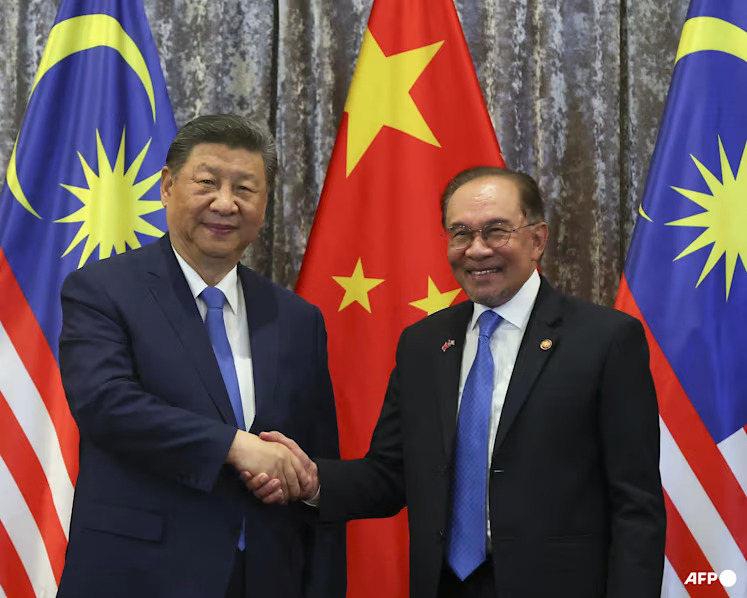
Prime Minister Anwar Ibrahim’s remarks on Taiwan raise a question that goes beyond the Taiwan issue itself.
Was he simply reaffirming Malaysia’s existing One China policy, or did he take Malaysia’s position further than it has traditionally been expressed?
Malaysia’s support for the One China policy is not new, and Anwar was not breaking new ground by stating it. The more significant issue is what he said beyond that.
Anwar stated, “I see Taiwan as part of China,” arguing that recognising Taiwan’s separation would support the break-up of a country.
When asked whether China should be condemned for reserving the right to use force if peaceful reunification failed, he did not condemn Beijing’s position. Instead, he compared it to using force to prevent a Malaysian province from breaking away.
This goes beyond a routine reaffirmation of policy. Anwar was not only explaining Malaysia’s position; he was arguing why Taiwan should be regarded as part of China and why Beijing’s position on territorial unity could be understood through Malaysia’s own approach to national unity.
That distinction matters because a prime minister’s words shape how Malaysia is perceived internationally.
China praised Anwar’s “steadfast position,” while Taiwan accused him of endorsing Beijing’s description of Taiwan as a breakaway territory and of rationalising the possible use of force.
For Malaysians, this intersects with the country’s wider foreign-policy interests. Malaysia maintains extensive economic ties with China while also maintaining relations with the United States, Japan, Taiwan and other regional partners.
It is also managing its own security interests in the South China Sea. Anwar has repeatedly presented this as an independent foreign policy. Malaysia can maintain relations with China while retaining the ability to raise objections when its interests are affected.
His remarks therefore invite scrutiny over how that balance is being maintained.
Supporting the One China policy does not make Malaysia a Chinese ally.
But publicly defending Beijing’s position on Taiwan, including its argument over territorial integrity and the possible use of force, makes that distinction harder to communicate.
The Cabinet’s response adds another layer to the issue. Communications Minister Fahmi Fadzil said the matter was not discussed during the Cabinet meeting.
This does not indicate that the government disagrees with Anwar, but it raises a question about whether the stronger position expressed in the interview represented an agreed government position or Anwar’s own articulation of Malaysia’s existing policy.
The wording also matters because foreign governments respond not only to formal policy but to how that policy is publicly expressed. Anwar’s remarks may therefore affect how Malaysia is perceived amid growing US-China competition, particularly if Beijing uses them as evidence of international support for its position on Taiwan.
Ultimately, Malaysia’s One China policy remains the foundation of its diplomatic position. The central question is not whether Malaysia has suddenly become “pro-China”, but whether Anwar made Malaysia sound more supportive of Beijing’s position on Taiwan than its established policy requires.
On the evidence available, the policy itself does not appear to have changed. What has changed is the strength and explicitness with which the Prime Minister has articulated it.
That is what makes his remarks significant: they may represent continuity in formal policy while going beyond the traditional limits of how that policy has been publicly expressed.