
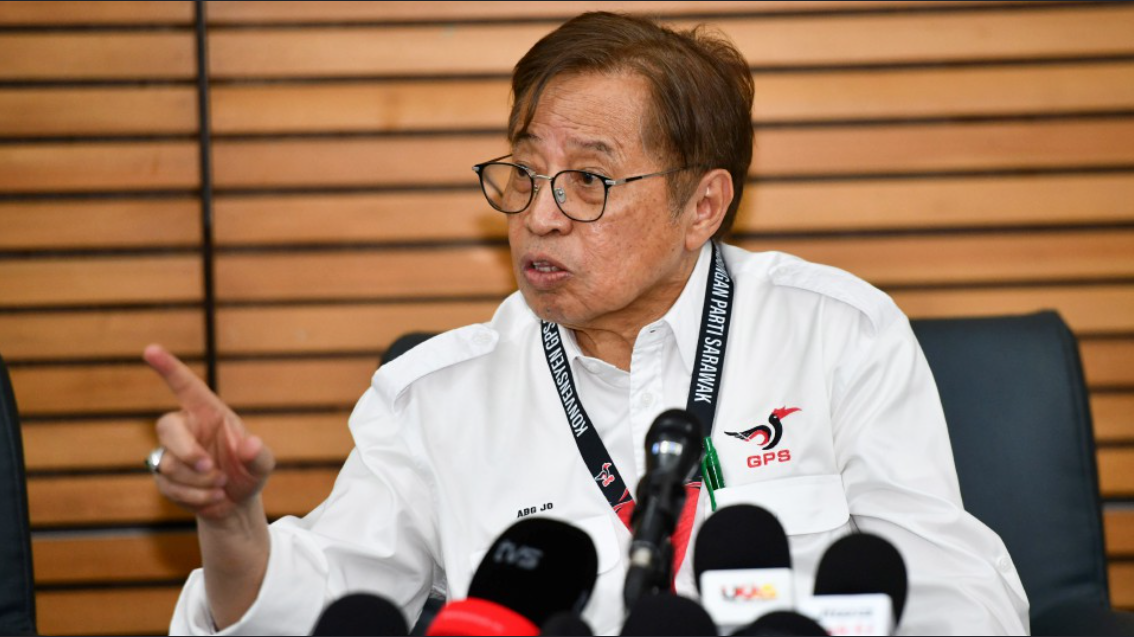

Premier Abang Johari Tun Openg has built much of his political legacy around one powerful commitment: restoring Sarawak’s rights and strengthening its position within Malaysia.
His administration has expanded PETROS’s role in Sarawak’s gas industry, established the Sarawak Sovereign Wealth Future Fund and changed the title of Sarawak’s head of government from Chief Minister to Premier.
These measures deserve recognition. They also lead to a harder question: Has Sarawak acquired the parliamentary power expected of an equal partner?
Measured by representation in the Dewan Rakyat, the project remains unfinished.
Sarawak holds 31 of the 222 parliamentary seats: 31 ÷ 222 × 100 = 13.96%.
Sabah holds 25 seats. Together, Sabah and Sarawak hold 56 seats:
56 ÷ 222 × 100 = 25.23%.
Peninsular Malaysia holds 165 seats, representing 74.32%, while Labuan holds one seat.
Under a parliamentary-power test, this falls far short of equal representation. Peninsular MPs retain a decisive numerical advantage in the institution that determines national policy and approves many constitutional amendments.
Anything below a 50% share of parliamentary power would leave the Borneo states with weaker safeguards for their constitutional interests, plural traditions, and religious and cultural harmony.
What Happened to the 2018 Syariah Commitment?
In March 2018, following cases involving converts seeking declarations concerning their religious status, Abang Johari said Sarawak would address weaknesses in its Syariah framework within six months.
The Chief Minister’s Office subsequently disputed reports portraying the proposal as an attempt simply to make it easier for converts to leave Islam. It described that characterisation as highly inaccurate.
On 3 December 2018, Sarawak gazetted the Syariah Civil Procedure (Declaration of Islamic Religious Status) Rules 2018, approximately three months after the stated six-month timeframe.
The Rules created a procedure through the Syariah High Court. Their scope contains important limitations.
Rule 3 addresses eligibility, including cases involving conversion outside Sarawak. Rule 8 permits a 180-day counselling process, with possible extensions, before a trial date is fixed.
These provisions raise legitimate questions about accessibility, speed and effectiveness.
The Sarawak government should disclose:
1. How many applications have been filed under the 2018 Rules?
2. How many applications have been allowed, rejected or withdrawn?
3. How long does an average application take?
4. Does the government regard these Rules as the complete fulfilment of the commitment made in March 2018?
5. Are further legislative or procedural reforms being considered?
The central question concerns whether the 2018 Rules have delivered an effective and timely solution for the people affected.
Sarawak’s Lost Parliamentary Safeguard
When Malaysia was formed in 1963, Parliament had 159 seats:
· Malaya: 104
· Sarawak: 24
· Sabah: 16
· Singapore: 15
Singapore, Sabah and Sarawak collectively held 55 seats: 55 ÷ 159 × 100 = 34.59%.
A two-thirds majority required 106 seats. Malaya’s 104 seats fell two seats short.
This arrangement therefore functioned as a practical constitutional safeguard whenever Singapore, Sabah and Sarawak acted together.
Following Singapore’s separation in 1965, its 15 parliamentary seats were abolished and were never redistributed to Sabah and Sarawak.
Today, Sabah and Sarawak collectively hold only 25.23% of the Dewan Rakyat. That historical decline deserves a serious constitutional response.
Abang Jo Has Stated a Target
Abang Johari has publicly advocated a larger parliamentary allocation for Sabah and Sarawak, calling for at least one-third and also referred to 35% of parliamentary seats.
The Federal Government agreed in principle to increase parliamentary seats for Sabah and Sarawak while leaving the final proportion open and made no commitment to the one-third target.
Source: https://bernama.com/en/news.php?id=2491479
As of August 2026, the 35% proposal remained under MA63 discussions. Abang Johari’s advocacy should be acknowledged. The next test is whether that advocacy produces a concrete constitutional proposal and a successful outcome.
One-Third Falls Short of Equality
In my view, equal partnership ultimately calls for equal parliamentary bargaining power.
Sabahans and Sarawakians should therefore favour a 50:50 arrangement between Peninsular and East Malaysia.
East Malaysia currently holds 57 seats (31 Sarawak, 25 Sabah, and 1 Labuan). Peninsular Malaysia holds 165 seats.
Under a model retaining Peninsular Malaysia’s existing 165 seats, East Malaysia would require another 108 seats: 165 − 57 = 108.
The Dewan Rakyat would then have 330 seats, divided equally:
· Peninsular Malaysia: 165 seats
· East Malaysia: 165 seats
Sarawak Deserves Specific Answers
Abang Johari should now disclose:
1. The exact number of additional seats Sarawak is seeking.
2. The proposed distribution between Sarawak and Sabah.
3. Whether Labuan forms part of the proposed East Malaysian allocation.
4. The formula governing future seat increases.
5. The target date for implementation.
6. The constitutional safeguards preventing future erosion of East Malaysia’s representation.
Support for additional seats is an important beginning. Sarawakians now deserve the numbers, formula, timetable and constitutional pathway.
Sarawak’s economic institutions and profile have grown stronger. The unfinished task is securing parliamentary power proportionate to its claim of equal partnership.
After nearly a decade under Abang Johari, that is the result by which his equal-partnership legacy should ultimately be judged.