
.jpg)
Malaysians are among the most enthusiastic people in the world about AI, ranking third out of 30 countries surveyed, yet only 53% of Malaysian SMEs are using it, behind Indonesia at 74% and Thailand at 71%.
A seminar for SME owners heard that the obstacle is usually not willingness but disorder: paid tools nobody opens, a single person who knows how to use them, staff using AI in secret, customer data flowing into free tools, and no one able to say what AI saved or earned last month.
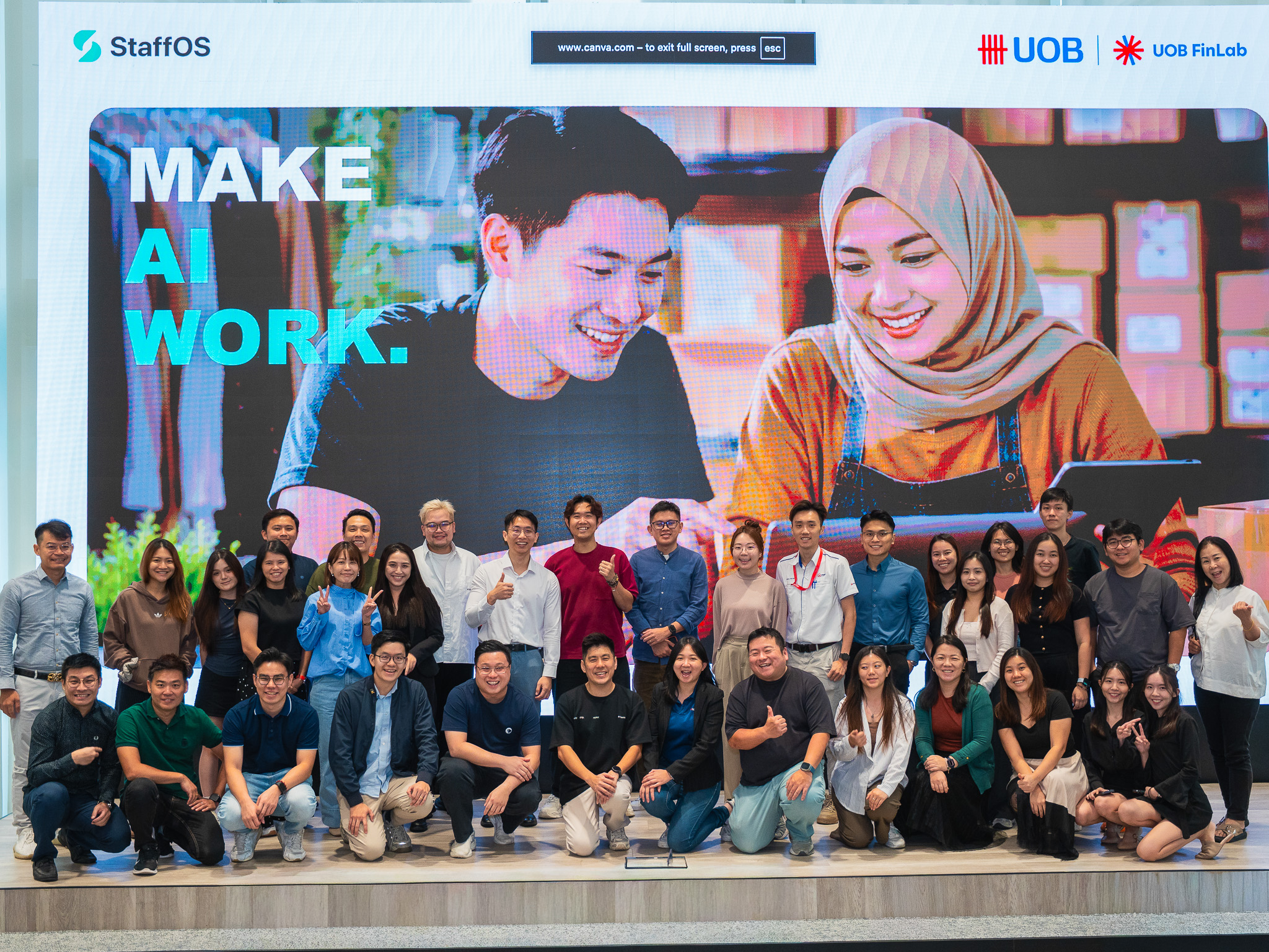
The seminar, "From AI Chaos to Business Clarity", was held on 18 August at UOBPlaza 1, Kuala Lumpur under UOB FinLab's "Make AI Work" programme. Speaking to about 50 SME owners and managers, StaffOS co-founder and Google Developer Expert Vin Lim grouped those five situations into what he called the five signs of AI chaos, and offered a fix for each that costs nothing and can start the same week.
"AI is already inside your company. The question is whether you can see it," Lim said, citing a 2024 Microsoft and LinkedIn survey of 31,000 workers in which 78% of AI users brought their own tools to work.
Among SMEs the figure was around 80%. The cost of not seeing it is rising, he added. PDPA amendments in force since June 2025 require data breaches to be reported within 72 hours, with fines of up to RM1 million. "When staff paste customer data into free tools, the risk lands on the owner. Banning AI only pushes it out of sight. A one-page policy makes it visible."
On where AI genuinely helps, Lim cited only controlled academic studies. A 2025 study in the Quarterly Journal of Economics covering 5,172 customer service agents found that AI lifted the productivity of the least experienced workers by about 30% while barely moving the most experienced.
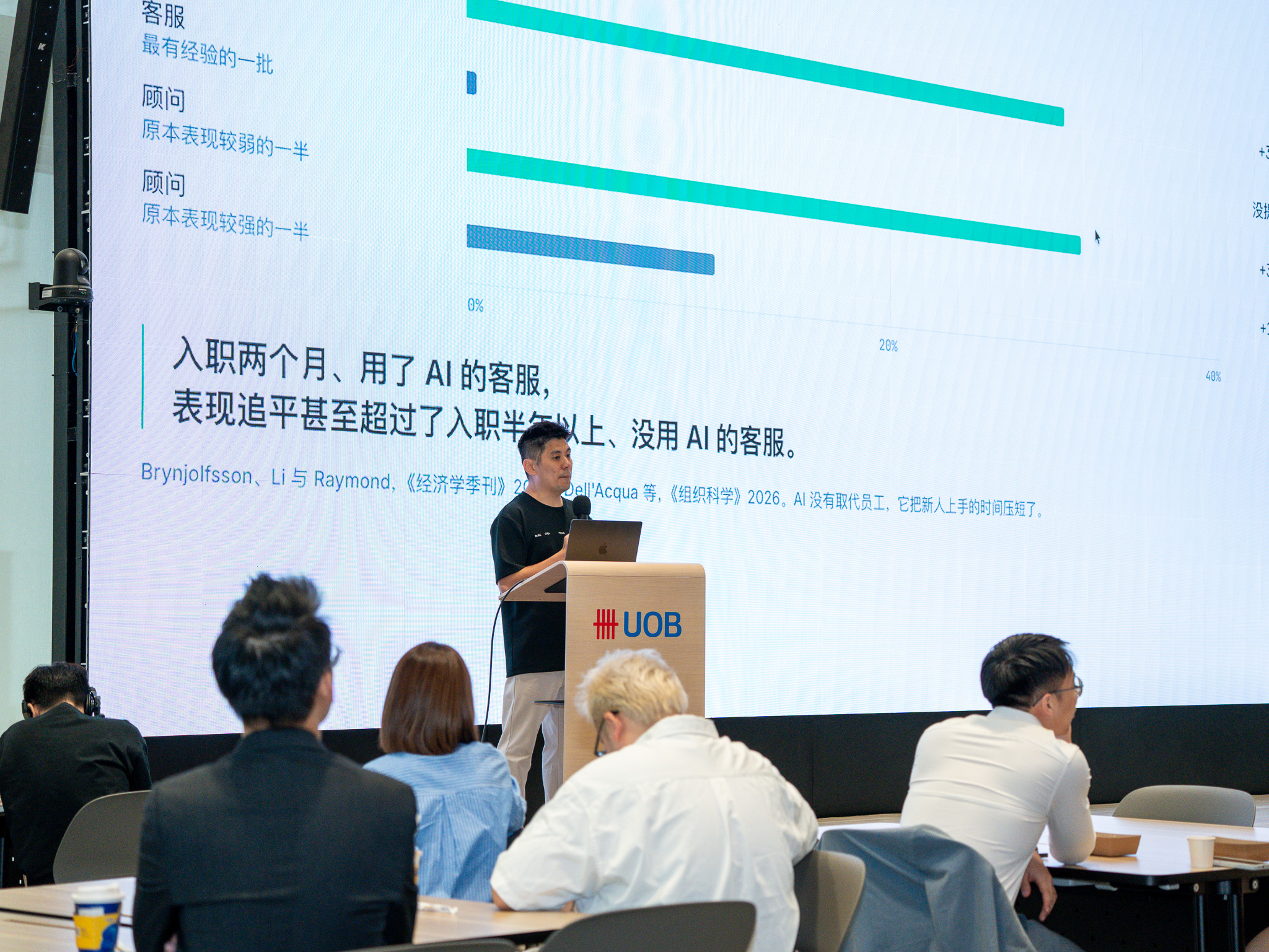
A separate experiment published in Management Science gave 640 Kenyan small business owners an AIadviser over WhatsApp, and found that top performers improved 15% while weaker ones declined 8%.
"Where the task has a standard answer, AI helps novices most. Where it doesn't, it only helps people who already know what they're doing. So don't ask how smart the AI is. Ask whether the job you're giving it has a standard answer," he said.
The most expensive waste, he argued, is response time. Research published in Harvard Business Review found that leads contacted within an hour were seven times more likely to become qualified opportunities. Audits have found companies taking an average of 4 hours and 50 minutes to send a first reply, and one 2024 study found that 63.5% never replied at all. "Every message still unanswered at11pm is a customer you paid to attract, walking toward a competitor who replies at 11.01."
For owners burned by a chatbot, Lim pointed to courier DPD, whose bot was coaxed into writing a poem mocking its own company, and Air Canada, which was held liable for a refund policy its bot invented. Any customer-facing AI, he said,must pass three gates: test it on your own real customer conversations, keep a human reviewing every reply in the first week, and guarantee handover to a human with a full record of every exchange.
The five signs are also the origin of StaffOS, the Kuala Lumpur agentic AI company Lim co-founded. Its AI staff take over whole stretches of work for SMEs, answering enquiries, quoting, booking appointments and following up advertising leads on WhatsApp, with every conversation logged and human handover built in.
"We watched our own customers fall into these holes one by one before we build anything. But whoever you buy from, including us, make them pass the three gates first," he said.
Lim closed with a November 2025 Xero survey of 1,033 Malaysian SMEs, in which four in five said they need to learn more before they can use AI with confidence. "The willingness is there. What's missing is the map."