
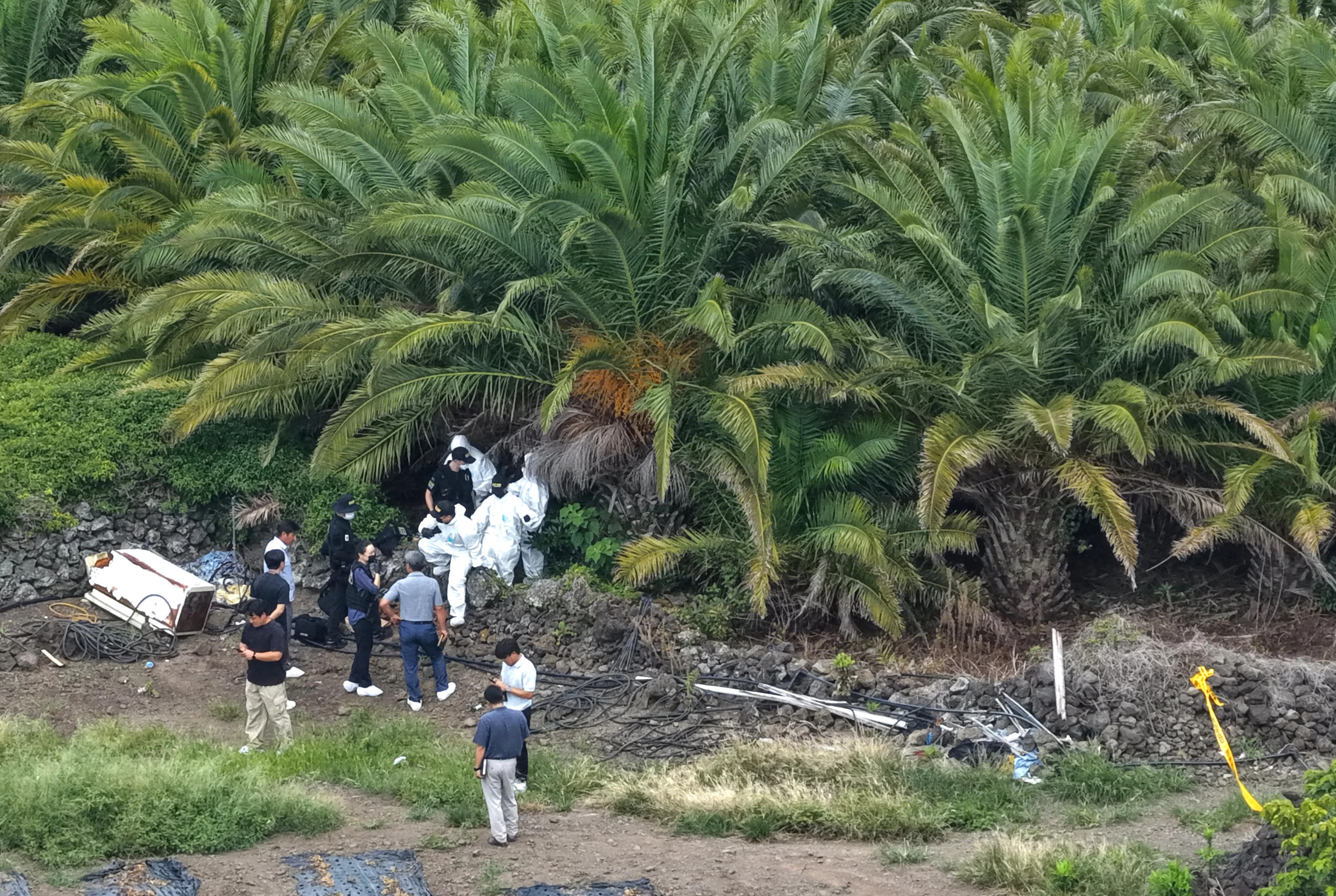
The most troubling part of the Jeju scandal is that an alleged lie closed a missing-person case.
Officer Bu allegedly claimed he had spoken to missing woman Jang Mi-ran and that she did not want her whereabouts disclosed. Her case was closed. Investigators later found no record of the conversation. Jang's body was found 104 days after she disappeared.
Another missing-person case handled by Bu was allegedly closed in a similar manner. The man was later found dead.
One officer may have failed, but the system also accepted his account without enough verification.
Missing people are questions
A missing-person report begins with an absence of information. The person's whereabouts are unknown, their safety cannot be established and the circumstances of their disappearance are unclear.
Police do not initially know the answers. Their job is to reduce that uncertainty through investigation.
The Jeju case suggests a basic failure in verification. An officer's account was accepted without properly confirming that the missing person had been contacted and was safe.
That matters because closing a case ends the active search, even when the facts have not been fully established. If the evidence does not confirm a person's safety, the case should not be treated as resolved.
Trust needs a second pair of eyes
Bu allegedly handled 298 missing-person cases over 17 months.
Four senior officers have since been removed from duty while the National Police Agency examines whether supervisors properly oversaw the cases.
No system should depend entirely on one person's word when that person's decision can determine whether an investigation continues.
This is why independent oversight matters.
A second review is not an accusation that investigators are incompetent or dishonest. It recognises that people make mistakes and that institutions can miss things precisely because they are too close to their own decisions.
That principle has become particularly relevant in South Korea's criminal justice reforms.
A recent analysis in the Korea JoongAng Daily by lawyer Kim Ye-won argues that changes to the division of investigative powers between police and prosecutors have weakened the traditional “second look” in criminal investigations.
Prosecutors previously reviewed police case records and could intervene when they found problems.
Under reforms since 2021, police gained greater authority to close cases, while prosecutorial direction of police investigations was abolished.
Further reforms have now removed prosecutors' ability to conduct supplementary investigations themselves.
The political debate over those reforms is separate from the Jeju investigation.
But the principle raised by the case is difficult to ignore. When one institution makes the initial judgment, who has the authority to correct it?
The cost of being wrong is unequal
This matters especially in missing-person cases because the consequences of a false closure are not symmetrical.
If police keep looking for someone who turns out to be safe, resources may be wasted.
If police stop looking for someone who is in danger, an opportunity to find that person may be lost.
The 298 cases Bu handled are now being reviewed, while police agencies elsewhere in South Korea are examining previously closed cases.
That review is necessary. But it also shows why retrospective checks are a poor substitute for timely oversight.
A case can be reopened months later. The lost time cannot.
Lost evidence cannot be recovered
Jang's case shows the cost.
By the time police requested CCTV footage that could have helped trace her movements, the footage had already been deleted after its retention period.
Reports said police sought footage from dozens of cameras around her accommodation only after the case had been reopened.
The damage from a premature closure is therefore not limited to the days when nobody was searching.
It can permanently change the evidence available to investigators.
Efficiency is not accuracy
South Korean police handle enormous numbers of missing-person reports. In Busan alone, 25,376 of 25,605 reports filed between January 2024 and July 2026 were closed.
Those figures may reflect an effective police force. Most missing-person cases do not end in tragedy.
But the Jeju scandal shows the limit of closure rates as a measure of success.
A closure rate tells us how many files reached an endpoint. It does not tell us whether every decision behind those closures was properly verified.
This matters because the pressure to manage large volumes of cases can make administrative completion look like progress.
There is nothing wrong with efficiency. The problem starts when efficiency is allowed to substitute for accuracy.
More power needs stronger checks
The issue is especially relevant as South Korea prepares to expand police investigative powers when prosecutors lose their remaining investigative authority in October.
More power demands stronger oversight. Decisions that can permanently affect an investigation need firm checks, particularly when they depend heavily on an individual officer's judgment.
Closing a missing-person case is one of them.
If an officer says a missing person has been contacted, that contact should be verifiable. If there are warning signs that the person may be in danger, those signs should not disappear simply because the case has been marked closed.
Internal supervision also has limits. Police reviewing police decisions can catch failures, but it is still an institution reviewing its own work. That is why independent oversight has traditionally mattered in criminal justice.
The issue is not whether one side of the system is always right.
It is whether there is another side with enough authority to say when the first side is wrong.
Uncertainty is not failure
Not every missing-person case can be resolved quickly. Police may simply not have enough information to locate someone immediately.
That uncertainty should remain visible in the case rather than being replaced by an unsupported conclusion that the person is safe.
“Unable to establish” is a legitimate finding. “Safe and does not want to be found” requires evidence.
That may leave a case open longer and require more resources. But it also preserves the possibility of finding new evidence and prevents an assumption from becoming the official version of events.
The lesson from Jeju is not that police should never close cases.
It is that closure should follow verification, not replace it.
When someone's safety is at stake, uncertainty is safer than false certainty.