
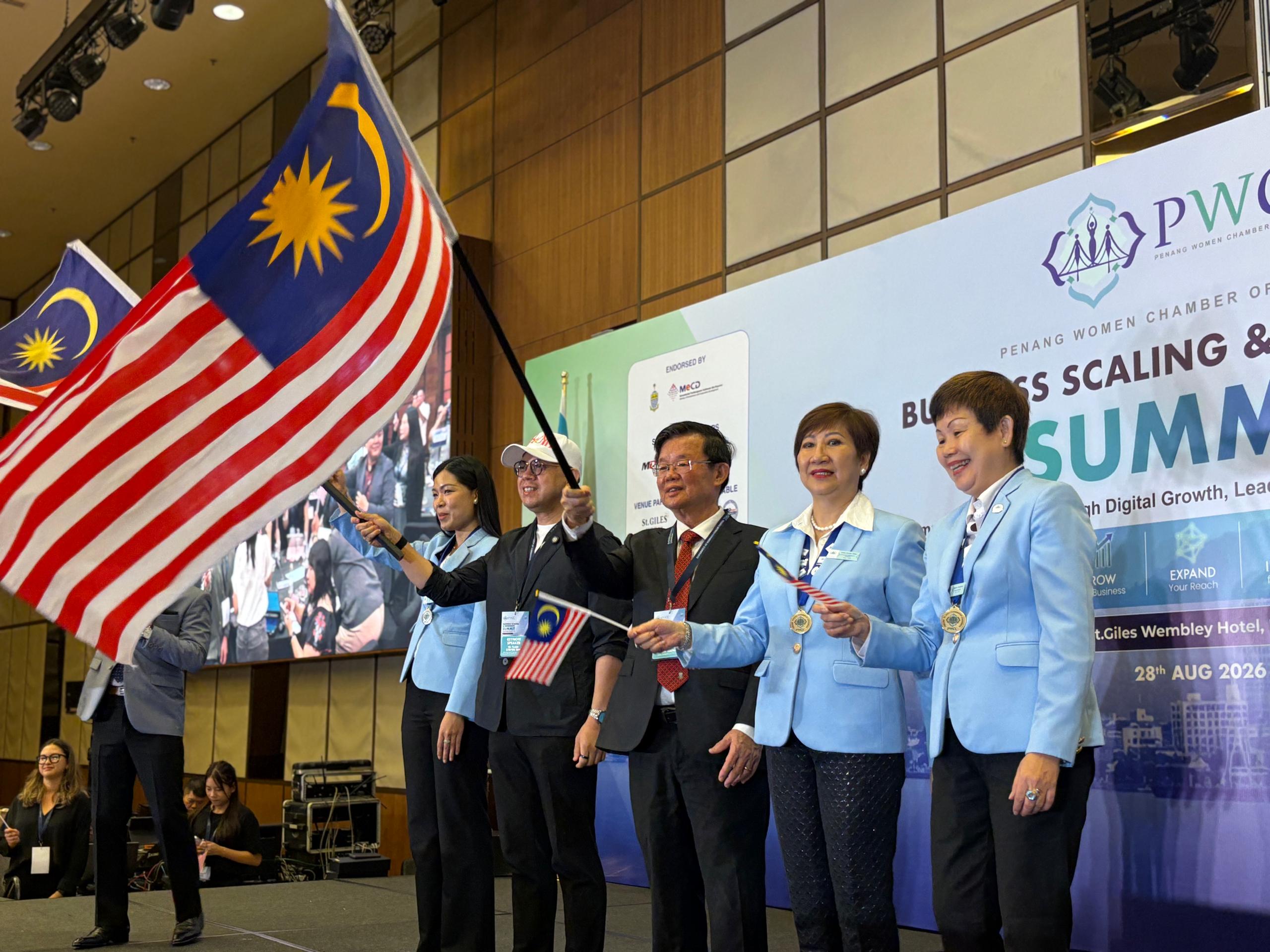
It is rare to see a government initiative hit its targets ahead of schedule. It is even rarer to see one that genuinely empowers people rather than just redistributing resources. That is why the latest figures from Penang deserve more than a passing glance — they deserve recognition.
Penang has achieved 81 percent progress towards its target of increasing women's participation in entrepreneurship under the Penang2030 vision. Chief Minister Chow Kon Yeow announced that 4,052 women had participated in entrepreneurship initiatives, up significantly from 2,450 women entrepreneurs in 2023.
The state is on track to exceed its goal of 5,000 participants, and that is something to be genuinely glad about.
The Right Kind of Ambition
What makes Penang's approach particularly encouraging is that it is not content to stop at numbers. Chow has made it clear that the state must move beyond simply encouraging more women to start businesses. The real challenge, he said, lies in helping women entrepreneurs scale up, enter high-value industries, and compete regionally and internationally.
By targeting the electrical and electronics sector — one of the most dynamic and export-oriented industries in the country — Penang is ensuring that women are not confined to the margins of the economy. Chow expressed hope that more women-led enterprises would enter the semiconductor supply chain. That is not just empowerment. That is integration into the engine of Malaysia's industrial growth.
And he acknowledged the barriers that women face: access to financing, talent, technology, larger markets, and government support. He urged federal agencies to listen to women entrepreneurs and make government assistance simpler, clearer, and easier to access.
The Federal Effort
At the federal level, Entrepreneur and Cooperatives Development Minister Steven Sim announced that the government's DEWI initiative has disbursed RM906 million in financing since its launch, benefiting 106,100 women entrepreneurs nationwide.
The initiative mobilises a total funding pool of RM3 billion across four key agencies to support up to 300,000 women entrepreneurs.
He noted that about 70 percent of the allocation remains unutilised and encouraged more women entrepreneurs to take advantage of the financing facilities.
Nationally, nearly 219,000 women-owned businesses were registered in Malaysia in 2022, accounting for 20 percent of all enterprises. That remains low compared to other ASEAN countries.
But the trajectory is encouraging. In 2025, the government approved RM2.77 billion in financing, grants, and training for 254,700 women entrepreneurs. Women also dominate participation in programmes like Maju Usahawan MADANI 2025, with 1,674 women participants — three times higher than male participants.
The Bigger Picture
This is not just about women. It is about Malaysia.
When women are economically empowered, the entire country benefits. Studies have consistently shown that women reinvest a higher proportion of their income into their families and communities than men.
Women-led businesses tend to be more resilient, more community-oriented, and more likely to create jobs. In a country that desperately needs to diversify its economy and reduce its reliance on volatile sectors, women entrepreneurs represent an underutilised resource.
Penang has understood this. The state has established Women and Family Development Committees in all 40 state constituencies, creating a network of 600 women leaders working directly with local communities.
It is the first state in Malaysia to implement a gender-responsive and participatory budget, ensuring that the needs of women and families are considered in public policy and spending.
Gender Gap Still Remains Real
For too long, women's entrepreneurship in Malaysia has been treated as a side issue — a nice-to-have, a feel-good story, but not central to the country's economic strategy. The figures from Penang and the federal government suggest that this is finally changing.
Of course, much remains to be done. Malaysia still ranks among the lowest in ASEAN on the Global Gender Gap Index. The financing gap remains real. Access to markets, mentors, and technology remains uneven. But the direction is clear. The momentum is real. And the results are tangible.
When Chow says that Penang's economy grew 7.3 percent last year, with an economic size of approximately RM130.3 billion, and that these figures are only meaningful when local businesses — including those led by women — grow alongside them, he is making a point that cannot be ignored.
This is not charity. It is not social engineering. It is economic common sense.
And that is something we should all be glad to see.