
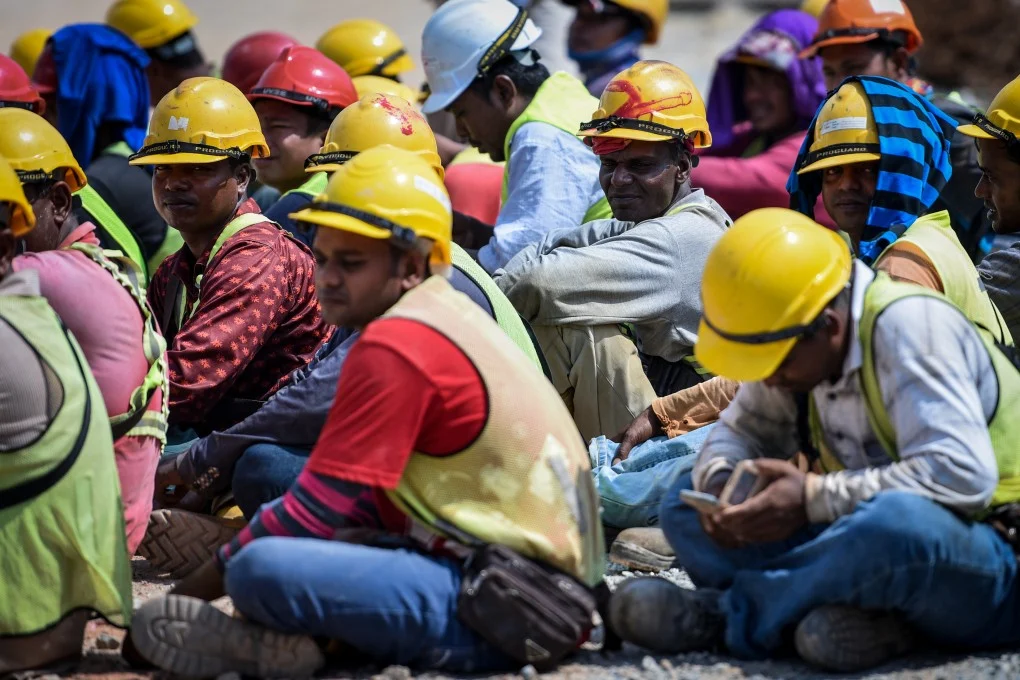
Just days ago, Malaysia announced it would recruit 200,000 migrant workers from Bangladesh over the next six months, with phased deployments beginning in late September.
The announcement came from Bangladeshi authorities following a meeting between Malaysia's High Commissioner to Bangladesh and Bangladesh's Local Government Minister. Of the total, 10,000 workers will be recruited at zero cost to the workers themselves.
Bangladesh also urged Malaysia to register undocumented Bangladeshi workers already in the country. According to Bangladeshi officials, approximately 800,000 registered Bangladeshi workers are currently employed in Malaysia, alongside an unspecified number of undocumented workers.
Economically, importing migrant workers helps Malaysia grow. Using cheaper labour for jobs locals don't want, keeping operational costs down, and allowing businesses to expand.
A World Bank study found that for every 10 new migrant workers in a given sector, 5.2 new jobs are created for Malaysians. The same study showed that contrary to popular belief, foreign workers do not take away jobs from locals or depress wages for most Malaysians.
But the paper does not capture the full picture. The perception problem is real, and it is growing.
The Perception Problem
Malaysians have long held strong negative attitudes toward immigrant workers. Studies have shown that anti-immigrant scepticism is most widespread in Malaysia compared to other Southeast Asian countries. A large proportion of the population perceives migration as a threat, believing it increases social conflict and unemployment.
The jokes about "Banglasia" have circulated for decades. The term itself is a shorthand for a deeper anxiety that Malaysia is being "overrun" by foreign workers. Never mind that the numbers don't support the panic. Never mind that foreign workers make up about 15 percent of Malaysia's 15-million-person workforce.
A 2026 UN study found that about two-thirds of Malaysians fall into an easily influenced group regarding migration issues, they do not fully reject or accept migration, but instead evaluate based on the information they receive.
The study also found that 52 percent of respondents agreed that migrants have a positive impact on the economy and society. But only 32 percent saw positive effects on culture and social life. And 42 percent remained uncertain about the country's immigration policies.
The problem is that negative narratives, stereotypes, inaccurate information, and demeaning language can shape public perception. When such narratives are repeated often, they can form a "us versus them" view and widen social divisions.
The Political Cost
This is where the government's move becomes politically dangerous.
The opposition will not miss this opportunity. They will frame the 200,000-worker intake as proof that the government is failing Malaysians — that it cares more about cheap labour than about local jobs, local wages, and local communities.
And they will have a receptive audience. The UN study found that the easily influenced group is predominantly aged 18 to 40 — the same demographic that will decide the next election. Their views are not fixed. They can be shaped by how the issue is presented.
The government's own MPs have raised concerns. Seven PKR MPs have urged the government to halt the implementation of the proposed Universal Recruitment Advanced Platform (TURAP), warning that it could create another private monopoly in the foreign worker recruitment system. Ten PKR MPs have called for labour market reforms aimed at reducing reliance on foreign workers. Even within the government, there is unease.
The Government's Dilemma
The government is in a difficult position. It needs foreign workers to keep the economy running. Plantations, construction, manufacturing, and services all depend on migrant labour. Without them, sectors would collapse.
But the government also promised to reduce reliance on foreign workers. The aim is to reduce the number of foreign workers in Malaysia to around 10 percent of the total workforce by 2030. This move, bringing in 200,000 workers over six months, seems to contradict that promise.
The government has tried to address concerns. It has pushed for a technology-driven, AI-based recruitment system aimed at reducing intermediaries, lowering migration costs, and ensuring that employers bear the full cost of recruitment — resulting in zero cost to workers. It has committed to transparent, fair, and ethical recruitment.
But these are technical fixes to a political problem. The perception issue is not about recruitment costs or AI systems. It is about whether Malaysians feel the government is looking out for them.
Perception Wins The Election
Malaysia needs workers. Bangladesh has workers. The economic logic is sound. A World Bank study has shown that foreign workers do not take jobs from locals and actually create new jobs for Malaysians.
But logic does not win elections. Perception does.
The government must do more than just manage the numbers. It must manage the narrative. It must explain why this is necessary, how it benefits Malaysians, and what safeguards are in place. It must address the fears that drive anti-immigrant sentiment — not dismiss them.
And it must be honest about the trade-off. You cannot have cheap goods and services without cheap labour. You cannot have economic growth without workers to fuel it. And you cannot have both without addressing the legitimate concerns of the people who voted for you.
The question is whether the government can convince Malaysians that this is a necessary step — or whether it will hand the opposition ammunition for the next election.