
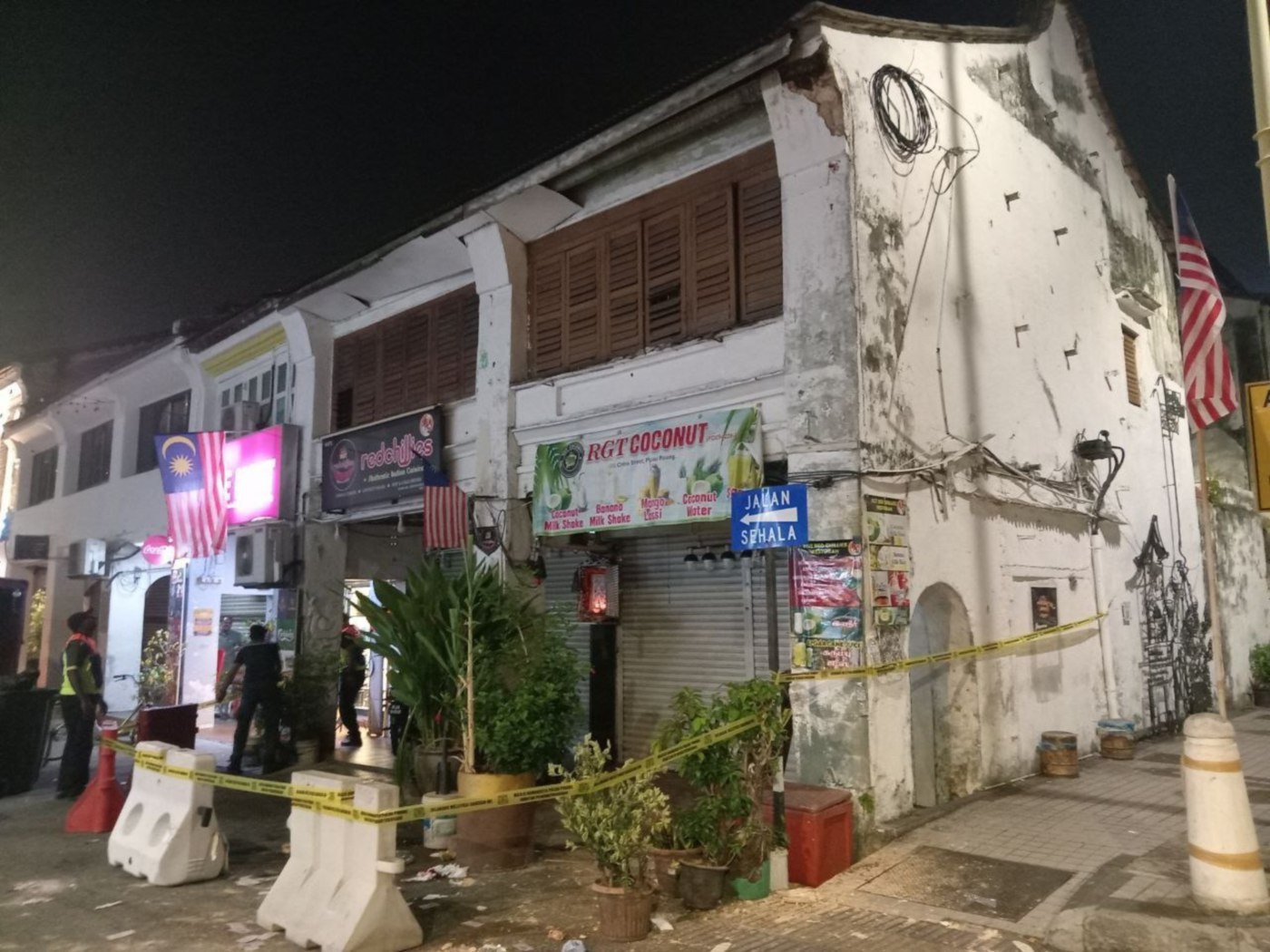
A woman was injured by falling concrete from a heritage building in Lebuh China on September 1.
The incident happened less than a month after two tourists were injured by falling debris from a heritage building on Lebuh Armenian.
That makes this more than an isolated accident.
Another Building Has Failed
The latest incident happened around 11.30pm while people were gathering for the Hungry Ghost Festival.
A connecting cable attached to the building's wall became dislodged, causing part of the structure at a corner of the building to fall and strike the woman. She was taken to hospital for treatment, while MBPP cleared the debris and cordoned off the area.
The incident follows the August 4 collapse at a heritage building on Lebuh Armenian, where a wooden beam and concrete debris fell and injured two Sri Lankan tourists.
An inspection found that the timber beam had been weakened by termite infestation.
Two separate buildings in the same heritage area have now caused injuries within roughly one month.
That deserves more than temporary cordons and debris removal.
The Authorities Already Know the Risk
Penang did respond to the first incident.
On Aug 5, the state government said it would assess the structural safety of heritage buildings across Penang and discuss appointing an independent engineer to identify buildings that were unsafe or at risk.
Two days later, MBPP said it would appoint consultants to conduct structural safety inspections of heritage buildings, starting with buildings showing signs of deterioration or potential safety risks.
MBPP also planned specific inspections of wooden structures for termite damage. Buildings found to be unsafe could be issued repair notices or ordered to be vacated.
MBPP also said it was considering requiring heritage building owners to submit structural assessment reports every two years.
At the time, the council said it had identified 66 poorly maintained heritage buildings in the George Town World Heritage Site, including 63 classified as dilapidated.
Those are not small numbers.
Owners Have A Responsibility
Heritage buildings are privately owned, but ownership does not remove the responsibility to keep them safe.
MBPP's Heritage Conservation Department already has responsibilities that include inspecting development sites, preparing visual structural reports, enforcing action against dilapidated and dangerous buildings, monitoring unsafe buildings and investigating complaints.
George Town World Heritage Incorporated (GTWHI) also monitors conservation work, conducts site visits and provides professional advice to heritage building owners and tenants on repairs and restoration.
The responsibilities therefore exist.
The bigger problem is making sure they translate into action before something falls onto a pedestrian.
Heritage Cannot Come Before Safety
Penang's heritage buildings are an important part of George Town's identity.
That is exactly why they need proper maintenance.
Preservation cannot mean keeping an old facade standing while its structural condition is ignored. Heritage conservation has to include the safety of the people who live, work and walk around these buildings.
The George Town Special Area Plan already serves as a conservation management plan for the World Heritage Site and provides guidance on the repair, conservation and maintenance of heritage buildings.
The state also recognises that some owners may struggle to pay for necessary repairs.
State executive councillor Wong Hon Wai said after the August incident that advisory support, assistance and enforcement needed to work together, and that GTWHI had been asked to look into providing more assistance to pre-war house owners.
That support matters.
But financial difficulty cannot justify leaving a dangerous building next to a busy public walkway.
The Next Step Must Be Measurable
Penang now needs to show what has happened since the first incident.
The state should publish the results of the inspections, including how many buildings have been assessed, how many were found to be unsafe, how many owners received repair notices and how many buildings require structural or termite-related work.
It should also be clear how many owners have completed the required repairs.
These figures will show whether the measures announced after the first incident are actually working.
Penang does not need to wait for a third incident before answering them.
The latest injury does not mean every heritage building in George Town is dangerous. It does show that deterioration in some buildings is already serious enough to injure members of the public.
The goal should not be to shut down heritage buildings but to make sure they remain standing safely.
Penang has invested heavily in protecting George Town's heritage status. That protection should extend beyond preserving what these buildings look like.
It should also protect the people walking beneath them.