
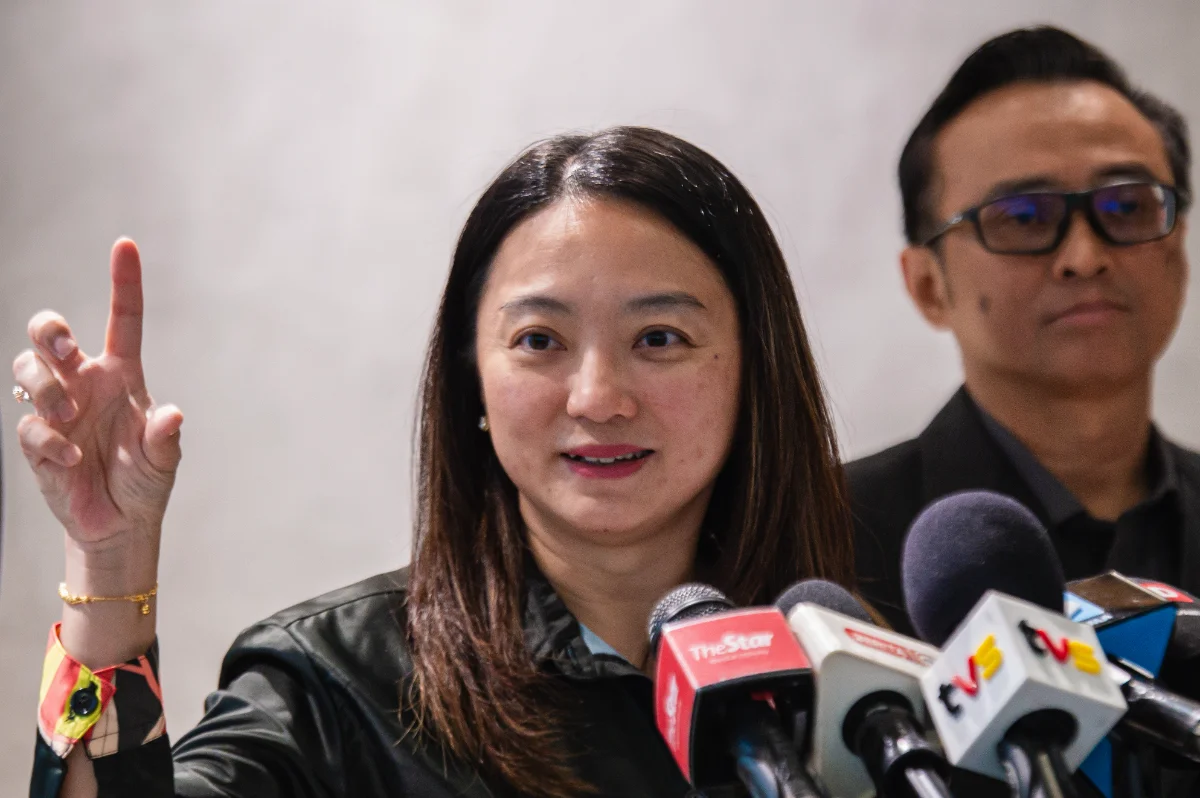
On September 2, 2026, Minister in the Prime Minister's Department (Federal Territories) Hannah Yeoh confirmed that she and her husband, Ramachandran Muniandy, had divorced after 18 years of marriage.
The announcement came not through a press conference, not through a dramatic social media post, but through a simple update to the "About Me" section of her personal website. A single sentence, written in the third person: "They divorced after 18 years of marriage in 2026".
It was about as low-key as a public figure could possibly make it. And yet, within hours, the headlines exploded.
The Media Frenzy
Every major news outlet ran the story. Sin Chew Daily, The Star, Malay Mail, The Vibes, Sinar Harian — all of them reported the same facts. The couple married in 2008. They have two daughters, born in 2011 and 2013. They divorced in 2026. The same details, repeated across every platform.
There was no scandal. No allegations of wrongdoing. No dramatic backstory. Just a divorce between two people who had been together for nearly two decades. The kind of thing that happens every day, to ordinary people, all over the world.
But Yeoh is not ordinary. She is a federal minister. She is a DAP deputy secretary-general. And in Malaysia, that means her personal life is apparently public property.
The Double Standard
Her press secretary, Ahmad Fazli, asked for space. "There would be no further information at this time," he said. It was a clear, reasonable request. And it was promptly ignored.
Lawyer Kiang Jau Sang stepped forward to urge the public to refrain from speculation. "This is a private matter and we shouldn't jump into conclusions. Instead, we need to give them space," he wrote. Others echoed the sentiment. "The world of politics is already hard enough. Respect Hannah Yeoh's personal space," wrote Mastura Yazid.
But the media kept reporting. Comment sections filled with speculation. Social media users debated the reasons, the implications, the politics of it all.
The Social Media Pressure
Politicians are human beings. They fall in love. They fall out of love. They marry. They divorce. They experience joy and grief and everything in between — just like the rest of us. The only difference is that their private moments are dissected, analysed, and broadcast to millions.
The pressure is immense. Every relationship is scrutinised. Every personal decision is politicised. Every private struggle becomes a public spectacle.
Nowadays, everything is on the grid. Eventually, everything will be. And that is precisely the problem.
When public figures cannot navigate personal challenges without the weight of social media pressure, something has gone wrong. When a simple divorce becomes front-page news, something has gone wrong. When a minister cannot update her own website without sparking a media frenzy, something has gone wrong.
It is understandable that people are curious about public figures. But curiosity is not entitlement. Interest is not ownership. And public service does not mean surrendering every aspect of private life to the public gaze.
Where Is the Line?
There is a legitimate public interest in a minister's professional conduct. There is a legitimate interest in policy decisions, in governance, in the management of public funds. But there is no legitimate public interest in the details of a private divorce.
Yeoh did not ask for sympathy. She did not ask for privacy in the dramatic way that some public figures do — through emotional statements or tearful press conferences. She simply updated her website, as millions of people do, and moved on.
The media should have done the same.
At the moment, media should stop poking into Hannah's personal life. That is the one thing she asked for. It is not a complicated request. It is not an unreasonable demand. It is a basic recognition that some things are nobody's business but her own.
Hannah Yeoh’s Personal Space
Hannah Yeoh's divorce is her own. It is not a political issue. It is not a public scandal. It is a personal matter between two people who have decided to go their separate ways after 18 years.
The media's frenzy says more about us than it does about her. It says that we have become a society that consumes private pain as entertainment. It says that we have forgotten the difference between public interest and public intrusion. And it says that we have lost sight of the simple fact that politicians are people too.
They deserve the same grace we would extend to anyone else going through a difficult personal transition. They deserve space to heal without the glare of public scrutiny. They deserve the basic dignity of a private life.
The news cycle will move on. The headlines will fade. But the question remains: the next time a public figure faces a personal challenge, will we treat it with the respect it deserves — or will we turn it into another spectacle?