
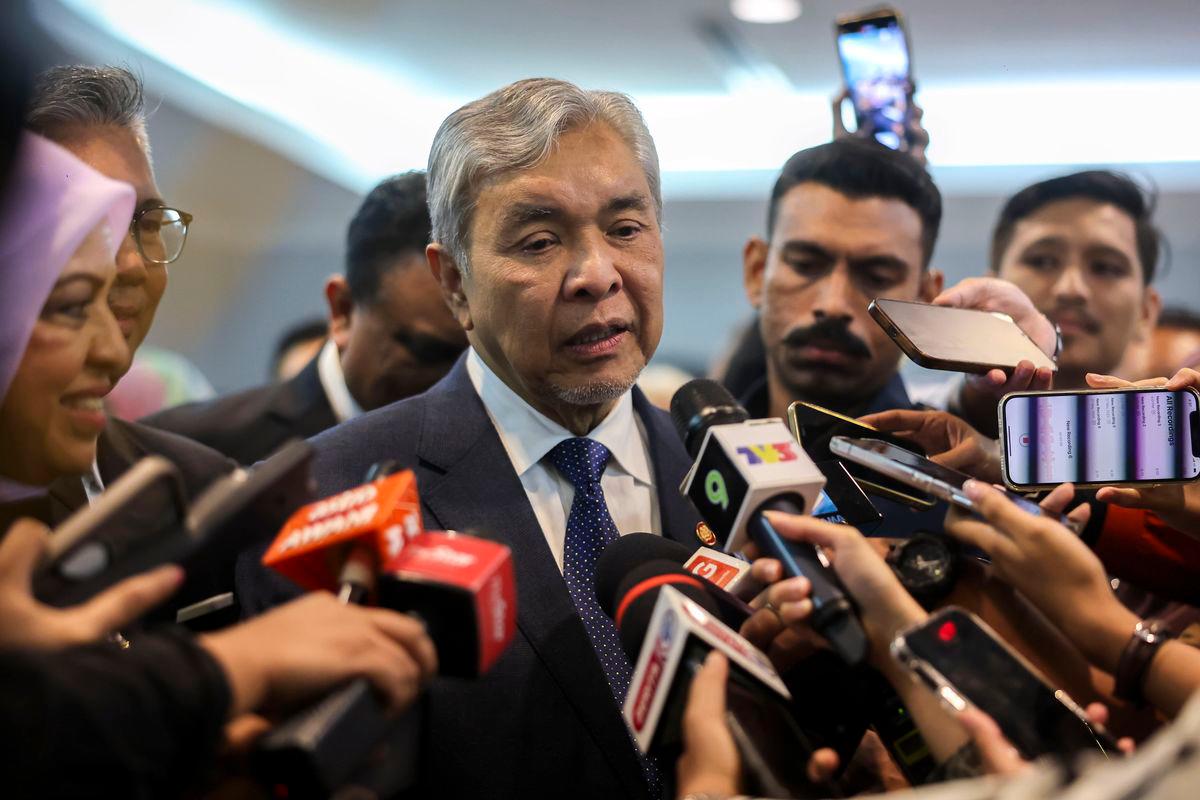
Deputy Prime Minister Zahid Hamidi and UMNO Youth chief Akmal Saleh are furious. They claim the Rural and Regional Development Ministry's (KKDW) funds aren't being transferred. Contractors are going unpaid. Projects are stalling. Rural communities are being left behind.
But here is what the data actually says.
The Overbudget Numbers
The Treasury secretary-general, Tan Sri Johan Mahmood Merican, has confirmed what the numbers make clear: KKDW has consistently overcommitted its annual budget for rural road projects over the past four years .
The figures are stark :
- 2022: RM1.1 billion allocated, RM1.1 billion spent — exactly on budget.
- 2023: RM1.1 billion allocated, RM1.8 billion spent — an overspend of RM700 million.
- 2024: RM1.3 billion allocated, RM2 billion spent — an overspend of RM700 million.
- 2025: RM1.6 billion allocated, RM2.3 billion spent — an overspend of RM700 million.
For 2026, Parliament approved a RM2.1 billion allocation. By June, the ministry had already spent RM1.9 billion — nearly 90 per cent of its annual budget in just six months . By September 1, that figure had climbed to RM1.995 billion, or 94 per cent of the allocation .
Over four years, the ministry overspent by a staggering RM2.1 billion.
So when Zahid, who is also the Rural and Regional Development Minister, complains that contractors aren't being paid , he is not wrong. But the cause is not Treasury blocking funds. The cause is a ministry that has been spending money it does not have.
Two Sides of the Same Coin
There are two ways to look at this.
On one hand, the money is going to rural communities that genuinely need it. Roads. Water supplies. Community projects. Development programmes meant to lift rural communities out of poverty. Contractors did the work. They deserve to be paid. Much of the backlog also stems from pandemic-era delays, when construction was halted and projects fell behind schedule . As construction resumed, payment claims piled up.
The ministry has argued that it requires about RM4 billion annually to ensure the continued implementation of ongoing rural road projects and newly approved ones . It has also pointed out that rural road development is not merely about physical infrastructure — good road connectivity affects children getting to school, residents seeking medical treatment, farmers transporting produce, and traders carrying out economic activities .
These are not unreasonable arguments. Rural communities have been neglected for decades. Development is overdue.
On the other hand, a ministry cannot simply spend beyond its approved budget. Parliament approves allocations for a reason. Treasury itself has warned that every ministry is responsible for planning and managing its expenditure based on the annual budget approved by Parliament .
"If every ministry did this, the country's finances would collapse," a Treasury official might say. And they would be right. There must be discipline. And discipline appears to have been absent.
The Governance Failure
This brings us to the biggest question of all: how does a ministry overspend by over RM2 billion without being flagged?
The Treasury has approved an additional RM300 million allocation for 2026 to help settle outstanding payments to contractors . It is also identifying savings from other ministries to help cover KKDW's excess commitments . But bailouts are not a solution. They are a symptom of a deeper problem.
If the ministry can overspend so freely, it raises uncomfortable questions. Are the funds actually reaching the rural communities they are meant for? Or is there a deeper problem — one where oversight is weak, contracts are mismanaged, and the system has been quietly compromised?
Zahid's office has rejected the Treasury's version as misleading, arguing that payments are for contractual obligations and pandemic-era arrears . The ministry itself has denied that it spent beyond its approved allocation, questioning the Treasury secretary-general's statement .
But the numbers speak for themselves. The ministry is spending more than it has. Contractors are waiting. Rural communities are waiting. And the public is left wondering: is this genuine development — or a system that has been quietly compromised?
The Path Forward
Zahid has announced "Operation Zero Delay" for the remaining four months of the year, focusing on immediate resolution of projects, payments, land issues, utilities, contracts, assets, and pending decisions . This is a welcome step. But it addresses the symptom, not the cause.
The root problem is financial discipline — or the lack of it. The government must ensure that no ministry can spend beyond its approved budget without consequences. The Treasury must strengthen its oversight. And Parliament must scrutinise how allocations are being spent, not just approve them.
To be fair, the ministry has acknowledged the need for better coordination. It has said it will continue to work closely with the Finance Ministry, the Economy Ministry, and relevant agencies to ensure that project planning and funding requirements are better coordinated . It has also pledged to manage allocations prudently and responsibly, in accordance with government financial procedures .
The Broader Problem
KKDW is not an outlier. It is a symptom of a broader problem in Malaysian governance — a system where ministries spend without restraint, where oversight is weak, and where accountability is often an afterthought.
The rural communities that need roads and water deserve better. The contractors who did the work deserve to be paid. And the taxpayers who fund these projects deserve to know that their money is being spent wisely.
Zahid is right to be frustrated. Contractors should not be waiting for payments they have earned. Rural communities should not be waiting for infrastructure they were promised.
But the frustration should be directed at the system that allowed this to happen — not at the Treasury that is trying to clean up the mess.
If the government is serious about reform, it must ensure that this does not happen again. That means stronger oversight, better planning, and a commitment to spending within approved budgets. It means holding ministries accountable for their spending — not bailing them out when they overspend.
The RM300 million bailout may solve the immediate problem. But it does not solve the underlying one. And until that is fixed, the cycle will repeat itself.