
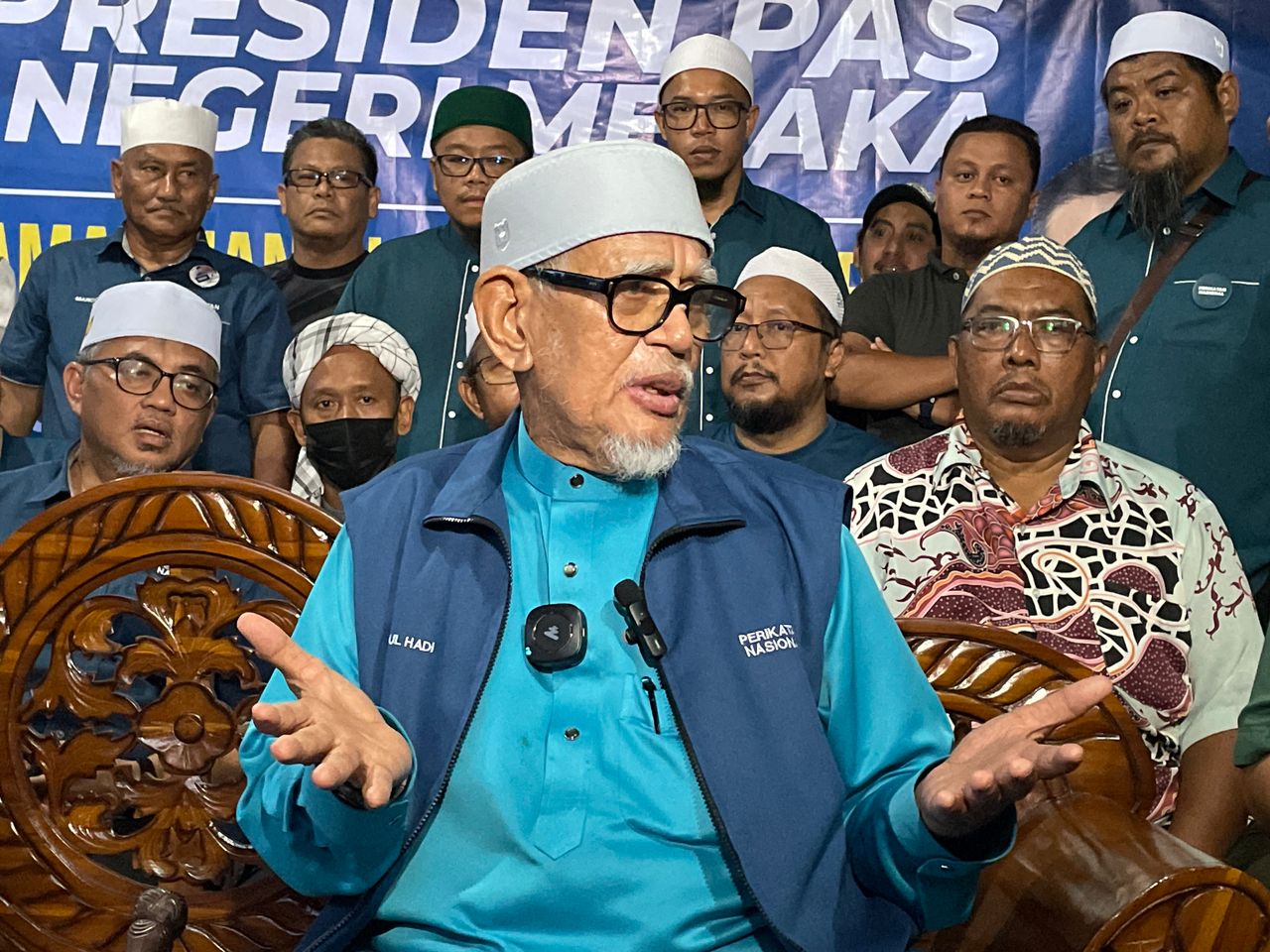
At the PAS Muktamar in Kota Bharu on September 4, party president Tan Sri Abdul Hadi Awang once again reached for a familiar script. He declared that Malaysia's political development is linked to Singapore's People's Action Party (PAP), and that the Democratic Action Party (DAP) is essentially PAP's Malaysian branch.
He argued that PAP established a branch in Malaya while Singapore was part of Malaysia, and after Singapore's separation in 1965, that branch was renamed DAP — but its secular political stance never changed.
It is an old claim. In fact, it is nearly a decade old. In April 2017, Hadi famously described DAP as "droppings" of PAP. He repeated the accusation in various forms throughout 2024, 2025, and now again in 2026. The words change slightly. The intent does not.
Frying the Same Rice
There is a saying in Malaysian kitchens: the best fried rice is made from overnight rice. You take what is left from the day before, toss it in a hot wok, and give it new life. It works for a day. Maybe two. But eventually, the rice becomes dry. It loses its flavour. The more you reheat it, the less appealing it becomes.
PAS's DAP-PAP narrative is exactly that — leftover rice that has been fried and refried so many times it no longer has any taste.
Hadi is not cooking anything new. He is reheating the same accusation, the same framing, the same fear, year after year. The rice was already cold in 2017. By 2024, it was stale. In 2025, it was dry. And now, in 2026, it is practically inedible.
PAS's argument has become a dish that no one with a discerning palate would order. Yet the party continues to serve it, hoping that the familiar aroma will still draw customers. The problem is that the public is no longer hungry for reheated leftovers.
The Historical Context That Never Seems to Matter
Here is the problem with Hadi's narrative: it ignores the historical reality it claims to describe.
DAP was indeed formed by former PAP members who remained in Malaysia after Singapore's separation in 1965. That much is true. But the party has long since evolved into a distinct Malaysian political entity with its own identity, leadership, and policy direction.
DAP leaders have repeatedly stated that the party has no official relations or communications with PAP since Separation. Lim Guan Eng has pointed out the irony of Hadi linking DAP to PAP when PAS deputy president Tuan Ibrahim Tuan Man received a visit from Singaporean officials in 2024.
The historical connection is just that — historical. It does not define DAP's present. It does not dictate its policies. It does not make it a proxy for Singapore or any foreign agenda. Yet Hadi continues to present it as if the party's DNA has remained frozen since 1965.
What This Narrative Actually Achieves
Hadi's repeated invocation of the PAP link serves a clear political purpose. It frames DAP as an alien force — a foreign implant with a secular, "Chinese racial" agenda that threatens Malay-Muslim political dominance. It allows PAS to position itself as the defender of Islam and Malay sovereignty against an external threat.
He has even expanded the narrative to claim that DAP is continuing the work of British colonisers to destroy Malay-Muslims in Malaysia. He has described DAP's "Malaysian Malaysia" vision as "extreme secularism" that contradicts the divine order. He has deployed Quranic verses to argue that Malays are the divinely designated owners of this land.
The accusation is comprehensive. It is also remarkably consistent. The problem is that consistency does not make it true.
The Real Question: Why Keep Repeating It?
The more important question is why Hadi continues to rely on a narrative that has been debunked, challenged, and overtaken by events.
The answer is not complicated. It works — or at least, it has worked well enough. For PAS's core base, the DAP-PAP link serves as a useful shorthand for everything they distrust about the opposition. It frames political competition as a battle between Malay-Muslim interests and foreign, secular, Chinese-aligned forces. It mobilises support without requiring detailed policy debate.
But there is a cost. By continually reaching for the same decades-old accusation, PAS reveals its inability to engage with contemporary political realities. The party is fighting yesterday's battles with yesterday's weapons, while the country has moved on.
As Anwar Ibrahim noted in 2022, Hadi remains obsessed with racial issues while the public is more concerned about the economy. The accusation is stale. The narrative is tired. And the voters who care about jobs, education, healthcare, and governance are increasingly tuning out.
Why Keep Reheating the Same Meal?
Hadi Awang has every right to criticise DAP. Political competition demands it. But there is a difference between legitimate criticism and recycled rhetoric.
When a party leader repeats the same accusation for nearly a decade, it is worth asking: is this about informing the public — or is it about avoiding the hard questions? Is it about presenting an alternative vision for Malaysia — or is it about maintaining a narrative that requires no evidence, no update, and no accountability?
The DAP-PAP link is a historical footnote, not a current threat. Hadi's repeated invocation of it does not strengthen PAS's argument. It weakens it. It suggests a party that has run out of new ideas, a leadership that has nothing fresh to offer, and a movement that would rather fight old battles than address new challenges.
Malaysia has changed since 1965. Since 2017. Since last year. Perhaps it is time for Hadi's narrative to change too.