
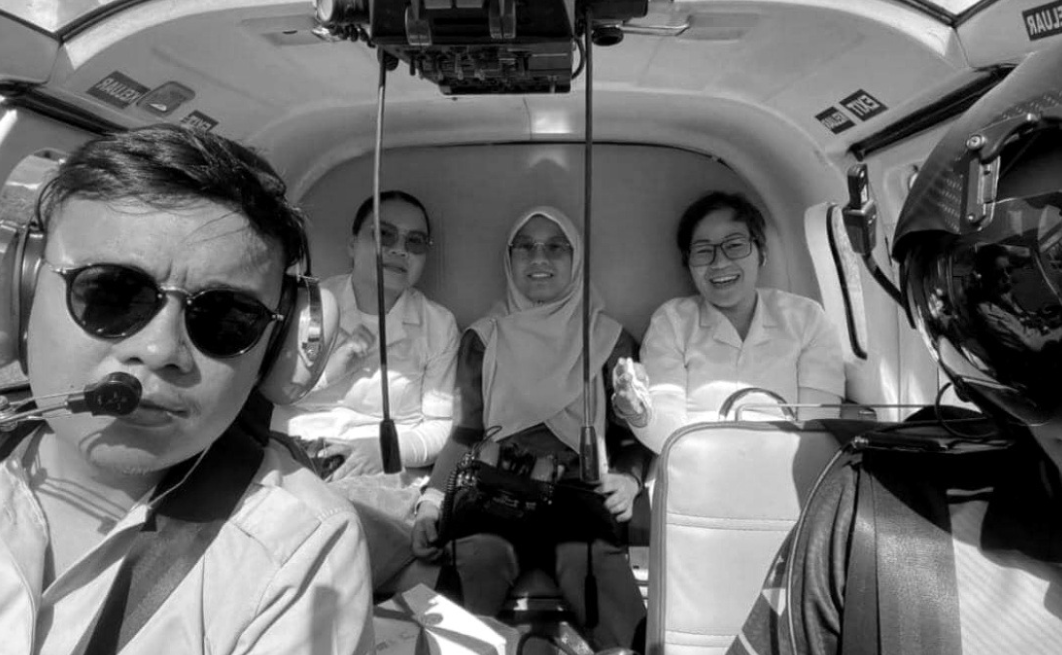
A BO-105 helicopter carrying five people crashed near Long Lellang on Sept 8 while operating a Flying Doctor Service flight from Miri to remote communities including Ba Lai, Long Siut and Long Lellang.
The crash raises serious questions about the safety and reliability of Sarawak’s Flying Doctor Service, which serves communities with limited access to healthcare by road or river.
The investigation must examine the aircraft, operator, operating conditions and surrounding infrastructure, with its findings translated into concrete improvements to the service.
The service remains essential
Sarawak's geography makes healthcare delivery in its interior exceptionally difficult.
The Flying Doctor Service was introduced in Sarawak in 1973 to reach communities that could not be easily accessed by road or river. More than five decades later, it remains a critical part of the state's healthcare system.
Today, 97 remote localities across Kapit, Miri and Limbang require FDS coverage. For these communities, FDS is not a convenience. It is a vital link to healthcare.
The answer to the crash therefore cannot be to simply reduce the service. It must be to make the system safer and more reliable.
Investment must deliver results
The government has already invested heavily in expanding healthcare access beyond conventional facilities.
Sarawak currently has 97 mobile health teams covering 1,005 localities and around 102,267 people in rural and remote areas. The state has also expanded mobile clinics and upgraded rural healthcare facilities.
Digitalisation is part of that effort.
As of May 2026, 176 primary healthcare facilities, or 65.2%, had been digitalised, with 94 facilities still pending. Sarawak has also allocated RM10 million for digitalising public health clinics and upgrading older facilities.
These investments show that rural healthcare access is already a government priority. The Long Lellang crash should now prompt the same scrutiny of the infrastructure supporting healthcare by air.
Does the Flying Doctor Service have enough aircraft, maintenance support and operational backup to serve remote communities safely and consistently?
If the answer is no, that gap needs to be addressed.
Capacity and safety cannot be separated
The service covers 97 remote localities, yet some communities receive visits only once every two months. When aircraft are unavailable, those communities have limited alternatives.
This makes operational resilience a healthcare issue, not simply an aviation issue.
The government needs contingency arrangements that prevent aircraft disruptions from automatically becoming healthcare disruptions.
That could include backup aircraft and clear procedures for rescheduling essential visits when weather, maintenance or other operational problems prevent a flight.
Safety must receive the same level of attention.
FDS aircraft operate in some of Malaysia's most remote and challenging terrain. The type of aircraft involved in the crash also deserves scrutiny.
Senator RA Lingeshwaran has called for the temporary grounding of all BO-105 helicopters pending confirmation of the crash's cause.
The helicopter involved was reportedly built in Germany in 1991, making it about 35 years old in 2026, although age alone does not establish that it is unsafe.
The investigation should determine whether the aircraft, its maintenance history, operator practices or other operational factors contributed to the crash, while also reviewing pilot requirements, emergency procedures and landing facilities.
Contracted aviation operators must also be held to rigorous and transparent safety standards throughout their contracts. If shortcomings are identified, corrective action must follow.
Build alternatives without abandoning FDS
Helicopters cannot be the only answer to rural healthcare access indefinitely.
Where populations and geography allow, permanent clinics provide a more stable form of healthcare delivery. Mobile clinics can reach smaller communities, while telemedicine and digital systems can connect rural healthcare workers with specialists without requiring every consultation to involve a flight.
The government has already invested in these systems.
Those investments should be targeted at communities where they can reduce dependence on air access while preserving FDS for places that genuinely cannot be reached otherwise.
The goal is to build a healthcare network where FDS is supported by other forms of care rather than carrying the entire burden of rural healthcare access.
Strengthen the system
The Long Lellang crash should not become a reason to scale back the Flying Doctor Service. It should become a reason to strengthen the system around it.
That means reliable funding for aircraft, maintenance, medical supplies, communications, emergency equipment and trained personnel. It also means stronger contingency arrangements and practical alternatives for communities that can be served without relying entirely on air access.
Sarawak's geography cannot be changed, but the reliability of its healthcare system can.
As the investigation continues, the five lives lost in the Long Lellang crash must remain at the centre of the conversation. They were people carrying out a vital service for communities that needed them.
Their loss deserves a thorough investigation, accountability where necessary and meaningful improvements to the system they were serving.