
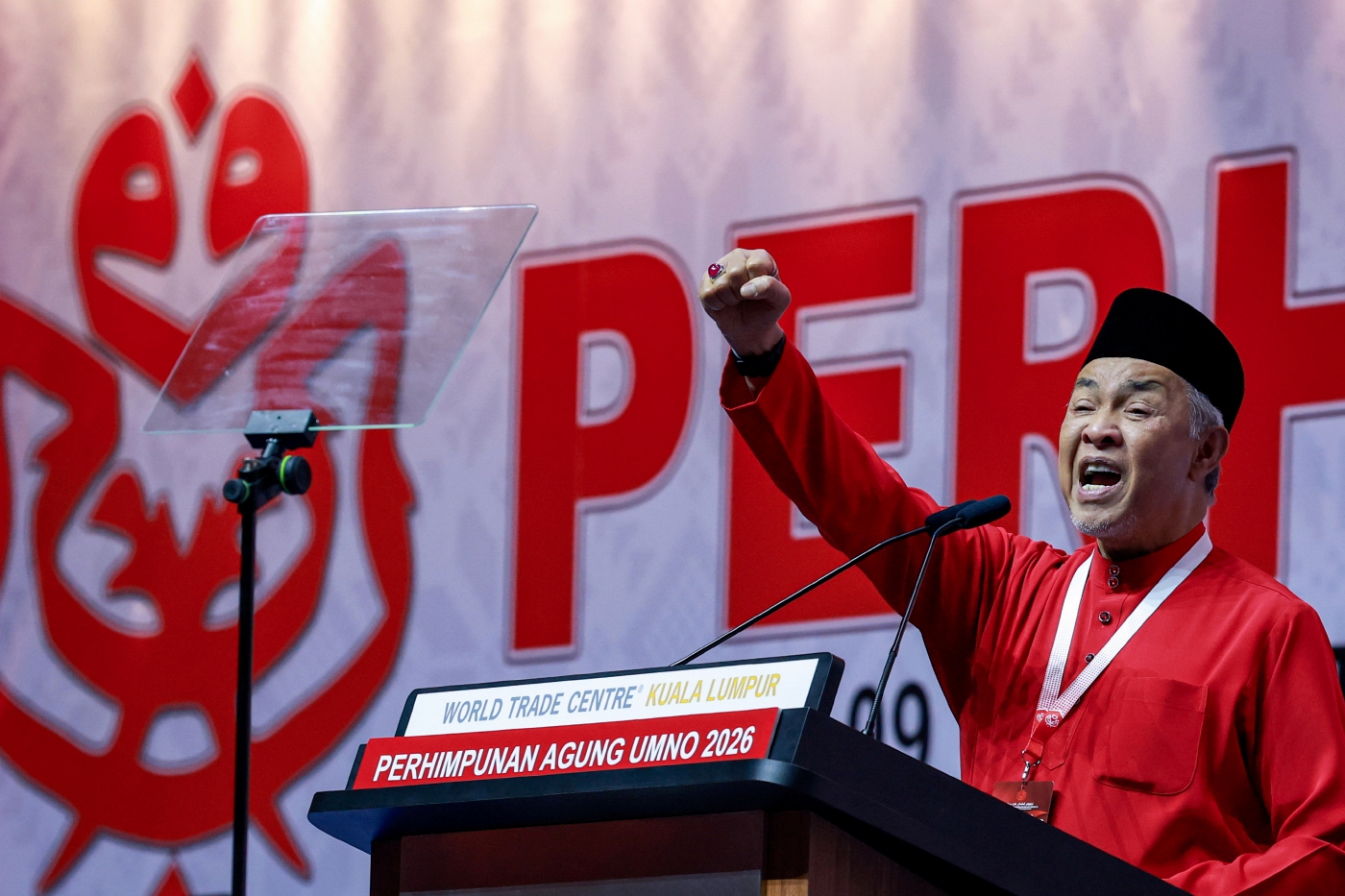
At the 2026 UMNO General Assembly, party president Datuk Seri Ahmad Zahid Hamidi pledged that UMNO would safeguard the rule of law and ensure government bodies are never used as tools of political persecution.
The commitment sounds meaningful. Coming from the leader of a party that governed this country for six decades, it also invites a question the party has never adequately answered.
If these reforms are so important, why didn't UMNO implement them when it had the power to do so?
UMNO did not need opposition support for most of its tenure. It had the majority. It had the mandate. It had machinery. From 1957 to 2018, with a brief interruption, UMNO and its coalition partners controlled Parliament, the executive, and the institutions that Zahid now says must be protected. There was no political obstacle to reform. There was only a political choice not to pursue it.
The Reforms That Never Came
The Attorney-General and Public Prosecutor have been combined since before Independence. For over sixty years, the same office has served as both the government's legal adviser and the country's chief prosecutor. This concentration of power was never reformed by UMNO, even as similar jurisdictions separated the roles decades ago.
The bill to split the two offices is now before Parliament. It requires UMNO's votes. Why did UMNO never bring this bill itself?
Political financing has never been regulated. Malaysia has no law governing how political parties receive, record, or disclose donations. There are no caps. No disclosure thresholds. No independent oversight. UMNO ruled for six decades without introducing a single comprehensive political financing law. The opposition demanded one repeatedly.
The government ignored it repeatedly. Now the party says it wants to protect the rule of law. A political financing law is the most basic building block of that protection. Where was UMNO's support for it?
The MACC was created by UMNO with executive control built in. The Malaysian Anti-Corruption Commission was established in 2009 under UMNO's government. Its leadership is appointed by the executive. Its prosecutorial decisions run through the Attorney-General's chambers.
Reforms to make it institutionally independent — fixed tenures, parliamentary oversight, independent prosecutorial powers — have been proposed for years. UMNO controlled the agency's structure for over a decade. Why did it never loosen its grip?
Constituency allocations have always favoured the ruling party. For sixty years, government development funds flowed through elected representatives, which meant opposition constituencies received less.
It was used to reward loyalty and punish dissent. UMNO built that system and maintained it. Now Zahid says institutions should not be used politically. What about the most visible, most routine political use of public resources in the country?
Government procurement was never made transparent. Direct negotiations, limited tenders, and classified contracts became standard practice under UMNO's watch. The Auditor-General's reports have documented irregularities for decades. Each year, the findings are published, debated briefly, and then forgotten.
The procurement system that allowed the Rural and Regional Development Ministry to overspend by RM2.1 billion was built during UMNO's time in power. The culture of impunity that enables it was cultivated over decades.
The prime minister's term limit was never proposed. Not by UMNO. Not by any of its leaders. The bill to cap the office at ten years is the product of the current government, not the party that ruled for six decades.
The next time someone suggests a prime minister should step down after a decade, ask whether UMNO would have supported such a limitation when Mahathir Mohamad was in his fifteenth year, or his twentieth.
The Pattern Is the Point
Every reform Zahid now promises to protect was available to UMNO for sixty years. Every institution he says must be safeguarded was shaped by UMNO's hands. Every abuse he says must be stopped was permitted under UMNO's watch. The party did not lack the power to act. It lacked the incentive.
That incentive only arrived when UMNO lost power. When the party was no longer the primary beneficiary of the system, it discovered a sudden enthusiasm for reforming it. This is not unusual. Opposition parties everywhere discover virtues they ignored while governing. But it should inform how seriously we take those virtues now.
A party that could have acted and chose not to is asking to be trusted again. That request deserves scrutiny, not applause.
What Real Reform Would Look Like
If UMNO is genuinely committed to the rule of law, there is a way to prove it that does not require another speech.
The party can support the AG/PP separation bill when it comes to a vote. It can co-sponsor political financing legislation. It can back MACC reforms that reduce executive control. It can endorse an allocation formula based on need rather than political affiliation. It can support procurement transparency measures. It can vote for the prime minister's term limit.
None of these require UMNO to accept blame for the past. They require only that the party act differently in the present. That is the test. Not rhetoric. Votes.
Asking For Trust Again
Zahid's pledge is welcome. It is better to hear a party promise to protect institutions than to hear it promise to use them. But promises made in 2026, by a party that ruled for sixty years, are not the same as commitments made when the cost is real.
UMNO has spent decades telling Malaysians to trust it with power. Now it is asking again. The question is not whether its leaders mean what they say. The question is whether they ever had the chance to do these things before — and whether they simply chose not to.
They did. And they didn't.
That is the record. And that is the standard by which the next vote should be measured.