
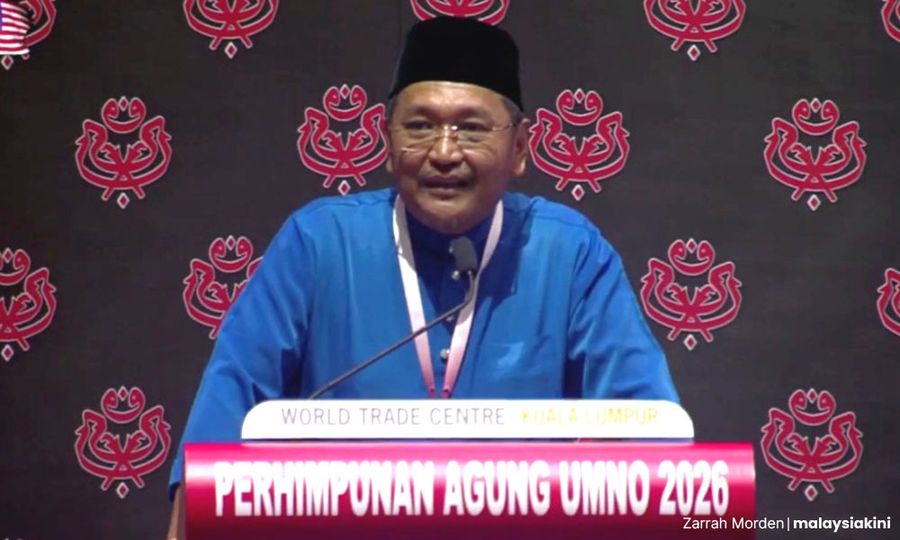
What Sepang Umno chief Noorazli Said delivered at the Umno General Assembly was not merely a joke in poor taste.
It was a sexually suggestive story involving a Catholic priest and a nun. It portrayed unwanted touching as humour. It invented a passage from Psalm 129 that does not exist. And it used the sacred figures and scripture of another faith as entertainment before the national assembly of a major political party.
Every part of it was disrespectful.
Noorazli has since apologised “if” his remarks caused misunderstanding or offence. That is not accountability. It suggests that the problem lies in how Christians interpreted his words, rather than in his own decision to utter them.
There was no misunderstanding.
The joke was vulgar. The biblical reference was false. Catholic clergy were sexualised. A woman being touched without consent was reduced to a punchline. All of this was done from Umno’s national stage to praise the supposed political wisdom of its president.
No amount of explaining that it was merely an “analogy” makes it less offensive. In fact, claiming that the joke was widely available on YouTube only makes the excuse more ridiculous. Political leaders are expected to exercise judgment, not repeat every piece of rubbish they find online.
The Catholic Lawyers’ Society of Kuala Lumpur has announced that it will lodge a police report, arguing that the remarks demeaned Catholic clergy and distorted sacred scripture. It has also raised possible implications under laws concerning religious disharmony and offensive online content.
But this issue is larger than Noorazli’s personal apology.
It is also about Umno’s failure to understand the gravity of what happened on its own stage.
Calling for an apology after public outrage is the bare minimum. It does not answer why a divisional chief and state party treasurer believed such material belonged at the party’s most important annual gathering. It does not explain what standards Umno imposes on its leaders. Nor does it tell Malaysians whether any disciplinary consequences will follow.
If the same sexual joke had been made about an imam, a Muslim woman and a fabricated Quranic verse, would Umno accept “I did not intend to offend” as a sufficient explanation?
Of course not.
Respect for religion cannot operate according to who holds the political majority. A party cannot demand absolute sensitivity towards one faith while treating another faith as material for cheap laughter.
Christians should not have to repeatedly explain why their scripture is sacred. Catholics should not have to defend the dignity of their priests and nuns. Women should not have to explain why unwanted touching is not funny.
An apology may acknowledge that harm occurred. It cannot erase the judgment that produced it.
Political parties must stop treating apologies as reset buttons: offend first, wait for public anger, issue a carefully qualified statement and then carry on as though nothing happened. Without consequences, the apology becomes public-relations damage control rather than genuine accountability.
Malaysia does not merely need politicians who know when to apologise. It needs politicians who possess enough decency and judgment not to cross such obvious boundaries in the first place.
Noorazli’s remarks should be investigated. Umno should explain what action it will take. Most importantly, voters must be prepared to reject political figures and parties that repeatedly exploit, distort or ridicule the faith of others.
Religious harmony is not protected through ceremonial statements after someone has crossed the line. It is protected by making clear that politicians who cross it will pay a political price.