
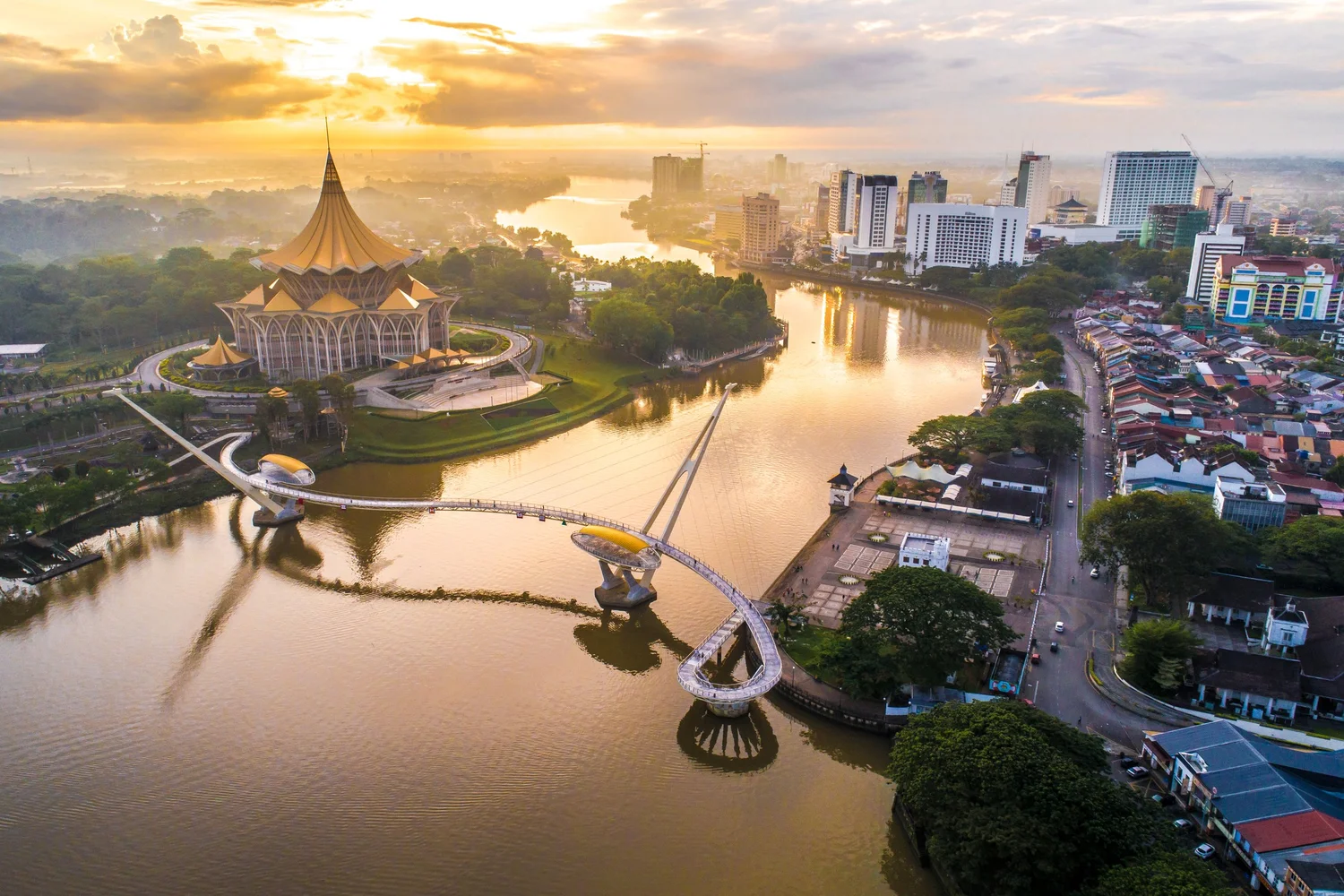
At the Borneo Convention Centre in Kuching on September 16, Prime Minister Anwar Ibrahim marked Malaysia Day by announcing that Sarawak's interim special grant would be raised from RM600 million to RM1.5 billion effective this year. He described it as a gesture of "solidarity, friendship and the spirit of Malaysia".
What the Grant Actually Is
The interim special grant is not a discretionary handout. It is a constitutional obligation under Article 112(D) of the Federal Constitution. Sarawak has been claiming a 40 percent share of revenue derived from its territory — a formula that has never been fully honoured since Malaysia was formed.
The RM1.5 billion is a step toward settling that claim. It is not the final formula. Anwar has said discussions on a permanent arrangement will continue, and that both Petronas and Petros have been instructed to expedite their commercial agreement — a key condition for Sarawak's broader revenue ambitions.
For Sarawak, the money will go toward development: rural infrastructure, utilities, and the state's own priorities. But the more important outcome may be the precedent. A federal government that acknowledges a constitutional debt to one state sets a standard for others.
Beyond the Money
The grant is not the only MA63 development worth noting.
The Bintulu Port was officially handed over to Sarawak, to be fully operated by the state. This transfers control of a strategic national asset to the state that hosts it — a recognition that Sarawak's resources should benefit Sarawak first.
The Borneonisation of the public service has also accelerated. Sarawak has surpassed its 80 percent target for locals filling key federal positions. Sabah is approaching 70 percent, with a target of 90 percent. For decades, federal departments in Borneo were led by officers from Peninsular Malaysia. That is changing.
And the government has agreed in principle to increase Sabah and Sarawak's parliamentary representation — a constitutional amendment that would restore the one-third share the Borneo states held when Malaysia was formed. The Cabinet approved the move in principle, though the mechanism remains under discussion with the Election Commission.
Why This Matters
For six decades, MA63 was treated as a grievance to be managed, not a commitment to be honoured. Announcements were made. Committees were formed. Reports were written. But the structural changes that would make the agreement meaningful were deferred, delayed, or diluted.
The Madani government has taken a different approach. It has not solved every problem. But it has moved on the issues that matter — the grant, the port, the public service, the parliamentary seats. And it has done so in a way that treats Sabah and Sarawak as partners, not supplicants.
Anwar has framed the push as a national commitment rather than a regional grievance. "Discussions on MA63 must become part of the national narrative instead of being viewed as an issue concerning only Sabah and Sarawak," he said. "This is a national commitment about development, stability, and the commitments we made at independence".
That is the right framing. Malaysia was not formed as a federation of convenience. It was formed as a partnership of equals. The Borneo states did not join Malaysia to be governed from Kuala Lumpur. They joined to build a nation together.
What Comes Next
The interim grant is just that: interim. The 40 percent formula remains unresolved. The parliamentary seat increase requires a constitutional amendment that has not yet been drafted. Borneonisation is advancing but has not reached parity.
But the direction is clear. The momentum is real. And the government has shown that it is willing to act.
For Sarawak, RM1.5 billion is a significant sum. But it is also a signal — that the federal government understands its obligations, and that it intends to fulfil them.