
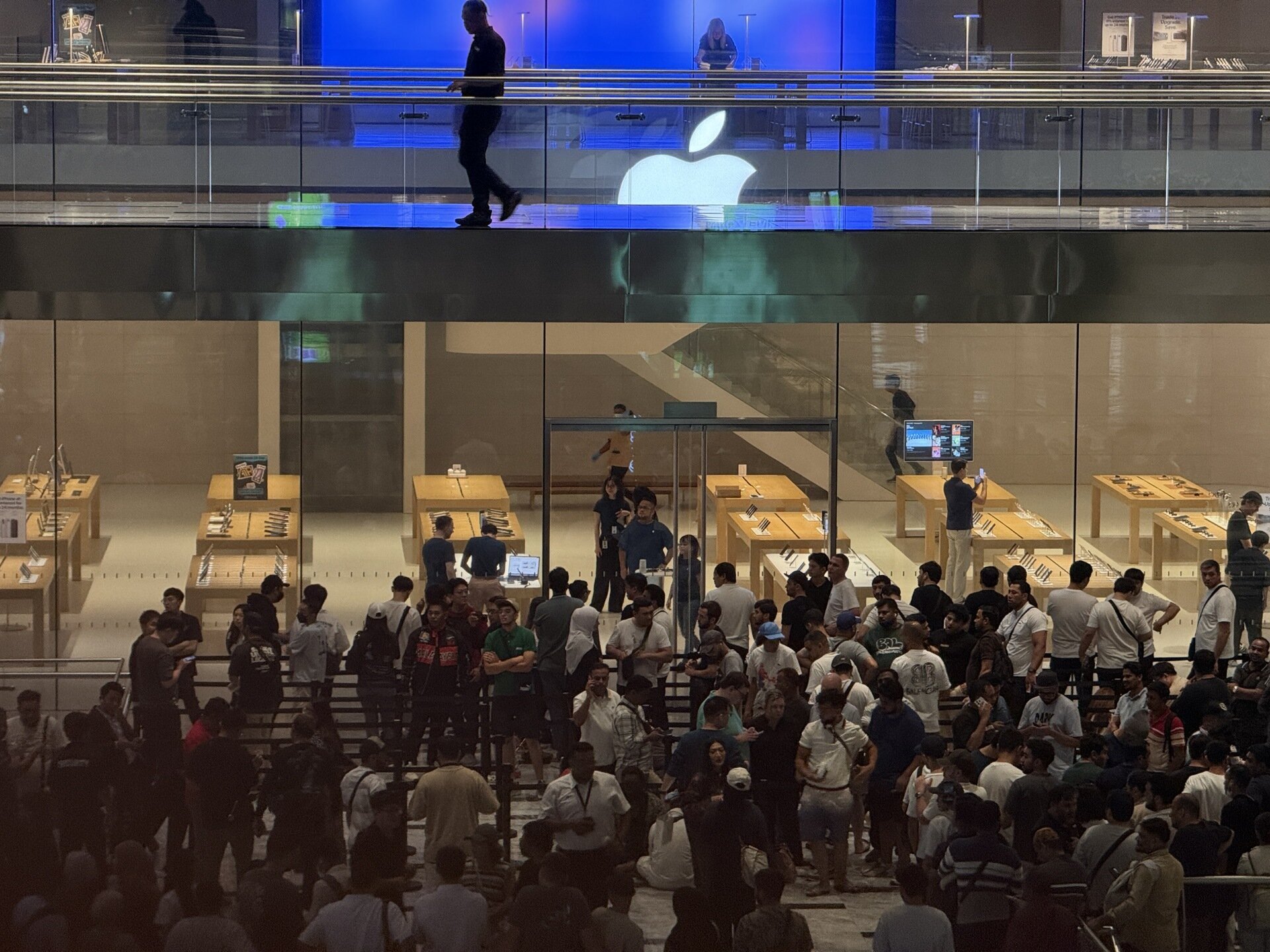
At The Exchange TRX on Friday, September 18, the first customer for Apple's new iPhone 18 Pro series arrived at 4.30am, hours before the store opened at 8am. A large crowd followed for pre-order collections and walk-in purchases.
The iPhone 18 Pro starts at RM5,499 for 256GB and reaches RM11,499 for the 2TB model. The Pro Max ranges from RM5,999 to RM11,999.
According to the Department of Statistics Malaysia, Malaysia's median monthly gross household income was RM7,017 in 2024.
Household income is not individual income, and a queue at a premium shopping district is hardly representative of the average Malaysian household.
Still, the launch comes at a time when Malaysia's wider economic indicators have been strengthening.
The economy grew 6.0% year-on-year in the second quarter of 2026, accelerating from 5.4% in the first quarter. Growth for the first half of the year stood at 5.7%.
Household spending continued to expand as well. Private final consumption expenditure grew 4.8% year-on-year in the second quarter, compared with 4.7% in the previous quarter, driven mainly by spending on restaurants and hotels, transport, food and non-alcoholic beverages, and communication.
The iPhone queue does not prove that Malaysians as a whole are becoming wealthier. It does, however, offer a visible example of discretionary spending taking place alongside continued growth in private consumption.
Beyond consumers, other parts of the economy have also recorded strong numbers.
Malaysia's total trade reached a record RM2.16 trillion from January to July 2026, up 24.7% from the same period last year. Exports increased 29.2% to RM1.165 trillion, while the trade surplus more than doubled to RM170.5 billion.
Approved investments reached RM218.5 billion in the first half of the year, an increase of 11.7% year-on-year. Foreign investment accounted for RM126.9 billion, up 18.5%. These are approvals rather than investments already fully realised, but they provide another indication of investment activity in the pipeline.
So, what does a 4.30am iPhone queue actually tell us?
It shows that Malaysia has a segment of consumers willing and able to spend substantially on premium discretionary products.
That anecdote becomes more meaningful when placed beside the broader numbers. An economy growing 6.0%, household consumption still expanding, record trade and rising approved investment.
The queue itself is not an economic indicator.
But it is one small, highly visible scene playing out inside an economy that, according to the latest data, is continuing to expand.