
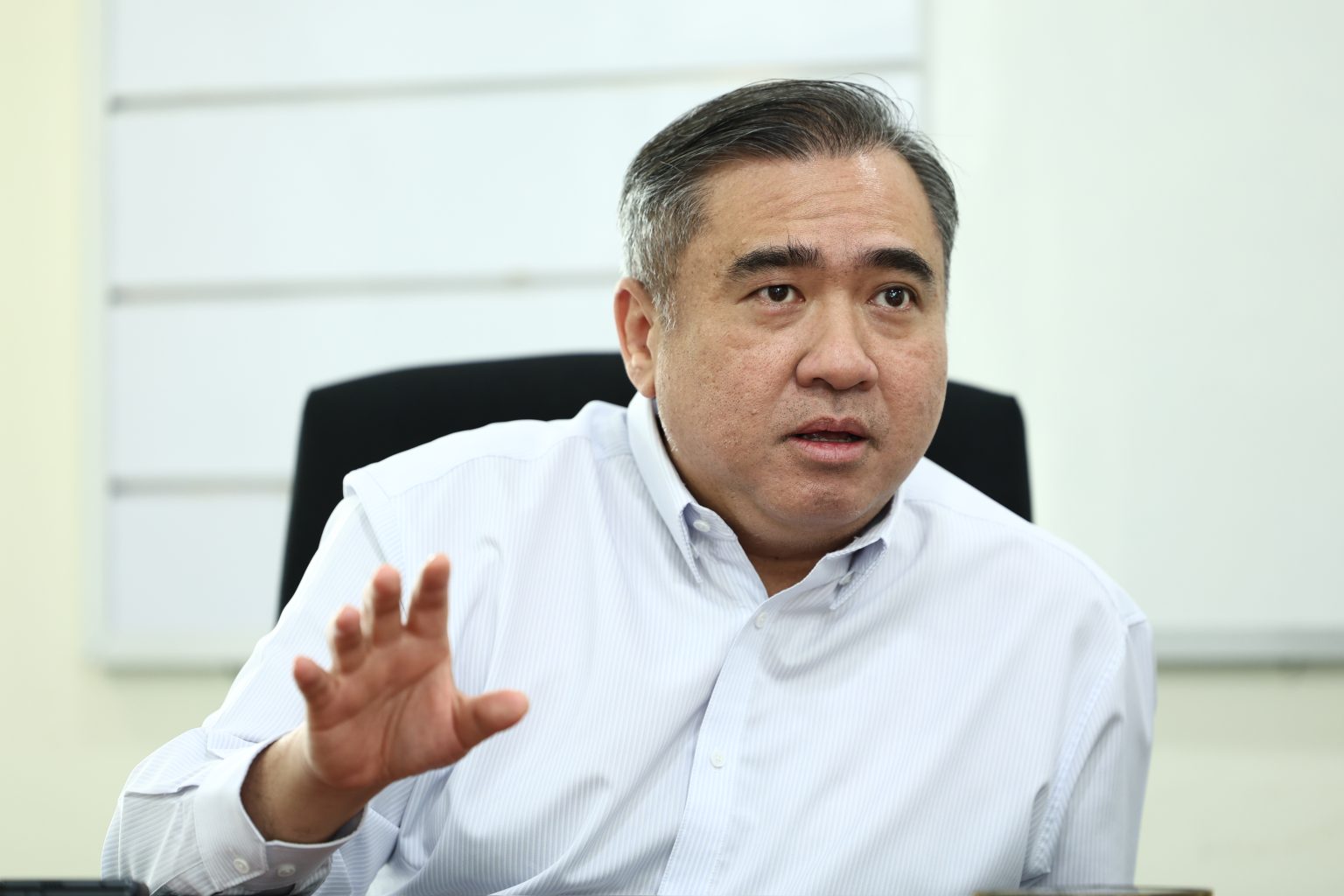
Most politicians resign when there is little left to hold on to.
Anthony Loke is doing the opposite.
He did not lose the DAP secretary-generalship. He was not defeated in a party election. He was not dropped from Cabinet. There was no rebellion demanding his head.
Yet after Najib Razak was granted a conditional pardon allowing him to serve the remainder of his sentence under house arrest, Loke offered to give up the Transport Ministry. DAP’s other ministers will stay in Cabinet, with the party saying it does not want to destabilise the government.
That makes his decision unusual in Malaysian politics.
Because Loke actually had plenty of reasons to stay.
There is unfinished work at the Transport Ministry, something he himself acknowledged after announcing his decision. Major projects such as Penang’s Mutiara Line LRT are still being implemented under the ministry’s watch.
He could easily have argued that continuity mattered.
He could have said leaving would achieve nothing.
He could have invoked that favourite phrase of Malaysian coalition politics: the bigger picture.
Others have done it before.
Lim Guan Eng’s generation of DAP leadership became remarkably familiar with stretching political red lines whenever circumstances demanded it.
For decades, Tun Dr Mahathir Mohamad was not merely a political opponent of DAP. He represented much of what the party had spent years fighting against.
Then came GE14.
The old enemy became an ally. DAP accepted Mahathir as Pakatan Harapan’s prime ministerial candidate, and Lim later openly acknowledged that political and ideological differences had been bridged in order to defeat Najib Razak.
The justification was understandable: the bigger picture.
Then came 2022.
After years of bitter exchanges with GPS, Lim publicly apologised for previous remarks about the Sarawak government as efforts intensified to build a new federal government.
Again, the language was familiar: move forward, put differences aside, think about the country.
Anthony Loke himself flew to Kuching and apologised personally on behalf of DAP.
So Loke is no political purist.
He knows how to compromise. He knows coalition arithmetic.
He knows that politics sometimes means sitting beside people you once attacked, apologising to people you once offended and accepting outcomes you do not particularly like.
That is precisely why his resignation matters.
He has spent years practising pragmatism.
This time, he decided pragmatism had a boundary.
Compare that with Rafizi Ramli.
Rafizi resigned as Economy Minister after losing the PKR deputy presidency to Nurul Izzah Anwar by 9,803 votes to 3,866. He said the defeat meant he no longer possessed his party’s mandate to carry its reform programme into government.
The sequence matters.
Rafizi first lost his party position. Then he resigned from Cabinet.
Loke has lost no such internal contest. He remains DAP secretary-general. His authority over the party remains intact.
Rafizi resigned after a political defeat. Loke offered to resign while he still had the political option to stay.
That makes Loke's political cost voluntary.
And that distinction matters because Malaysian politics has become very good at explaining why politicians cannot act.
Cannot leave because the government may fall.
Cannot protest too strongly because coalition partners may be offended.
Cannot draw a line because the opposition may benefit.
Cannot insist on yesterday’s principles because today’s arithmetic has changed.
Each explanation can sound perfectly reasonable on its own.
Put them together, however, and politics becomes an endless exercise in explaining why principles must always wait until a more convenient day.
That was the danger of the “bigger picture” politics that defined so much of the last decade.
Mahathir was acceptable because Najib had to go.
Former enemies became partners because a government had to be formed.
Old statements could be apologised for because new alliances were required.
Every red line came with an asterisk.
There is nothing inherently wrong with compromise. No coalition government survives without it.
But there is a difference between compromise and having no point beyond which one refuses to compromise.
Otherwise, “political stability” becomes the argument that excuses everything.
Loke’s decision also avoids the easier form of political theatre.
DAP is not pulling out of government.
Its other ministers are staying.
Loke has said clearly that the party does not want to trigger political instability.
Instead, the party leader himself is absorbing the consequence.
That is politically more interesting than threatening to bring down a government and then walking away from the consequences.
Critics will undoubtedly call it symbolic.
Of course it is symbolic. Politics is full of symbolism.
The more relevant question is whether the symbol costs anything.
A press statement costs nothing.
An angry Facebook post costs nothing.
A carefully worded declaration about “deep concern” costs almost nothing.
A Cabinet post does.
That is what separates Loke’s move from the usual Malaysian ritual of outrage followed by business as usual.
For years, Malaysian politicians have explained how far principles must bend to accommodate political reality.
This resignation raises the opposite question:
At what point should political reality be asked to accommodate a principle instead
Loke has drawn his line.
And this time, the chair on the other side of it is his own.