
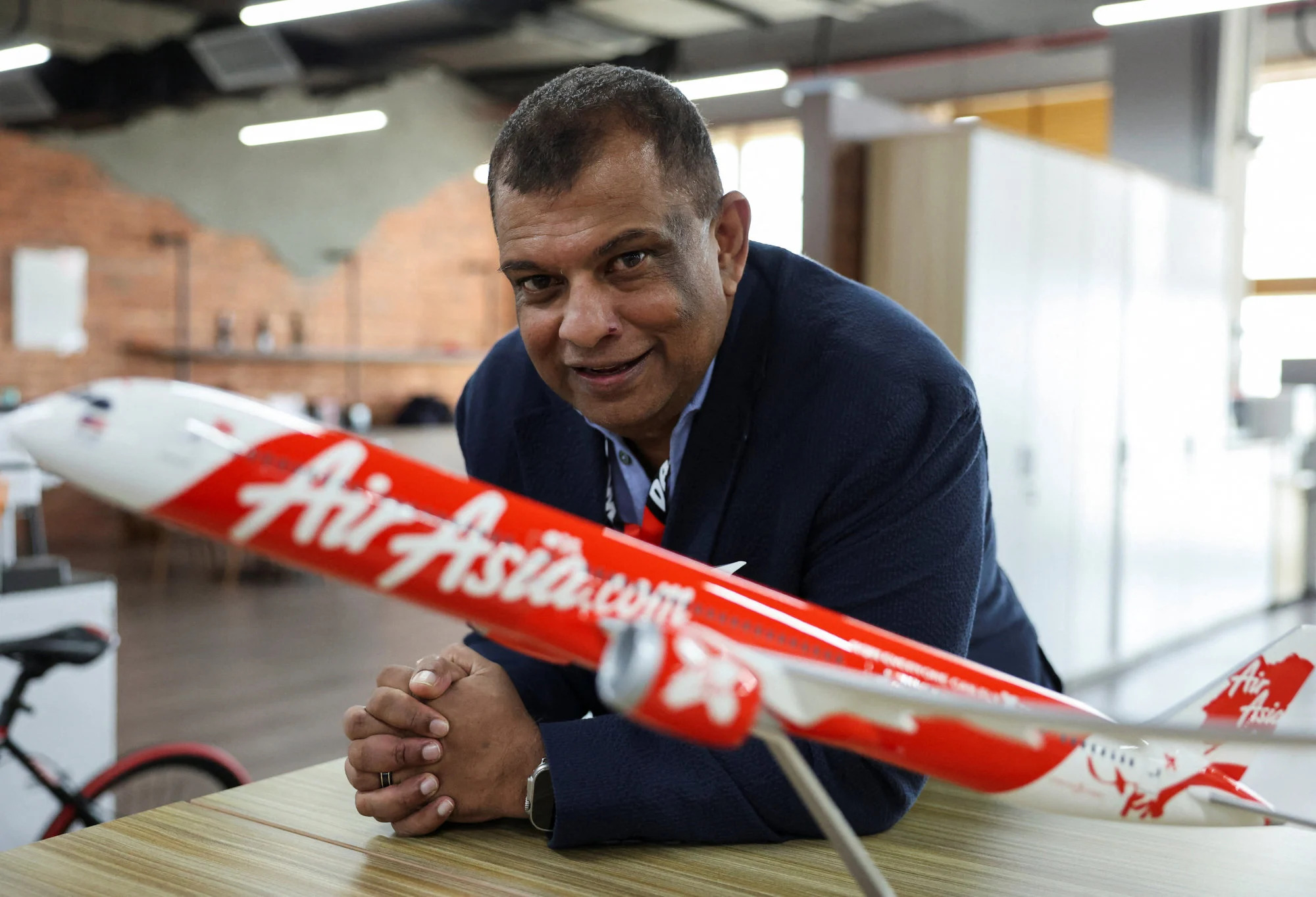
Tony Fernandes is now open to assistance for AirAsia if it is offered, marking a softer position just days after he said the airline did not need government help.
Fernandes stressed that there are no discussions with the government over a bailout. Instead, AirAsia is looking at other forms of support that could help it get through its current financial pressure.
Some support is already taking shape.
AirAsia is working with Malaysia Airports Holdings Bhd to reduce ground-handling and other operating costs, while Petronas is extending credit to the airline. The amount and terms of the Petronas facility have not been disclosed.
Fernandes has also revealed a separate financing effort involving him personally.
He said he had been asked to provide personal guarantees and extend his contract if he wanted to secure a loan, although he did not identify who made those requests.
That detail is notable because AirAsia faced a similar situation during the Covid-19 crisis.
In 2021, the government approved a loan of up to RM500 million under a Covid-19 guarantee scheme, with the government covering 80% of the facility.
AirAsia ultimately decided not to proceed after objecting to conditions that included personal guarantees from Fernandes and co-founder Kamarudin Meranun.
This time, AirAsia is pursuing financing from the private market.
The airline expects to raise more than US$1 billion, mainly to refinance existing debt and reduce its financing costs.
That is significant given the scale of its existing obligations. As of June 30, AirAsia had RM954 million in cash, against RM18.4 billion in current liabilities, including RM3.13 billion in borrowings and RM13.3 billion in lease liabilities.
And that is where the latest developments become more complicated.
Raising more than US$1 billion would give AirAsia additional financial breathing room, but analysts have questioned whether new financing alone can resolve the company's deeper financial pressures.
For Fernandes, however, the focus remains on getting through the current crisis.
He has indicated that he wants to move on from his current role, but says the market wants him to stay for now.
More importantly, he remains confident that AirAsia can recover.
That confidence is partly rooted in the airline's experience with Covid-19, which Fernandes has described as the most difficult crisis in AirAsia's 25-year history.
The difference this time is that people are still travelling.
AirAsia is therefore trying to adapt rather than simply wait for conditions to improve.
It is returning older, less fuel-efficient aircraft, cutting routes that are no longer profitable at current oil prices, slowing expansion in Indonesia and the Philippines and looking for ways to reduce operating costs.
The airline is also dealing with the fuel shock without the protection of fuel hedging, leaving it directly exposed to changes in the market.
So, the latest development is not a bailout announcement.
It is a picture of an airline trying to secure more financing, lower its costs and bring in whatever commercial support is available while Fernandes remains confident that AirAsia can weather another crisis.
The real test now is whether those measures give the airline enough room to stabilise its finances and whether Fernandes' confidence is matched by the numbers.