
Former Prime Minister Najib Razak has been granted a conditional pardon by the King. He will serve the remainder of his six-year SRC International sentence under house arrest until August 2028, provided he pays the RM50 million fine. Until that condition is met, he remains in Kajang Prison.
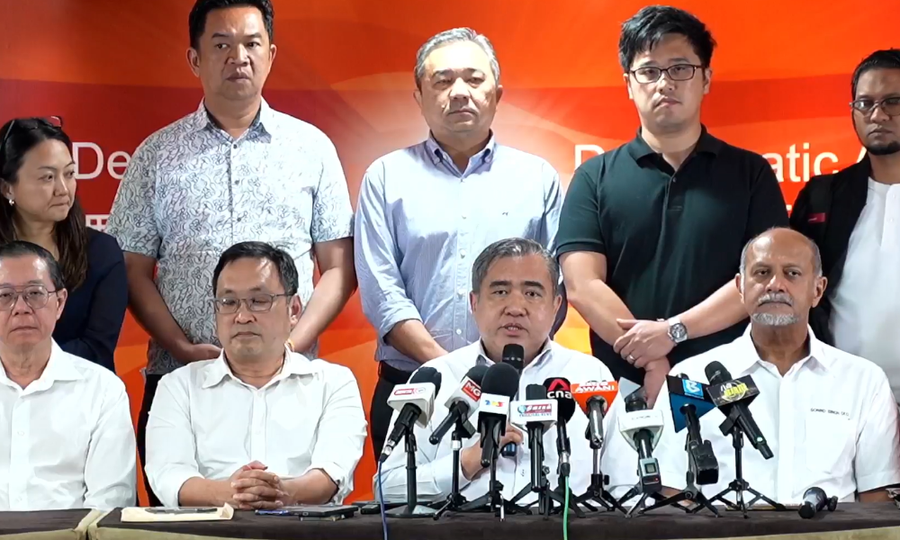
DAP secretary-general Anthony Loke announced he would resign as Transport Minister. But DAP will remain in the unity government, with its other ministers staying in the Cabinet. Loke said the party respected the King's pardon powers, but added: "This is something that is hard for Malaysians to accept."
The anger is real. The frustration is justified. But walking away from government is not the answer. Finishing the reforms is.
What the Government Cannot Do
Pakatan Harapan cannot constitutionally reverse a royal pardon simply because its supporters dislike the outcome. The pardon is the King's power. That is not something a government can undo.
It is a constitutional reality. The pardon was granted under Article 42 of the Federal Constitution, which vests the power of clemency in the Yang di-Pertuan Agong. No prime minister, no cabinet, no parliamentary majority can override it.
What the government can do is change the institutions it controls.
It cannot promise that every political outcome will satisfy its base. But it can make the system less dependent on whoever happens to sit in Putrajaya. That is what reform is supposed to mean.
The Reform That Cannot Wait
The separation of the Attorney-General and the Public Prosecutor has become more urgent, not less.
Right now, one person holds both roles — the government's chief legal adviser and the country's chief prosecutor. That concentration of power is a structural weakness. It opens the door to political interference and conflicts of interest. It makes the prosecution of politically connected individuals a matter of executive discretion rather than independent legal judgment.
The Malaysian Bar has long argued that separating these offices is essential to strengthen prosecutorial independence and restore public confidence in the justice system.
The reform is already moving. The Constitution (Amendment) (No. 2) Bill 2026 was tabled in Parliament earlier this year and referred to a Parliamentary Special Select Committee. The Cabinet has since approved amendments requiring the Public Prosecutor to undergo scrutiny by the Dewan Rakyat before appointment.
But moving is not the same as finishing.
The Contradiction DAP Must Resolve
If DAP says it remains in government because destabilising Putrajaya would jeopardise national stability, that stability needs a purpose. Otherwise, the argument becomes: we compromised to preserve a government whose unfinished reforms we then did not finish.
That would be politically devastating approaching GE16.
The anger over Najib's pardon is real. But the answer is not to walk away from government. The answer is to use the time left to build institutions that make future abuses harder — not easier. To make the system less dependent on the goodwill of any single leader.
DAP staying in government is the right decision. But staying is not enough. Staying must mean delivering. It must mean passing the AG/PP separation bill. It must mean political financing legislation. It must mean the prime minister's term limit. It must mean procurement transparency and equal constituency allocations.
These are not abstract reforms. They are the mechanisms that prevent the next Najib. They are the reason reformasi still matters.
The Time Is Now
Reformasi was never about one man. It was never about one pardon. It was about building a system where power is accountable, where institutions are independent, and where the law applies equally to everyone — including prime ministers and their allies.
That work is unfinished. And it will not finish itself.
The government has time. GE16 is not due until 2028. If Anwar Ibrahim chooses not to call an early election, he has more than two years to deliver the reforms that will define his legacy.
But time is not unlimited. Every month spent managing political crises is a month lost to reform. Every week spent negotiating coalition tensions is a week not spent passing legislation.
The pardon has reminded Malaysians why reform matters. The question is whether the government will use that reminder to act — or whether it will let the moment pass, as so many moments have passed before.
The time to change is now. And it needs to happen before it's too late.