
At a time when faith in global institutions is being tested, Malaysia is making a case for something increasingly unfashionable: that countries still need each other.
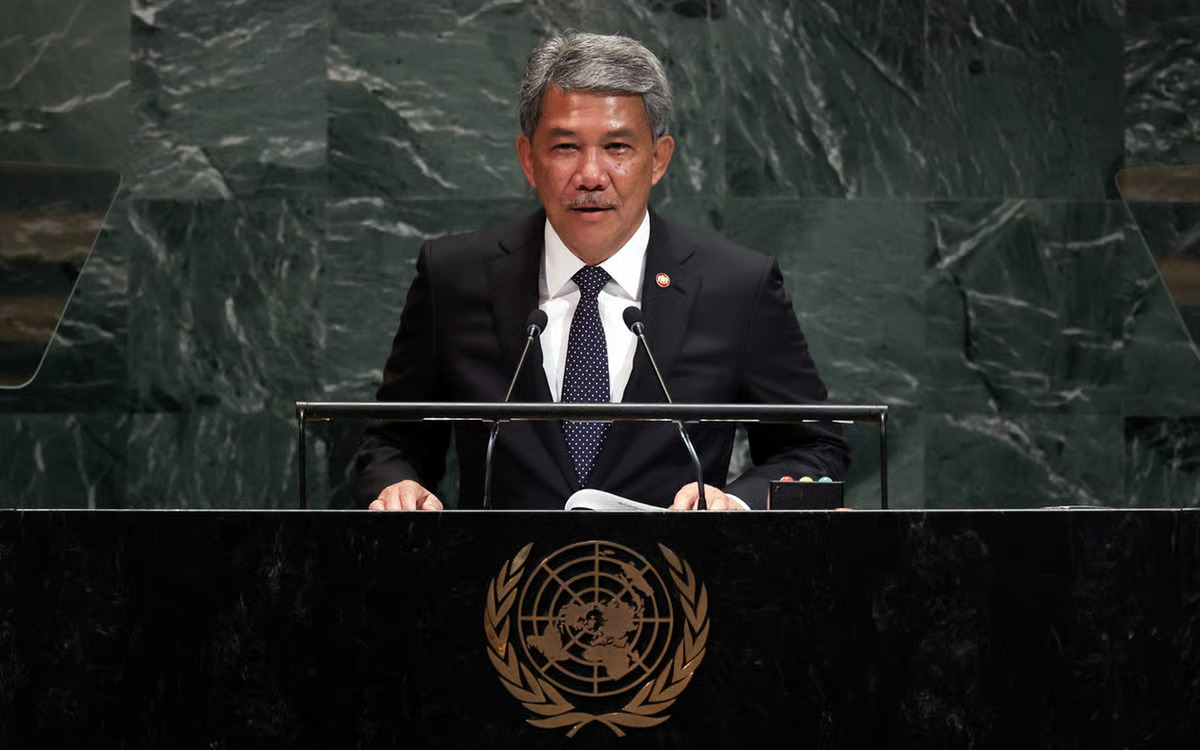
Foreign Minister Datuk Seri Mohamad Hasan is leading Malaysia’s delegation to the 81st United Nations General Assembly in New York this week, where the country is expected to push for stronger multilateralism, respect for international law and a more effective United Nations.
It is a familiar position for Malaysia, but the timing makes it more significant.
The UN enters this year’s General Assembly facing a growing trust deficit, financial pressure and questions over whether it remains capable of responding effectively to conflicts and other global challenges.
Its theme, “Restoring trust, managing transformation: A United Nations that delivers for all”, reflects that problem directly.
US President Donald Trump also used his address to the assembly on Tuesday to criticise the UN’s bureaucracy and effectiveness, while arguing for countries to take action rather than relying on international institutions.
Malaysia, however, is putting forward a different answer.
Its permanent representative to the UN, Datuk Nadzirah Osman, said the international community needs to move beyond words and commit to collective, concrete action, stressing that no country can address today’s global challenges alone.
That does not mean Malaysia is arguing that the UN should remain unchanged.
In fact, UN reform is expected to be one of the issues raised by Mohamad, alongside reform of the Security Council, development gaps, the Sustainable Development Goals, the UN80 initiative, Palestine and geopolitical tensions in the Middle East.
There is a difference between acknowledging that an institution needs reform and deciding that the institution itself is no longer worth defending.
Malaysia appears to be taking the former position.
The message is essentially that a flawed multilateral system should be made more effective, rather than replaced by a world where countries simply act according to their own interests.
For a middle power such as Malaysia, that principle is hardly insignificant.
A rules-based international system gives countries that do not possess the military or economic weight of major powers a platform to participate in decisions that affect them.
It also provides a framework for countries to collectively address problems that do not stop at national borders, from conflict and climate change to development and public health.
The UN's problems are real.
Its inability to prevent or resolve some conflicts, its bureaucratic shortcomings and its financial constraints have all contributed to the questions surrounding its relevance.
But those failures also make reform more important, not necessarily the institution itself less necessary.
Malaysia's position reflects that logic.
The country is not presenting multilateralism as a perfect system. It is arguing that cooperation remains necessary precisely because the problems confronting countries have become too interconnected for any one government to solve alone.
That also explains why Palestine and international law remain part of Malaysia's agenda at the assembly.
Whatever the outcome of individual diplomatic efforts, Malaysia's position is consistent. International rules should not simply become optional when they are inconvenient.
Whether the UN can actually deliver on the principles it represents is another question.
But Malaysia's stance at this year's General Assembly is clear. If the international system is failing, the answer should be to fix it, not abandon the idea that countries have a responsibility to work together.
In an increasingly fragmented world, that is a principle worth putting on the record.