
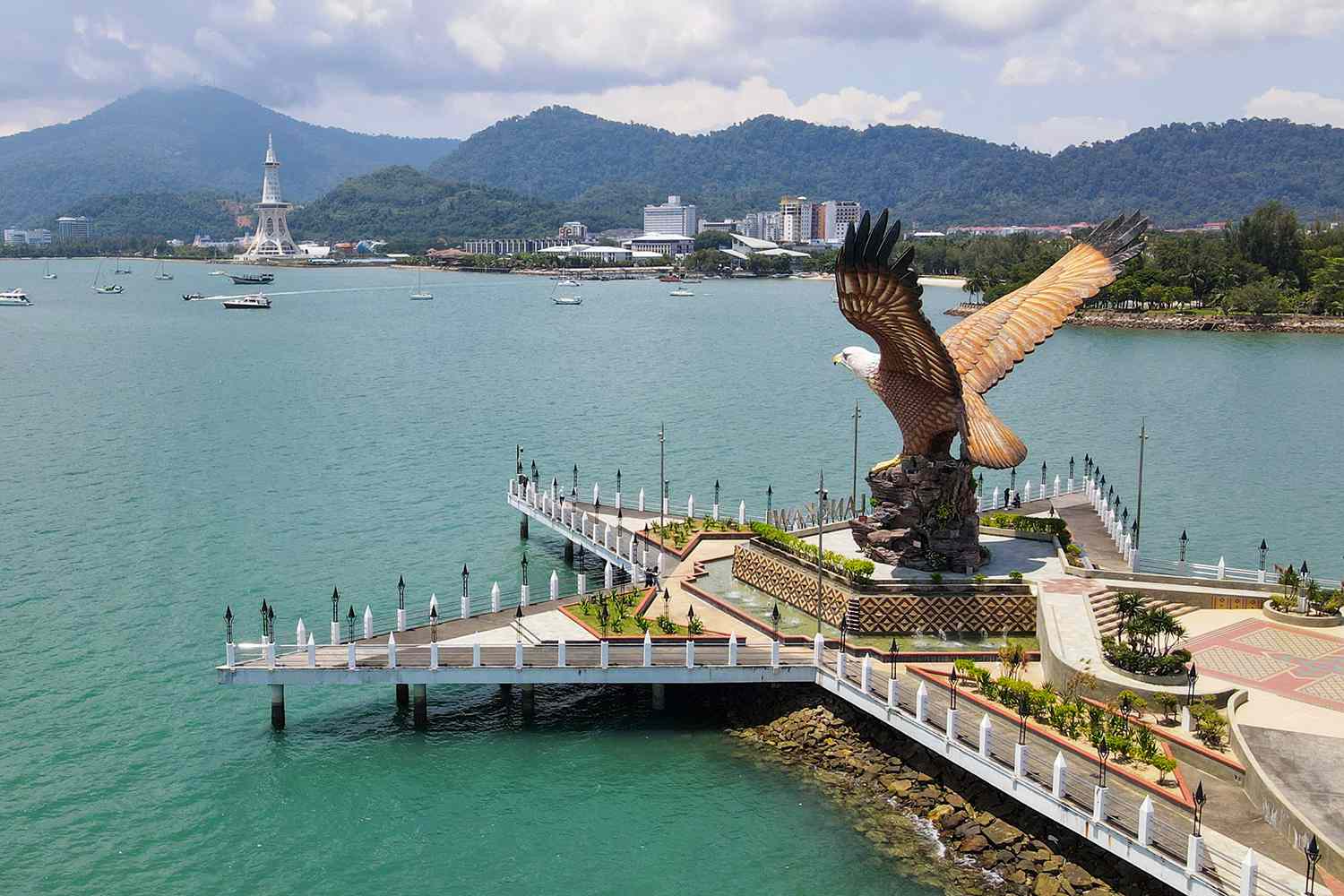
Foreign Minister Mohamad Hasan said sea levels along Malaysia’s coastline could rise by as much as 0.74m by 2100, putting water security, agriculture and infrastructure at risk while increasing exposure to flooding, erosion and saltwater intrusion.
Malaysia’s own Nationally Determined Contribution 3.0 projects the same rise and estimates that, without adaptation, almost 77% more coastal land could be inundated. The country is also developing its first National Adaptation Plan.
For a country with more than 8,840km of coastline, that puts a wide range of places in the conversation, from Penang and Selangor to the east coast and Sabah and Sarawak.
Malaysia’s National Climate Change Policy 2.0 identifies coastal settlements, infrastructure, food resources and the livelihoods of fishing communities among those exposed to rising seas.
Penang provides one example of the pressures already facing developed coastlines.
Coastal erosion has affected areas including Batu Ferringhi and Tanjong Bungah, while the state has allocated funds for shoreline protection.
Malaysia is not the only country planning around a changing coastline.
Bangladesh has spent years expanding coastal resilience through embankments, cyclone shelters, early-warning systems and other measures.
The Netherlands has incorporated flood protection and water management into long-term national planning.
For some countries, the stakes are even more immediate.
Small island states such as Tuvalu, Kiribati and the Marshall Islands face questions over communities, infrastructure and territory as rising seas threaten low-lying land.
The UN has increasingly treated sea-level rise as a development, economic and security issue rather than a purely environmental one.
That was reflected in Thursday’s UN General Assembly meeting in New York, where member states adopted a Political Declaration on sea-level rise.
The declaration calls for stronger international cooperation and practical action, including resilient infrastructure, restoration of mangroves, wetlands and reefs, risk-informed land-use planning and early-warning systems.
It also highlights the need for adequate financing for countries facing the greatest exposure.
The global scale of the problem is already substantial.
The UN says around 900 million people live in low-lying coastal zones, while more than one billion could be exposed to coastal hazards by 2050.
Global mean sea level is also rising at more than twice the rate recorded during the first decade of satellite observations.
For Malaysia, the question is what happens between now and 2100.
A coastline does not have to disappear for rising seas to disrupt it. More frequent flooding, erosion, saltwater intrusion and damage to infrastructure can gradually make coastal areas more expensive and difficult to maintain.
The government already has the projection. The National Adaptation Plan is being developed.
The next question is how much of Malaysia’s future development will be planned around the coastline it is expected to have, rather than the one it has today.
Because 2100 may sound distant. The roads, homes, ports and cities being planned today are not.