
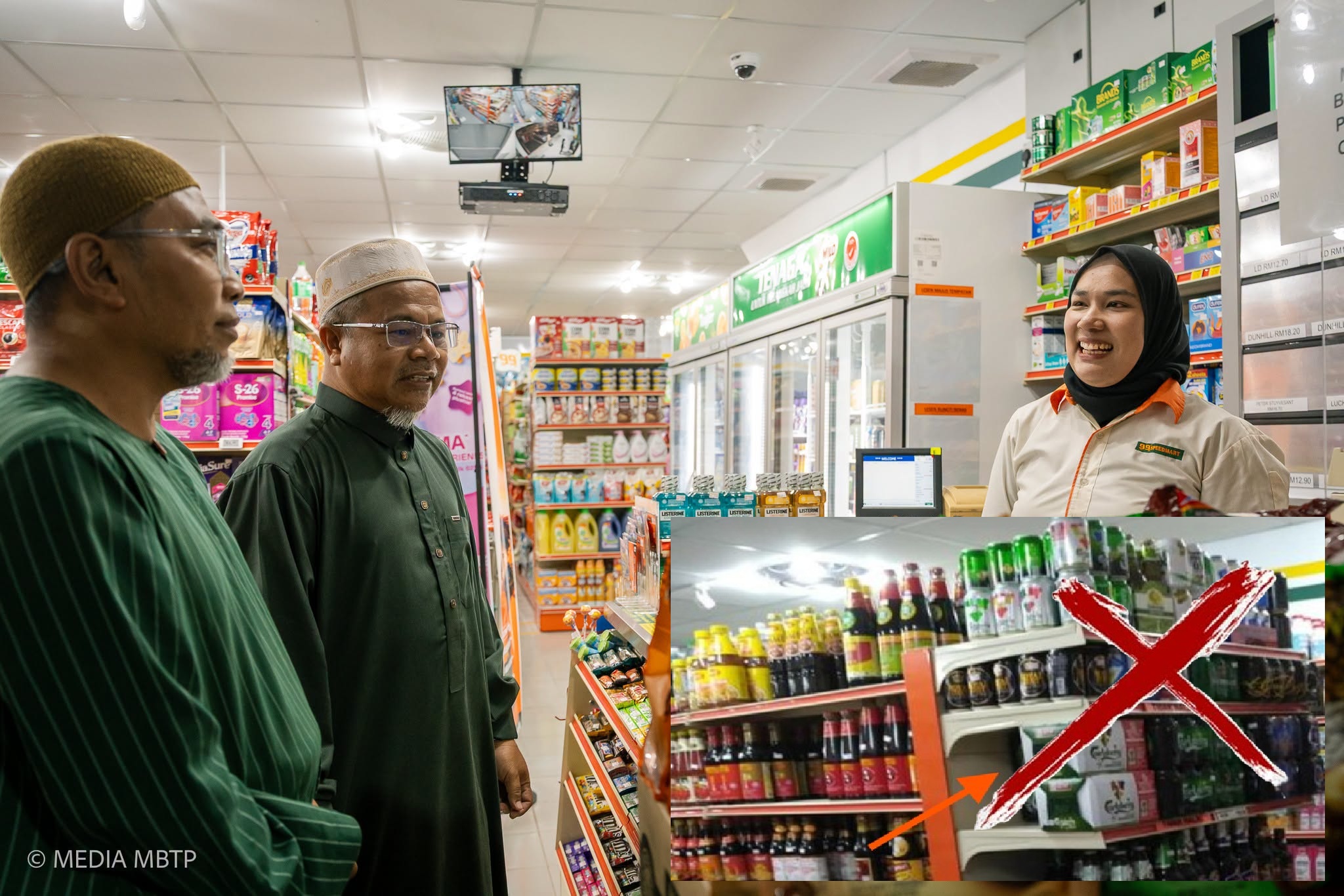
A KK Mart outlet in Bandar Tasik Puteri has reportedly stopped selling alcohol following protests from local residents. The decision, whatever its commercial logic, raises a question that Malaysians rarely ask out loud: what exactly is the principle being enforced here — and why is it applied so selectively?
If the objection is that alcohol is haram, the objection is understood. Islam prohibits intoxicants. No one disputes that. But the logic of removing a product from a convenience store because it offends religious sensibilities runs into an immediate problem: cigarettes are also widely considered haram by Islamic scholars.
Yet there is no mass movement to remove cigarettes from KK Mart shelves. There are no protests outside 7-Eleven. There is no campaign to shame shopkeepers who sell tobacco.
The Cigarette Double Standard
Smoking is regarded by many Islamic authorities as haram or at minimum makruh — harmful, wasteful, and damaging to the body, which Islam teaches is a trust from God. The Quranic prohibition on intoxicants is often extended by scholars to include anything that impairs health or clouds the mind. Cigarettes fit that description. They kill. They addict. They burden families with medical costs and lost income.
And yet, cigarettes remain legal. They are sold openly in convenience stores, supermarkets, and roadside stalls. The government taxes them — heavily — and collects billions in revenue every year. When the government raises cigarette taxes, as it has repeatedly, the loudest complaints come not from health advocates but from smokers and retailers worried about costs.
If the objection to alcohol is genuinely about protecting the Muslim community from haram, the same logic should apply to tobacco. It doesn't. And that tells us something important: the campaign against alcohol is not really about religious consistency. It is about visibility.
Alcohol is a visible symbol of "otherness" — something associated with non-Muslims, with nightlife, with spaces that conservative Muslims do not frequent. Cigarettes are not a symbol of anything except addiction, and addiction is shared across communities.
The Freedom of Practice
Let us be clear about what is at stake here. This is not an argument in favour of alcohol consumption. Islam prohibits intoxicants. That is understood. No one is disputing the right of Muslims to abstain, to teach their children to abstain, or to build communities where abstinence is the norm.
But Malaysia is not a Muslim-only country. It is a multi-religious, multi-cultural nation where non-Muslims have the constitutional right to practise their faiths and live their lives according to their own beliefs. For many non-Muslim Malaysians, alcohol is part of their culture — consumed at celebrations, family gatherings, religious ceremonies, and social occasions. It is legal. It is regulated. It is taxed.
If Muslims have the freedom to practise their religion, non-Muslims must have the same freedom. That includes the freedom to buy and consume legal products without being told that their presence offends the sensibilities of the majority in their neighbourhood.
Freedom of practice is not a one-way street. It cannot mean that one community's religious sensitivities override another community's cultural practices. It must mean that both communities coexist — that Muslims abstain because they choose to, and non-Muslims consume because they choose to, and neither imposes their choices on the other.
What Thailand Understands
Thailand offers an instructive comparison.
It is a Buddhist-majority country, but it has a significant Muslim population, particularly in the southern provinces. Alcohol is sold everywhere — in convenience stores, supermarkets, restaurants, and roadside stalls. There are no protests demanding its removal from communities where Muslims live. There are no campaigns to shame businesses that sell it.
Muslims in Thailand abstain because they choose to abstain. Their discipline comes from within — from their faith, their upbringing, their personal commitment to religious observance. It is not enforced by removing the temptation from their surroundings. It is not imposed by pressuring shopkeepers to stop selling a legal product.
That is what genuine religious discipline looks like. It is internal, not external. It is about what you choose to do, not about what you prevent others from doing.
The Cost of Coercion
When communities learn that protests can remove products they dislike from their local stores, they learn that coercion works. When businesses learn that selling legal products can invite harassment, they learn to avoid controversy. And when Muslims learn that their faith is being protected by removing temptation rather than by strengthening their own discipline, they learn that their convictions are fragile.
That is not a recipe for a confident, resilient religious community. It is a recipe for a brittle one.
The real challenge facing Malaysia's Muslim community is not the presence of alcohol in convenience stores. It is the need to cultivate the kind of internal discipline that Thai Muslims demonstrate every day — the discipline to see something forbidden, acknowledge it as forbidden, and walk past it without demanding that it be removed for everyone else.
That discipline cannot be legislated. It cannot be enforced by protest. It can only be built through education, family, community, and personal commitment.
The Discipline We Need
There is a deeper problem with this approach that its proponents have not yet confronted. When you spend your energy removing the things you blame for your shortcomings, you are left with nothing to blame but yourself.
The alcohol is gone from the shelf. The temptation is removed. The environment is sanitised. And then what? The weakness remains. The struggle continues. The discipline you were supposed to build never materialised, because you were never forced to build it.
Eventually, the excuses run out.
You can protest at a convenience store. You can pressure a supermarket. You can demand that the world rearrange itself to accommodate your sensitivities. But there will always be another temptation, another product, another establishment, another influence that offends you. And you cannot remove them all. You cannot sanitise the entire world. You cannot build a life free of things that test your faith.
At some point, the mirror is the only thing left to look at.
That is the uncomfortable truth that the campaign against alcohol avoids. It is easier to blame the shopkeeper, the company, the community, the system. It is harder to look inward and ask why the temptation was so difficult to resist in the first place. It is harder to build the internal discipline that Thai Muslims demonstrate every day. It is harder to accept that faith is not about removing the test, but about passing it.
Malaysia's Muslims are not children. They do not need the world sanitised on their behalf. They need the space to practise their faith with maturity, conviction, and self-respect — not the illusion of piety created by removing everything that might test it.
Because once you have removed everything you can blame, you will have nothing left to point at but yourself. And that is a confrontation no amount of protest can postpone forever.