
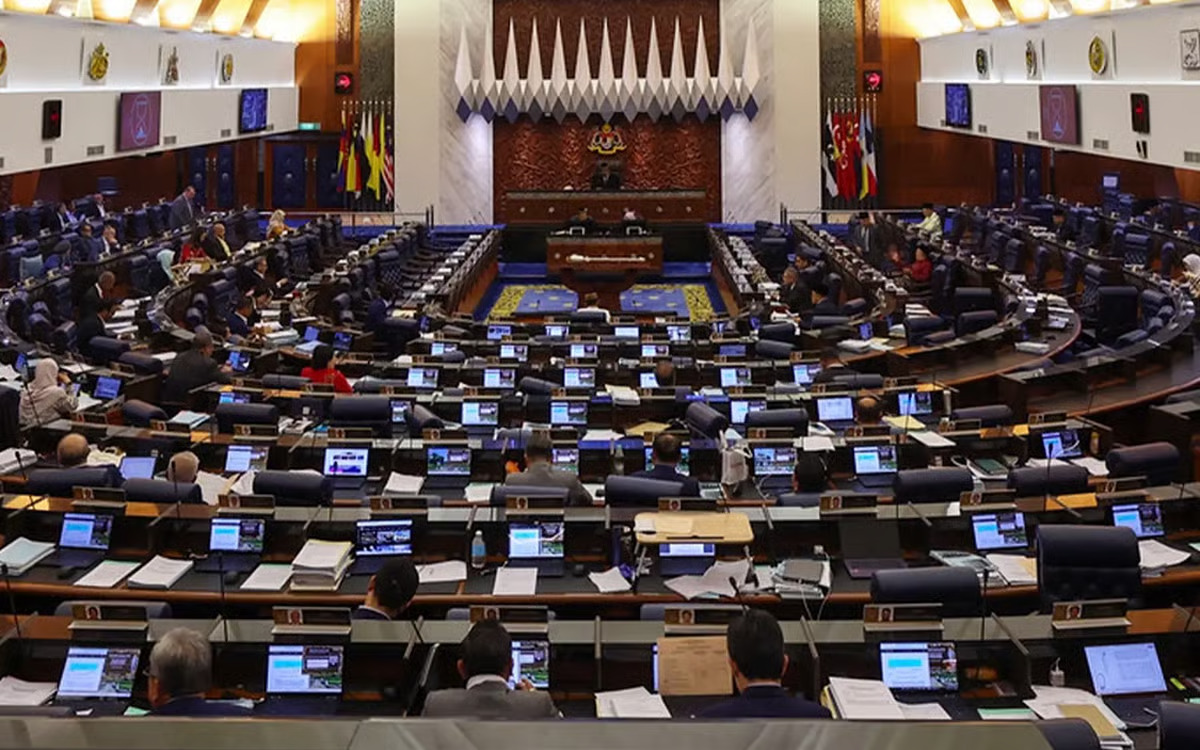
The Election Commission’s denial of a report claiming Sarawak will gain 15 additional parliamentary seats has raised a bigger question. How far has the government actually progressed on its decision to increase Sabah and Sarawak’s representation?
On September 25, the EC said there was currently no proposal to increase the number of parliamentary constituencies in Sarawak, rejecting a report that the state’s 31 seats in the Dewan Rakyat would rise to 46.
The commission said the report had referred to a purported document on a proposed redelineation of Sarawak’s parliamentary constituencies, which it said was not an official proposal.
But that does not mean the broader plan to increase Sabah and Sarawak’s parliamentary representation does not exist.
On September 11, Prime Minister Anwar Ibrahim said the Cabinet had agreed in principle to increase the proportion of parliamentary representation held by Sabah and Sarawak in line with the spirit of the Malaysia Agreement 1963 (MA63).
He said the Election Commission had already been informed to begin discussions on the mechanism and number of additional seats, although the details had yet to be determined.
The government has agreed to the principle of increasing representation. What has not yet been finalized is the actual mechanism, number of seats and constituency boundaries needed to implement it.
The EC’s latest statement appears to be addressing the latter.
Khairul Shahril Idrus said the only Sarawak redelineation exercise currently prepared by the EC is the Seventh Sarawak Electoral Constituency Redelineation Review, which is now open for public inspection from September 1 to 30.
This is a state-level exercise, not the proposed increase in Sarawak’s parliamentary seats.
The current review proposes 17 additional constituencies for the Sarawak Legislative Assembly, increasing the number of state seats from 82 to 99.
It also proposes changes to the names of several existing state constituencies and one parliamentary constituency.
In other words, the EC is not saying that the government has abandoned its plan to increase parliamentary representation for Sabah and Sarawak. It is saying that there is currently no official proposal to increase the number of Sarawak parliamentary constituencies to 46.
That is an important difference because Anwar himself acknowledged on September 11 that the details and mechanism still had to be worked out.
He also warned that the process could not simply be reduced to adding seats, saying the increase must result in a higher proportion of parliamentary representation for Sabah and Sarawak.
The government’s decision, he said, was only the first step, with the EC, state governments and political parties still needing to discuss the mechanism.
The EC’s own chairman subsequently indicated that parliamentary boundary changes in Sabah and Sarawak would have to follow the constitutional amendments being prepared under MA63.
He said the commission would look into the parliamentary boundaries after the relevant constitutional changes, while the current Sarawak exercise proceeds separately.
So, the apparent contradiction is less about the government and the EC disagreeing, and more about two different stages of the same broader process being reported as though they were the same thing.
The Cabinet has agreed in principle. The EC has been told to work on the mechanism. But there is no final parliamentary seat proposal for Sarawak yet.
That gap is precisely where confusion can arise.
The government has made a political commitment to increase Sabah and Sarawak’s representation under MA63.
The next question is no longer whether the principle has been agreed, but when that agreement will produce an actual constitutional amendment, a defined number of seats and an official parliamentary redelineation proposal.
Until then, a reported figure such as 15 additional Sarawak seats remains just that: a reported figure, not an EC proposal.