
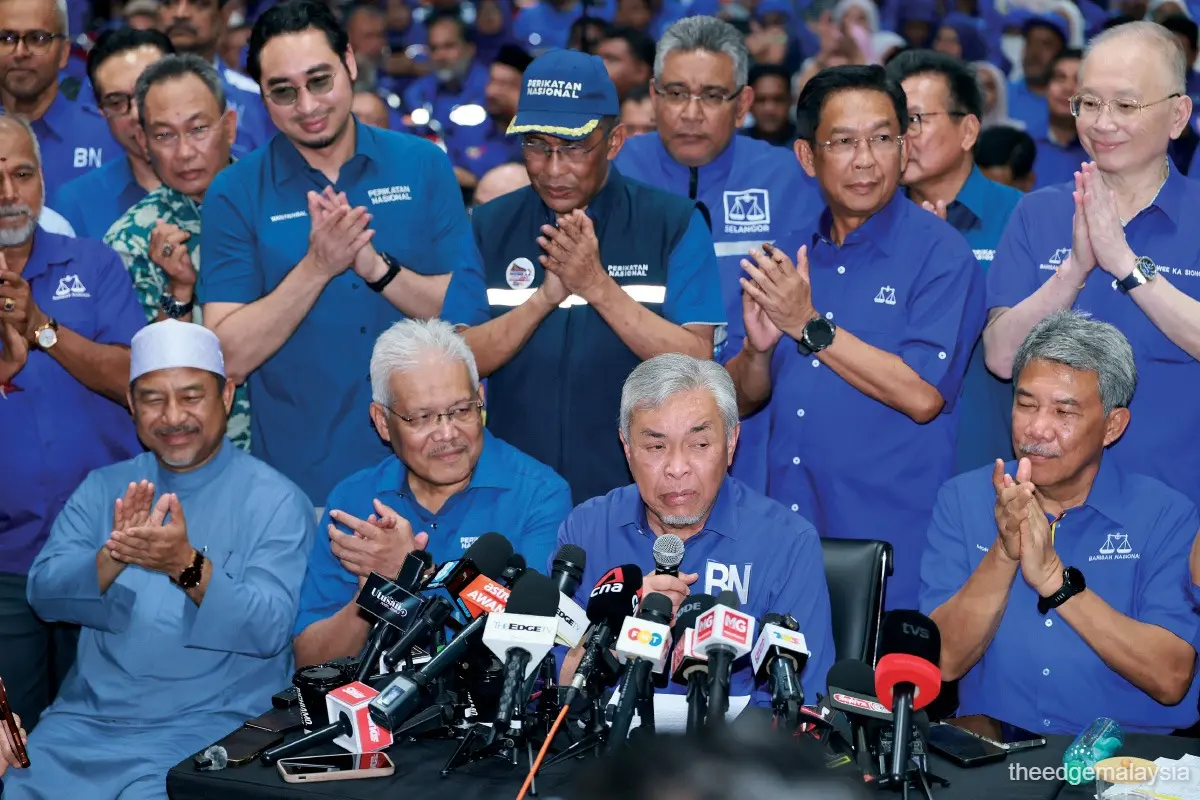
Winning an election is supposed to settle things. It gives a coalition a mandate, a direction, and a period of calm in which to govern.
In Negeri Sembilan, BN and PN achieved that victory — and then squandered it with a constitutional crisis that has paralysed the state administration and damaged both coalitions nationally.
Ten Days, Four Positions
The crisis centres on the Menteri Besar, Datuk Ismail Lasim, whose handling of the royal proclamation has been erratic to the point of incoherence.
On September 6, he declared full support for Tuanku Muhriz Tuanku Munawir. Three days later, he claimed he had signed the proclamation under duress. On September 15, he insisted the Menteri Besar had no unilateral power to vacate a Ruler's position. On September 16, he reversed again — asserting the April proclamation was in effect and recognising Tunku Nadzaruddin Tuanku Ja'afar as the new Yang di-Pertuan Besar.
Four positions in ten days. A leader who cannot hold a consistent line on the constitution cannot command a government.
On September 20, Tuanku Muhriz dismissed all ten state executive councillors. Two days later, the exco attempted to suspend the state secretary and the state legal adviser. The Attorney-General's Chambers intervened the same night, clarifying that under Article 37 of the Negeri Sembilan Constitution, civil service appointments and suspensions fall under the Public Services Commission and the Judicial and Legal Service Commission — not the exco.
On September 23, Ismail and his former exco members were blocked from entering the state secretariat. The dismissal had been gazetted. The administration they once led no longer answered to them.
Who Actually Controls the State
The answer, at this point, is nobody in BN or PN.
Constitutional interpretation sits with the AGC and the state legal adviser. Security and building access sit with the police. Civil servants answer to the state secretary, who answers to the Ruler. The Menteri Besar has been reduced to a man issuing statements no institution is obliged to follow.
Ismail's subsequent attempts to shift blame to the previous Pakatan Harapan administration have not helped his case. Datuk Seri Aminuddin Harun refused to sign the proclamation. Ismail signed it himself. That is the difference between caution and a fatal miscalculation.
Under the state constitution, if the legislative assembly does not convene within six months — a deadline falling in January — it dissolves automatically. A paralysed state government is not merely an embarrassment for its leaders. It punishes the people who elected them.
Tan Sri Dr Rais Yatim, honorary chairman of Parti Wawasan Negara, now faces sedition charges for publicly congratulating Tunku Nadzaruddin as the twelfth Yang di-Pertuan Besar. The legal consequences are extending beyond the executive council.
PAS's Own Goal
If UMNO humiliated itself in Negeri Sembilan, PAS managed something similar at the coalition level.
PAS president Abdul Hadi Awang assumed that taking control of Perikatan Nasional would allow him to sideline Bersatu permanently. In June, PAS installed Ahmad Samsuri Mokhtar as PN chairman. In July, Bersatu was excluded from the PN Supreme Council meeting. In the Negeri Sembilan election, Bersatu candidates were barred from using the PN banner and fielded 24 candidates under their own logo — losing deposits in 23 of them.
Bersatu filed a complaint with the Registrar of Societies. The ROS responded by ordering PN to suspend all activities and prohibiting the use of the "Perikatan Nasional" name and logo until a final decision is reached. PAS may argue the timing is political, but the predicament is self-inflicted. PAS broke the procedural rules first; Bersatu simply used the mechanism available to it.
Wawasan can contest under PAS's moon symbol in Melaka. But asking Gerakan to run under the PAS banner in Chinese-majority and mixed constituencies is not a strategy — it is a surrender of those seats before the campaign begins. If the ROS ultimately deregisters PN, PAS's route to Putrajaya collapses. A court challenge would take longer than the electoral calendar allows.
What This Means for Melaka
Melaka's state election is the immediate test. PAS may hope that pressure from Anwar Ibrahim will push UMNO and PAS into an electoral pact. But the Negeri Sembilan crisis has weakened the momentum that made such a pact attractive.
UMNO is managing a paralysed state government, a royal controversy, and a fundraising failure. PAS is managing a coalition whose name it cannot legally use. Both are entering the Melaka campaign with less credibility than they had three months ago.
Malay political unity has always run on momentum. When the trend is rising, every party wants to be part of it. When confidence evaporates, the arithmetic changes — and so do the calculations of everyone who was waiting to see which way the wind was blowing.
BN and PN won Negeri Sembilan. What they do with that victory now depends on whether they can govern it. So far, the answer is that they cannot.