
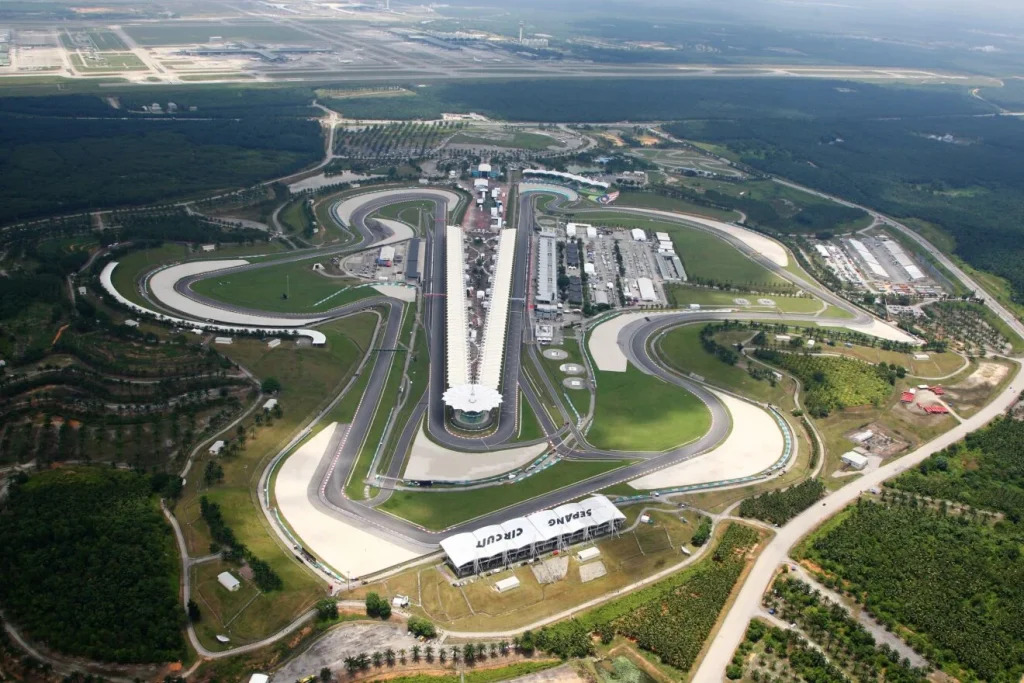
Formula 1 is returning to Sepang this weekend for the first time since 2017.
But this is not the same Formula 1 that left Malaysia nine years ago.
The 2026 Bahrain Grand Prix, relocated to the Sepang International Circuit after the original race could not take place in Bahrain, will be the first F1 race at the Malaysian circuit since Sebastian Vettel won there in 2017.
Officially, it remains the Formula 1 Gulf Air Bahrain Grand Prix in Malaysia. But while Bahrain retains the name, Sepang presents the bigger sporting question.
For the first time in almost a decade, Formula 1's current generation of cars will have to deal with one of its former regulars.
And almost everything has changed.
F1 has changed but Sepang hasn’t.
The 2026 regulations introduced an entirely new car philosophy, with smaller and lighter cars, active aerodynamics and a much greater reliance on electrical power.
The power units have also been redesigned, with the electrical component becoming significantly more important.
Sepang, meanwhile, is still Sepang.
The 5.543km circuit combines long straights, heavy braking zones and sweeping high-speed corners. It is also notorious for heat, humidity and sudden tropical downpours that can transform a race within minutes.
That creates an unusual test for the 2026 cars.
Teams have spent the season learning how the new regulations behave across a variety of circuits. But Sepang gives them a combination they have not encountered in a current-generation race weekend: these cars, on this track, in these conditions.
The circuit's long straights will place particular emphasis on aerodynamic efficiency and energy management.
The 2026 regulations have also replaced the traditional DRS system with active aerodynamic modes and a new overtake system, changing how drivers gain and defend track position.
Then there are the corners.
Sepang's fast, flowing sections demand aerodynamic stability, while its slower corners and long braking zones punish compromises in setup.
Finding the balance between straight-line speed and cornering performance has always been part of the circuit's challenge.
With the 2026 cars built around a different aerodynamic philosophy, teams will have to work out where that balance now lies.
Sepang is not Singapore
The timing of this return makes the comparison even more interesting.
Sepang's race comes immediately before the Singapore Grand Prix, putting two Southeast Asian circuits on consecutive weekends.
They may be neighbouring countries, separated by little more than a few hundred kilometres, but they present almost opposite challenges.
Singapore is a street circuit. Sepang is a purpose-built permanent track.
Singapore is run under floodlights. Sepang's Grand Prix will begin at 3pm local time on Sunday.
Singapore's Marina Bay circuit is tight, bumpy and dominated by 19 corners, with little room for drivers to recover between braking zones.
Sepang is wider and faster, with long straights and flowing corners that allow the cars to stretch their tires.
Even the weather challenge is different.
Both races take place in hot, humid Southeast Asian conditions, but Sepang adds the possibility of tropical afternoon storms directly into the race equation. The current forecast for this weekend points to temperatures around 33°C in Sepang, with rain and thunderstorms possible across the weekend.
Sunday's forecast is still developing, with current projections differing on the timing and likelihood of afternoon rainfall.
Singapore, by contrast, deliberately runs at night.
The Marina Bay race is staged under floodlights, although the circuit remains hot and humid, with cockpit temperatures capable of exceeding 60°C and humidity reaching around 90%.
Formula 1 describes Singapore as one of the most physically demanding races on the calendar.
For the drivers, that means two very different kinds of test in back-to-back weekends.
Singapore is a prolonged physical test with high humidity, a demanding street circuit, repeated braking and almost no opportunity to relax.
Sepang's challenge is more volatile.
A driver could begin the race in intense heat, lose grip as the tyres deteriorate, and then suddenly find the circuit transformed by rain. A dry setup can become a liability within a single lap.
That makes weather more than a question of driver comfort. It can fundamentally alter the competitive order.
A new generation meets an old circuit
There is also a generational divide.
Twelve of the 22 drivers on the current grid have never raced at Sepang in Formula 1.
For them, this is not a return to a familiar circuit. It is effectively a new one.
They can study old race footage, historical data and simulator runs, but none of that completely replaces learning a circuit in a live F1 car.
And they will be doing it while their teams are simultaneously trying to understand how the latest generation of machinery behaves around a track that has been absent from the calendar since 2017.
That makes the Bahrain Grand Prix in Malaysia an unusual sporting experiment.
Sepang has already hosted multiple generations of Formula 1 machinery from V10s to V8s and the turbo-hybrid era. Now it gets the 2026 cars, built around a fundamentally different aerodynamic and power-unit philosophy.
The circuit has not had to reinvent itself for Formula 1. Formula 1 has reinvented itself and is coming back to the circuit.
And that could make the weekend more revealing than a simple nostalgia trip.
This is Bahrain's race, but Sepang is the story.
The race may carry Bahrain's name, but the biggest sporting question belongs to Sepang.
Can the newest generation of Formula 1 cars extract the same character from this circuit that previous generations did?
The answer will tell us more than how well the drivers remember an old track.
It could reveal which teams have genuinely understood the compromises of the 2026 regulations when confronted with a circuit that demands almost everything from the car at once. Efficiency on the straights, stability through fast corners, traction out of slower ones and adaptability when the weather turns.
And unlike Singapore, there is room to race.
Sepang's wide layout and long straights offer more opportunities for overtaking and multiple racing lines.
That means the circuit can test not only the cars' outright performance but also whether the new generation of machinery can produce the kind of racing F1 promised when these regulations were introduced.
Nine years after Formula 1 left, Sepang is back.
But this is not simply an old circuit welcoming an old sport. It is an old circuit meeting a very different Formula 1.
Bahrain may have brought its Grand Prix to Malaysia. But for one weekend, Sepang gets to ask F1 a question of its own.
After nine years, what can these new cars actually do here?