
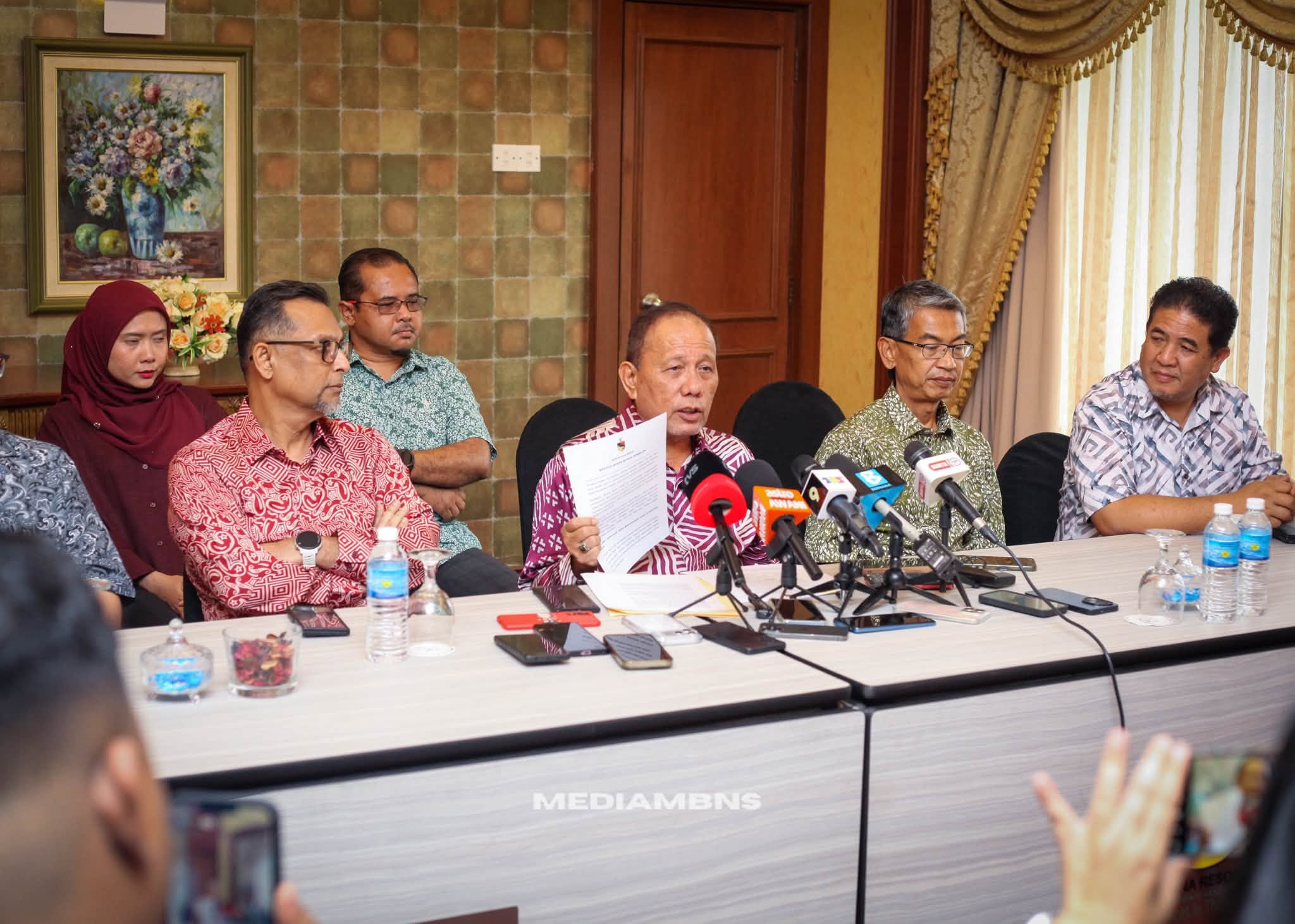
The constitutional crisis in Negeri Sembilan has entered a new phase — one defined not by legal interpretation, but by administrative reality.
The ten former state executive councillors whose appointments were revoked by Tuanku Muhriz Tuanku Munawir have been instructed to return their official government vehicles. At least some have complied. Bukit Aman officers recorded statements from all ten former exco members in connection with the continuing turmoil. The Attorney-General has affirmed that the revocations were constitutionally valid.
These are not abstract developments. They are the machinery of government following the law. The exco members have no office. They have no official car. Their appointments have been gazetted as revoked. The legal question, whatever remains of it, has been settled by the institution empowered to settle it.
The Position Ismail Lasim Occupies
This leaves Menteri Besar Datuk Ismail Lasim in an increasingly difficult position.
If he continues to maintain that the old exco legally remains in office, he is asserting a position that the Attorney-General has rejected, that the state legal adviser has rejected, and that the Ruler has rejected.
He is asserting it against the gazette. He is asserting it against the police, who have recorded statements from the very men he claims still hold office. He is asserting it against the civil service, which now answers to the state secretary, who answers to the Ruler.
A Menteri Besar who cannot command the civil service, cannot convene a functioning executive, and cannot access the state secretariat is not a Menteri Besar in any meaningful sense. He is a man issuing statements into a void.
BN-PN leaders met for nearly three hours under Zahid Hamidi's initiative but emerged without publicly explaining a solution. Ismail has been instructed to seek an audience with Tuanku Muhriz and engage the state's adat leadership.
The practical question is straightforward: who forms the next exco? Until that question is answered, Negeri Sembilan has no functioning executive government. Departments need decisions. Budgets require administration. Constituents need services. None of that is happening.
The Lesson Nobody Wants to Learn
There is a broader argument emerging from this crisis, and it extends well beyond Negeri Sembilan.
Constitutional politics depends on something that receives surprisingly little attention: institutional losers eventually accepting outcomes. Every political actor naturally believes their interpretation is correct. Every side in every dispute believes the other side is wrong. That is not a problem. That is politics.
The problem arises when a losing side refuses to accept the institution that ruled against it. When the response to an adverse decision is not appeal, not negotiation, not compromise, but continued operation as though nothing happened. When the law is treated as optional because the outcome was unwelcome.
A state cannot function under those conditions. A country cannot function under those conditions. Democracy and constitutional government require something that politicians hate: knowing when you have lost.
The Rukun Negara is not a decorative document. Its principles — loyalty to King and country, supremacy of the constitution, rule of law — are not suggestions to be invoked when convenient and discarded when inconvenient. They are the foundation on which Malaysia's political system rests. When a state leader signs a proclamation, reverses himself, reverses himself again, and then attempts to suspend civil servants whose appointments fall under the jurisdiction of independent commissions, he is not merely making a political error. He is testing whether the Rukun Negara means anything at all.
The answer, so far, is that it does. The Attorney-General has spoken. The Ruler has acted. The police have recorded statements. The cars have been returned. The institutions have held.
What Comes Next
The state legislative assembly must convene within six months — a deadline falling in January — or dissolve automatically. If the crisis drags on, it will spill over into the national political landscape, complicating BN and PN's efforts to consolidate support ahead of GE16.
Zahid's intervention is welcome. Reconciliation is the right goal. But reconciliation requires two things: a willingness to accept the legal reality, and a functioning executive to replace the one that was dismissed. Until Ismail submits a new list of exco nominees to Tuanku Muhriz, there is no second thing.
At some point, responsible political leadership means recognising that continuing escalation imposes costs on ordinary people who had nothing to do with the original dispute. The residents of Negeri Sembilan did not sign the proclamation. They did not reverse themselves four times in ten days. They did not attempt to suspend civil servants they had no power to suspend. They simply elected a government and expected it to govern.
That government no longer functions. And the longer its leaders fight to pretend otherwise, the longer the people of Negeri Sembilan pay the price.