
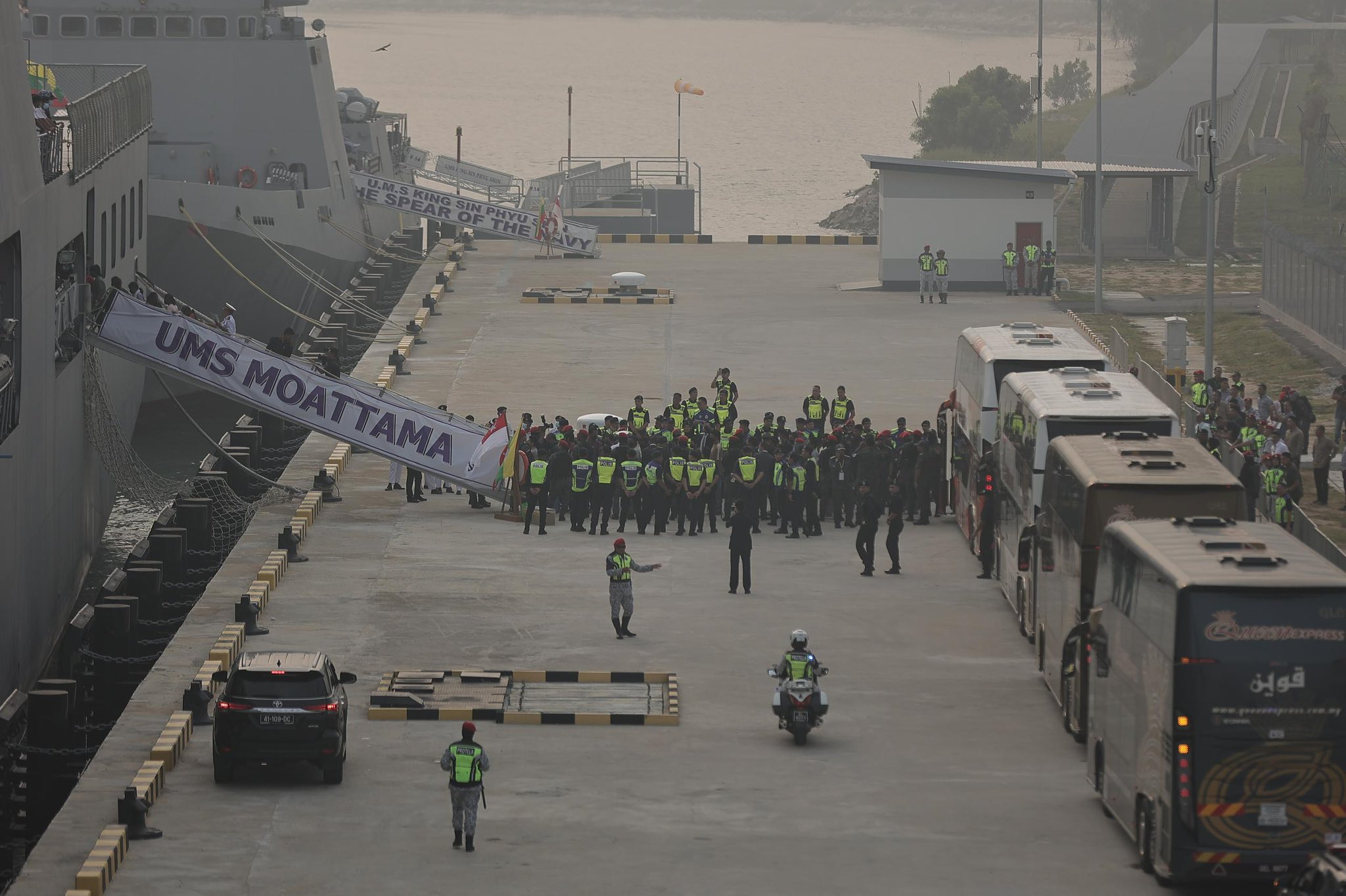
On September 29, the first 1,476 Myanmar detainees were sent home under a voluntary repatriation programme agreed between Malaysia and Myanmar. Prime Minister Anwar Ibrahim has said Myanmar agreed to receive an initial 5,000 people. Both governments processed the names. Both governments signed off. And authorities have not confirmed that all 1,476 were Rohingya.
That detail matters, because the Rohingya are not simply Myanmar nationals returning home. They are a people Myanmar does not recognise as its own.
What Malaysia Is Returning Them To
Myanmar's 1982 Citizenship Law excludes the Rohingya from the list of recognised ethnic groups. They are effectively stateless. Many fled Rakhine State without identity documents because they were never issued any. So even if they are physically returned, the question remains: what are they returning to?
Can they work? Can they travel? Can they access healthcare, education, or legal protection? Or do they simply become stateless again — this time inside the country that expelled them?
The UN refugee agency has been unambiguous. In a statement issued on September 1, UNHCR confirmed it was not involved in Malaysia's repatriation process and warned that conditions in Myanmar did not support safe and sustainable returns. More than 160 civil society organisations have urged Malaysia to halt the returns, warning of continued violence and possible forced conscription. This week, the UN condemned another deadly airstrike in Rakhine State.
Myanmar remains at war. The military no longer controls most of Rakhine. The Arakan Army governs much of the territory. Return areas are not safe, and the government that agreed to receive returnees does not control the ground they are returning to.
The Pressure Malaysia Faces
The country hosts around 193,000 registered refugees and asylum seekers from Myanmar, the majority of them Rohingya. Malaysia has never signed the 1951 Refugee Convention. It has no permanent integration pathway, no legal framework for long-term residency, and no mechanism for citizenship. Rohingya in Malaysia live on the margins — unable to work legally, unable to access public schooling, vulnerable to arrest, detention, and deportation.
Public hostility has been rising. A BBC report in August described a "fierce new wave of hostility" against the Rohingya, with crackdowns that were "haphazard and often spurred by public sentiment". Analysts believe the hostility will intensify as Malaysia approaches a general election.
High-profile criminal cases involving Rohingya suspects have added to the tension. But the numbers do not support the panic. The Inspector-General of Police has said Rohingya were involved in 89 criminal cases between 2024 and 2026 — approximately 0.02 per cent of crimes recorded nationwide.
Anwar's argument is straightforward: Malaysia cannot host hundreds of thousands of refugees indefinitely. That is difficult to dismiss.
The Decision Malaysia Made in 2017
In 2017, when the world watched Rohingya flee what many governments and international bodies described as genocide, then-Prime Minister Najib Razak declared that Malaysia must defend them. Not because they shared the same faith, he said, but because they were human beings whose lives had value. Malaysia opened its doors. The country had never signed the Refugee Convention, yet it took them in anyway.
That decision, made nearly a decade ago, is the reason this conversation is happening today. Malaysia acted on humanitarian instinct. It did not build the institutional framework to manage the consequences.
The result is a situation where Malaysia hosts a large refugee population it has no legal mechanism to integrate, no pathway to regularise, and no strategy to support. The refugees are here, but they are not anywhere. They exist in a legal limbo that serves no one — not the refugees, not the communities that host them, and not the government that must manage them.
The Real Question
Malaysia is not wrong to seek repatriation. No country can host an indefinite refugee population without a legal framework, an integration strategy, and public consent. All three are missing.
But repatriation only works if there is somewhere safe to return to. Myanmar is not that place. It is not a country that recognises the Rohingya as citizens. It is not a country where the government controls the territory it is receiving them into. It is not a country at peace.
Sending people back before their safety, legal status, and future are secured does not solve the problem. It transfers the problem — to people who have already lost everything, and to a country that has already shown it does not want them.
The question is not whether the Rohingya should eventually return. The question is whether Myanmar is actually ready to receive them safely. The evidence says it is not. Malaysia knows this. Myanmar knows this. And the 1,476 people who boarded those boats on September 29 know it best of all.