
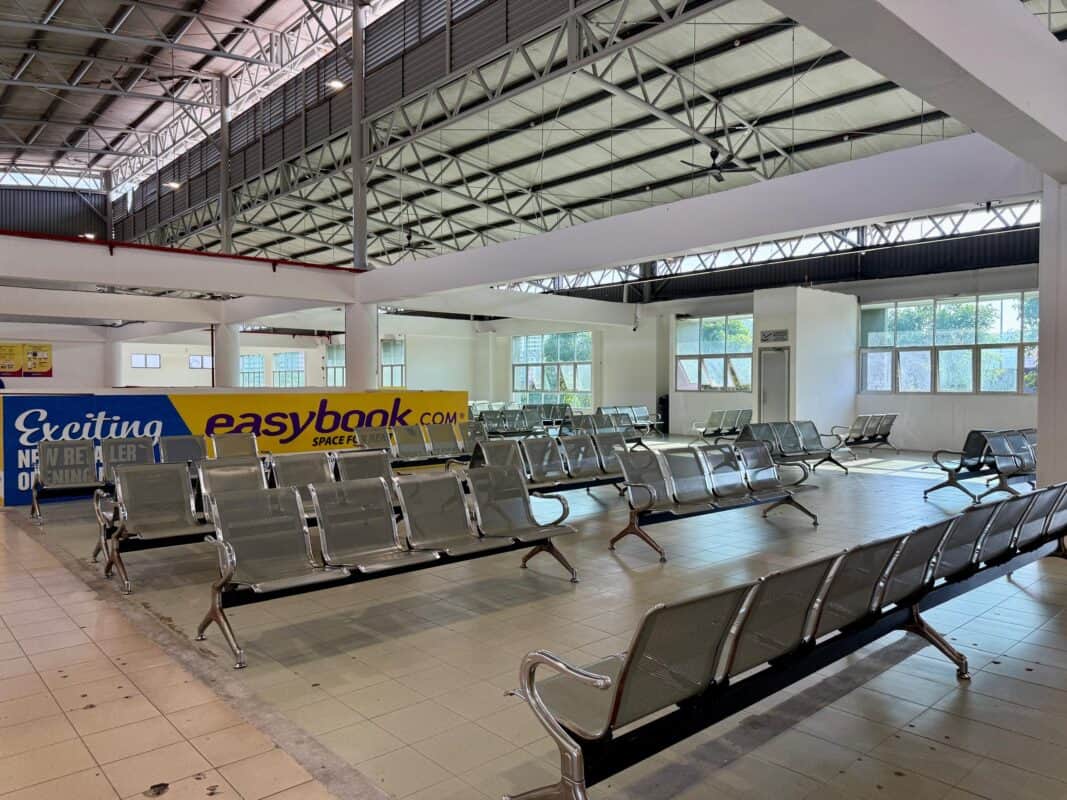
The Sungai Nibong Bus Terminal has already undergone a major upgrade.
So, why does it still look neglected?
The question comes after a report by The Star highlighted problems at the Penang terminal, including uneven floor tiles, broken chairs, torn roof insulation and a missing button panel on one of the lifts.
For a terminal that underwent a nearly RM7 million Phase 1 upgrade in 2024, those problems are difficult to ignore.
But this is not a case of RM7 million being spent with nothing to show for it.
In fact, the improvements are visible.
The Phase 1 project, which began in 2021, included upgraded physical facilities, escalators and lifts, improved restrooms, a centralised ticketing system and an online ticketing system. Parking areas were also resurfaced and equipped with CCTV. The project was completed in April 2024.
At the time, users interviewed by Buletin Mutiara also acknowledged the improvements, particularly the upgraded toilets, lifts, escalators and ticketing system.
So, the question is not where the RM7 million went. We can see where it went.
The bigger question is why a terminal that was upgraded so recently can already have basic facilities showing signs of deterioration.
Because for passengers, infrastructure is not experienced through a project budget.
It is experienced through the condition of the floor they walk on.
The chair they sit on. The ceiling above them. The lift they use. And whether they can find someone at the information counter when they need help.
That is where the difference between upgrading infrastructure and maintaining infrastructure becomes important.
A new escalator is an upgrade.
Keeping that escalator, the surrounding floor, seating areas, ceilings, lifts and other facilities in good condition is maintenance.
And both are necessary if an investment is going to continue delivering the experience it was intended to provide.
This is particularly relevant for Sungai Nibong because the terminal is not simply an old bus station being left behind.
The area is being prepared for much larger development.
Penang's draft Sungai Nibong Transit-Oriented Development master plan is expected to be finalised in October, with implementation potentially taking 10 to 15 years. The development is planned around future public transport infrastructure, including the Mutiara Line.
That means the terminal's current condition offers a useful lesson before even more infrastructure is built.
Penang will need to invest in new transport infrastructure. But it will also need to invest in keeping that infrastructure in good condition.
Because public infrastructure does not remain modern simply because it was modernised once.
A RM7 million upgrade can give a terminal new lifts, escalators and systems.
But if the basic things passengers encounter every day are allowed to deteriorate, the facility can still feel neglected.
The lesson from Sungai Nibong is therefore not that the RM7 million was pointless.
It is that upgrading a public facility is only the beginning.
The real test is whether the facility continues to look, feel and function like an upgraded facility years later.