
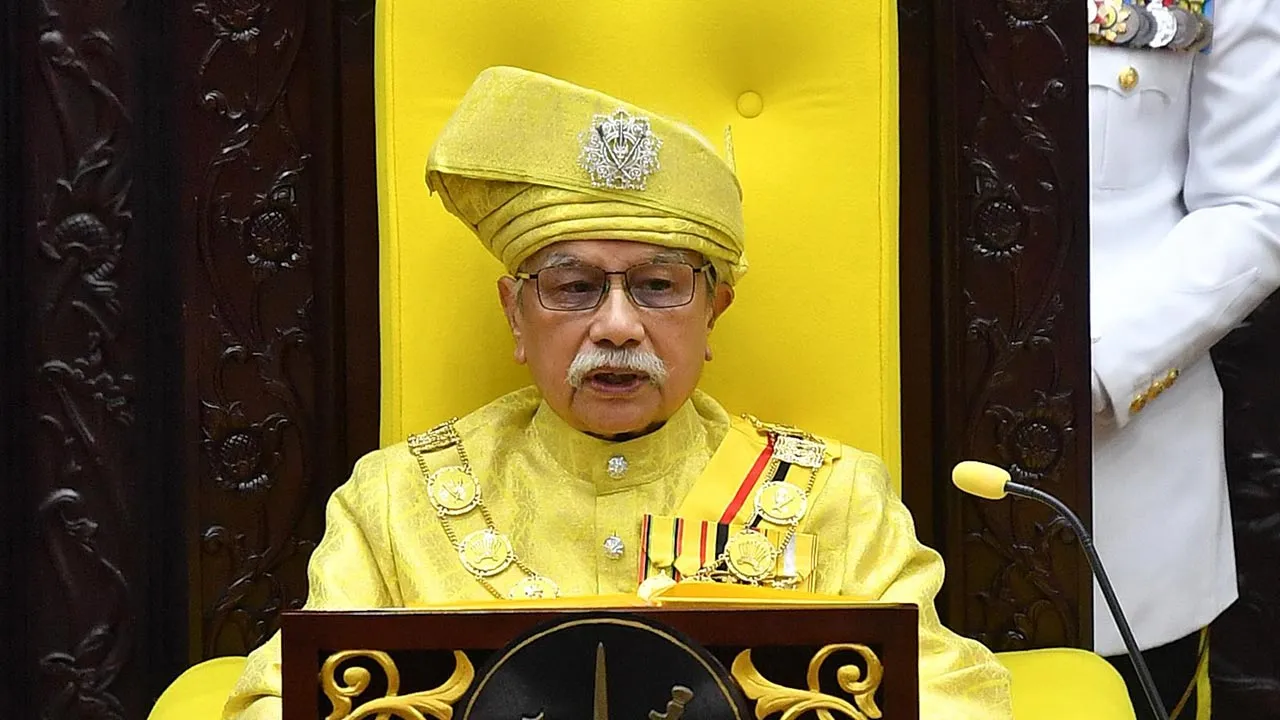
The constitutional and administrative crisis in Negeri Sembilan has entered its second month, and the economic consequences are becoming impossible to ignore.
The state executive council has effectively ceased to function. Ten exco members had their appointments revoked by Yang di-Pertuan Besar Tuanku Muhriz Tuanku Munawir on September 20, with the revocation gazetted on September 24 . The state administration now faces a "decision vacuum" — a situation where matters requiring exco approval simply cannot proceed.
The Investment Chill
Negeri Sembilan PKR has warned that the uncertainty over the status of the exco could delay "investment and development matters, as well as land approvals and transfers and project implementation" . The party noted that this "could undermine investor confidence, complicate matters for landowners and businesses, and affect employment and household incomes" .
Prospective investors arriving in the state during this period have been described as being "like headless chickens" — unsure of who to approach, and increasingly likely to take their capital elsewhere . Negeri Sembilan has been actively courting investment, targeting an increase from 295 projects worth RM19.1 billion in 2025 to 2,405 projects by 2040, with GDP projected to rise from RM57.01 billion to RM109.12 billion . That trajectory now looks uncertain.
Real Estate First to Feel the Pain
Datuk Looi Hai Ting, president of the Negeri Sembilan Chinese Chamber of Commerce and Industry, explained that developers routinely need to meet with the relevant exco member and present matters to the state executive council for approval . These include land premium appeals, decisions on discounts or additional charges, and special requests related to state land .
"With the exco positions vacant, the state executive council cannot meet normally to discuss these matters," Looi said. "Some procedures may be stuck, and project progress will be affected" .
The Malaysia Real Estate and Housing Developers' Association (REDHA) Negeri Sembilan branch has echoed the concern. Chairman Datuk Foo Tian Seng noted that land conversion applications, company-to-company contract purchases and other specific procedures all require exco approval .
The Budget That Cannot Be Tabled
The state budget must be presented by the end of this year. The state legislative assembly last convened in August and cannot be delayed beyond February next year — but the budget itself cannot wait until February . Without a functioning executive council, the budget process is in jeopardy. If the budget cannot be passed, the entire state administration and its spending face paralysis.
The economic damage is not confined to boardrooms either.
Village Development and Security Committees (JPKK) and municipal councillors remain unappointed. These bodies serve as the link between the state government and communities at the grassroots level . Without them, rural residents and local communities lose their channels of representation and coordination .
The Perception Problem
Perhaps the most damaging long-term consequence is the perception that the state government is not functioning effectively.
Aminuddin Harun, the former Menteri Besar and current Negeri Sembilan PKR chairman, said the prolonged dispute had created exactly that impression . Even if civil servants continue to perform their duties, the uncertainty at the leadership level has confused public servants, investors, local authorities and the public alike .
The Bottom Line
Negeri Sembilan cannot afford a prolonged paralysis. Every day without a functioning executive council is a day of delayed approvals, postponed projects, and deferred investment. The state's economic ambitions — new industries, new housing, new jobs — depend on a government that can actually govern.
The political crisis will eventually be resolved, one way or another. But the economic cost of the delay will not disappear when the crisis ends. Investors who looked elsewhere will not return immediately. Projects that were shelved will take months to restart. And the people of Negeri Sembilan — the landowners, the small businesses, the workers whose incomes depend on the state's economic machinery — will bear the burden of a dispute that was never theirs to begin with.