
Formula One's return to Sepang after nine years brought packed grandstands, record ticket sales and plenty of excitement.
But for some fans, getting into and out of the circuit became a race of its own.
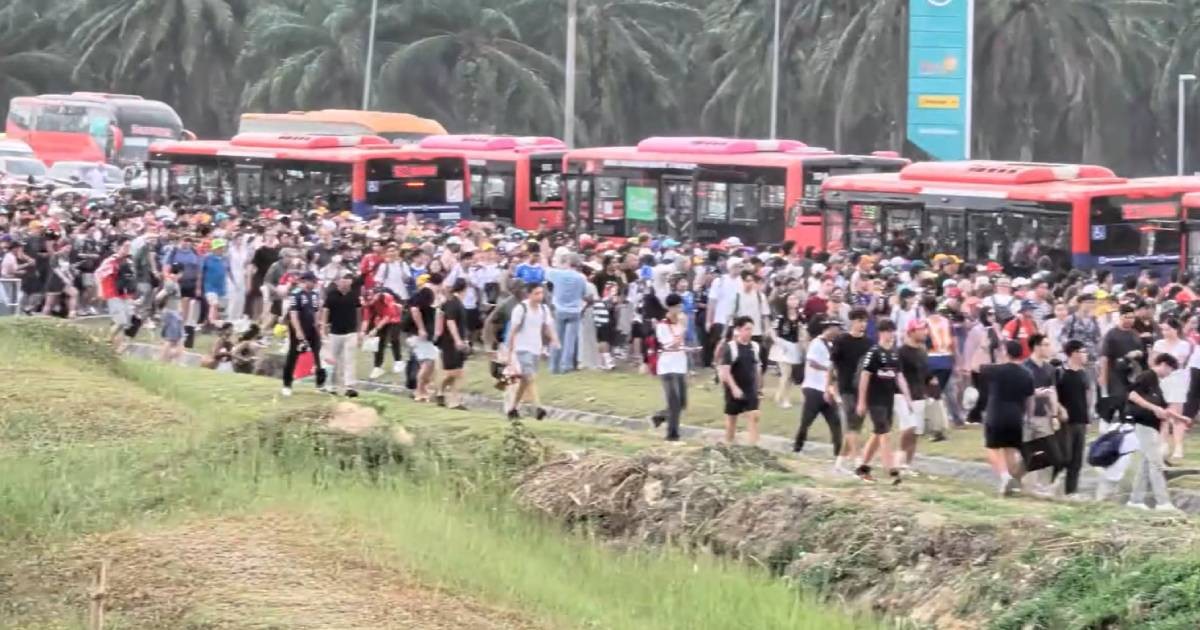
Crowd and transport problems emerged on Friday, with spectators reporting long waits for shuttle buses, heavy traffic and difficulty leaving the circuit.
One spectator told The Straits Times that he walked around seven kilometres after Friday's sessions ended at 5pm, eventually arriving home at 11.30pm after what would normally have been roughly a one-hour journey.
The problems prompted Sepang International Circuit, or SIC, and transport operators to make changes, including adjustments to shuttle arrangements and stronger crowd-management measures.
And the response was visible on the ground.
SIC chief executive officer Azhan Shafriman Hanif was seen personally helping manage crowds and distributing water to spectators waiting for shuttle buses.
By Saturday, fans reported improvements, with more buses, dedicated lanes and a stronger presence of staff, marshals and police.
But the circumstances behind the event are worth considering.
This was not a conventional Malaysian Grand Prix.
The Bahrain Grand Prix was relocated to Sepang, leaving organisers with less than two months to prepare compared with the six to seven months normally required.
The event was jointly managed by Bahrain International Circuit and Sepang International Circuit, alongside Malaysian authorities and transport operators.
More than 5,000 people were involved in the operation, including hundreds of Bahrain and Malaysian marshals.
So, while the problems were real, the situation was more complicated than simply asking who was at fault.
Sepang, after all, is no stranger to large motorsport crowds.
Last year's MotoGP weekend attracted a record 190,977 spectators, demonstrating that the circuit has experience handling crowds significantly larger than the number attending this year's F1 race.
But Sunday presented another challenge.
Heavy rain delayed the race by more than 90 minutes, pushing the finish to around 6.30pm.
More than 100,000 fans still stayed to watch the race.
Afterwards, however, congestion continued, with thousands of spectators reportedly still around the circuit and nearby transport hubs hours later. Some were seen walking towards Mitsui Outlet Park and KLIA as they tried to get out of the area.
The Sepang MP, Aiman Athirah Sabu, has urged against turning the situation into a blame game, saying the focus should instead be on improving coordination between the Bahrain organisers, Malaysian agencies and other parties involved.
And perhaps that is the bigger takeaway from the weekend.
The crowd-management problems should not be dismissed. Fans spent hours waiting, walking and trying to get home, and there are clear lessons for future events.
But neither should those problems overshadow what the return of F1 itself demonstrated.
The demand is there.
More than 100,000 people packed Sepang on race day despite the rain and delayed start, while drivers praised the atmosphere and the Malaysian crowd.
For a country hoping to keep F1 at Sepang beyond this one-off return, the priority now is to take those lessons from the weekend and build on them.
Because Sepang has already shown with MotoGP that it can handle massive motorsport crowds.
The challenge is making sure that, the next time F1 comes back, the biggest memories are made on the track and not on the way home.