
Malaysia is sending Myanmar nationals home. But much of the international coverage has reduced the story to one simple image: Malaysia sending vulnerable people back into a country still facing conflict.
That is part of the story. It is not the whole story.
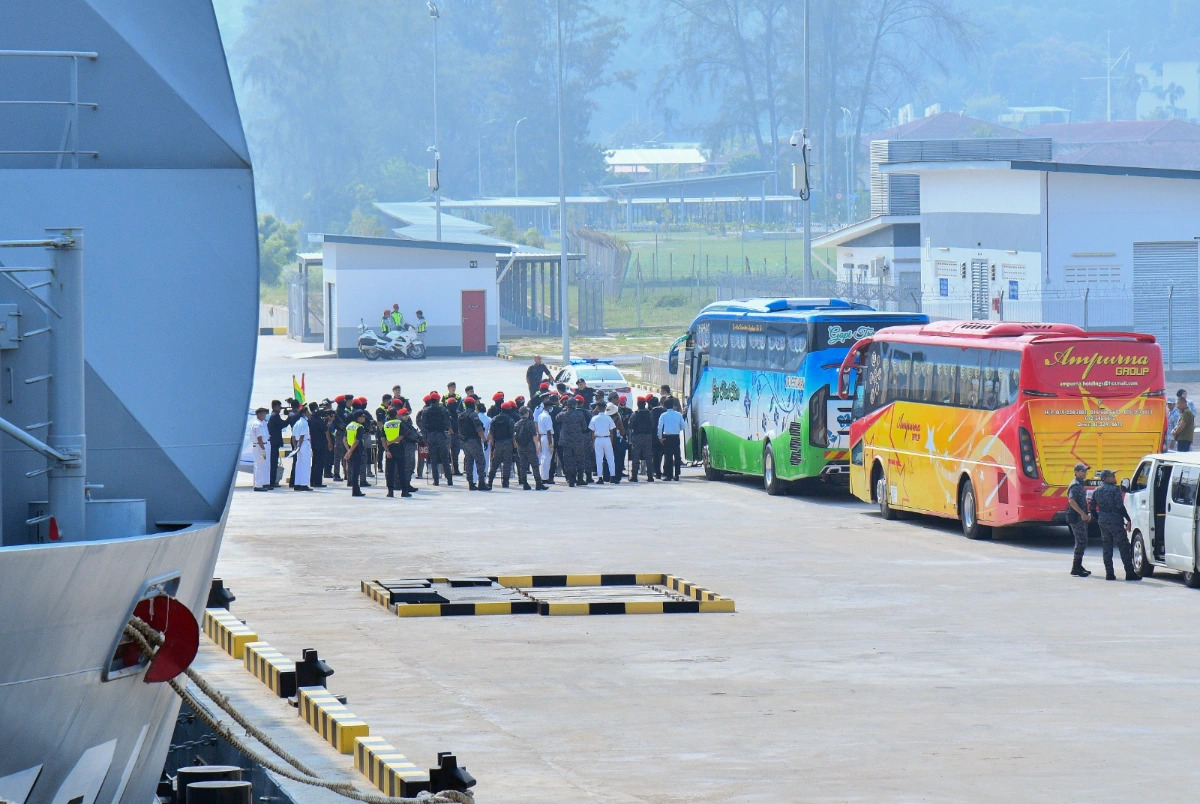
On September 29, Malaysia repatriated 1,476 Myanmar nationals in the first phase of a programme involving 5,000 people. The government has consistently described the exercise as voluntary, saying those returned had agreed to go home.
So, why is Malaysia doing this?
The answer begins with the sheer number of Myanmar nationals already in Malaysian immigration detention.
As of August 31, the Home Ministry said 11,804 Myanmar nationals were being held in Immigration Detention Depots and Baitul Mahabbah facilities nationwide. The ministry said the large detainee population and prolonged detention periods were putting pressure on detention capacity and government resources.
Repatriation is therefore being presented as a way to resolve prolonged detention by returning foreign nationals to their own country. And this is not a unilateral Malaysian operation.
Myanmar agreed to receive 5,000 of its citizens during 2026. The Home Ministry says Myanmar first verified the list of individuals and submitted it through a diplomatic note, after which both countries coordinated the security, logistics and reception arrangements.
Those being returned also underwent citizenship verification, documentation, health screening and identity checks.
That context matters.
Describing the operation simply as Malaysia “deporting refugees” can make it sound as though the government indiscriminately rounded up vulnerable people and expelled them to Myanmar.
The process described by Malaysian authorities is more specific: identify Myanmar nationals in detention, verify their citizenship, obtain their consent, coordinate their return with Myanmar and reduce the need for prolonged detention.
And this is much bigger than the 1,476 people who made headlines last week.
Prime Minister Anwar Ibrahim told Parliament on October 6 that about 10,000 Myanmar nationals had been repatriated since January, through both air and sea routes. He said the returns involved different ethnic groups, including Arakan, Karen and Shan people.
Most significantly, Anwar said none of the more than 10,000 people repatriated so far were Rohingya.
That matters because international coverage has understandably focused heavily on the plight of Rohingya people, given their history of persecution in Myanmar.
But the broader repatriation programme is not synonymous with the Rohingya issue. Malaysia is dealing with thousands of Myanmar nationals in its immigration system and negotiating directly with their country of origin to return them.
That does not make every return automatically safe or appropriate.
UNHCR has questioned whether people held in immigration detention can make a genuinely free and informed decision to return. The agency said it did not have access to independently assess their consent and urged Malaysia to ensure safeguards and individual assessments.
That is a legitimate concern.
But there is a difference between questioning whether consent was genuinely free and informed and establishing that Malaysia forcibly deported people who did not want to go.
According to Malaysia, consent was not simply assumed. Anwar said those being repatriated signed documentation confirming their consent and that the process was carried out without coercion or duress. He also said Malaysia sought assurances from Myanmar that returnees would receive reasonable treatment and would not face suffering, oppression or human-rights violations.
And Malaysia is not claiming that Myanmar is suddenly a safe country.
Its position is that it is managing Myanmar nationals already in its immigration system and establishing a mechanism for those who agree to return to do so through coordination with their own government.
That is different from denying the risks in Myanmar.
Those risks deserve reporting. So do UNHCR's concerns. But so do the reasons Malaysia is carrying out the repatriations.
A country has to manage its immigration system, detention capacity and foreign nationals who have no legal basis to remain. When another government is prepared to receive its own citizens, a bilateral arrangement provides a mechanism for returning them.
The Immigration Department said on October 6 that more than 3,000 people remained under the initial arrangement and that Malaysia intended to continue repatriations where possible.
So, this is not simply a one-off operation. It is part of a broader effort to manage a large population of Myanmar nationals within Malaysia's immigration system.
That does not mean the policy should escape scrutiny.
Were all returnees genuinely willing to leave? Were vulnerable individuals properly identified? Were people with potential protection claims given access to appropriate procedures? What happens to those who return?
These are questions Malaysia should be prepared to answer.
But journalism should ask another question too: are audiences being given enough context to understand what Malaysia is actually doing?
Calling something a “deportation” rather than a “voluntary repatriation” matters when the circumstances surrounding the two processes are different. So does applying the word “refugee” broadly to Myanmar nationals whose individual circumstances may differ.
Malaysia's policy can be criticised without stripping away the context behind it.
Myanmar's conflict can be acknowledged without suggesting every Myanmar national in Malaysian detention is being forcibly sent into the middle of it.
And concerns over consent can be raised without presenting them as proof of coercion.
If international coverage is going to scrutinise Malaysia, as it should, it should also tell audiences why Malaysia is doing this, how the process works and what safeguards the government says are in place.
Understanding the policy does not mean defending every decision Malaysia makes.
It means giving the audience enough information to judge the policy for themselves.
That is what good reporting should do.