
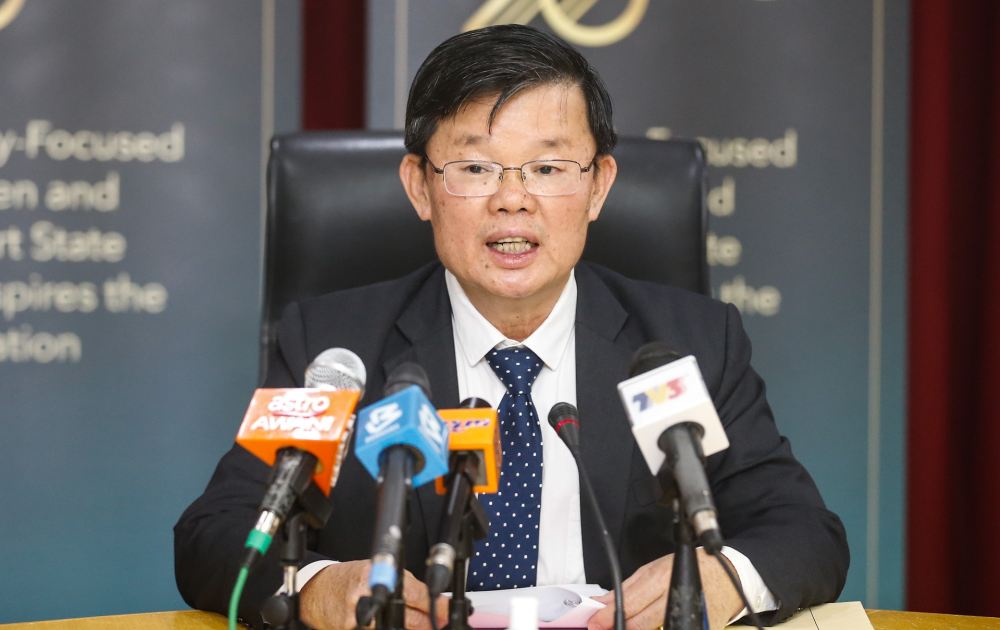
Seven of Penang’s 10 priority projects submitted for consideration under the 13th Malaysia Plan’s 2027 Rolling Plan have received positive consideration from the Federal Government, Chief Minister Chow Kon Yeow said.
The projects cover areas ranging from water resources and STEM education to public facilities, flood mitigation and road infrastructure.
The seven projects are:
- 1. Groundwater resource mapping and assessment in Penang.
- 2. The Penang STEM Talent Blueprint.
- 3. A proposed public market complex in Teluk Kumbar.
- 4. Upgrading mechanical and electrical infrastructure for flood-control systems.
- 5. Upgrading Jalan Bukit Tambun (FT149) from the FT001 junction to the Bukit Tambun Selatan toll junction.
- 6. Upgrading the FT001 Federal Route between Permatang Tinggi and Sungai Juru.
- 7. The Sungai Kelang Ubi flood mitigation plan in Seberang Perai Tengah.
The state government submitted the 10 priority projects to the Finance Ministry in February. The remaining three projects were not accepted for consideration at this stage, although Chow said they could be raised again in the future.
However, being accepted for consideration does not necessarily mean all seven projects have secured funding.
Chow said details could be announced when Budget 2027 is tabled on Friday, while the relevant ministries could also communicate details later.
He added that the state understood the Federal Government’s financial constraints and that priority would have to be given to projects considered urgent.
That makes Budget Day an important checkpoint for Penang.
The state’s development conversation is often dominated by major projects such as the Penang LRT. But these seven proposals point to another side of development: the infrastructure that supports everyday life.
Better roads affect daily commutes. Flood-control systems affect homes and businesses. Water-resource mapping matters as the state plans for future water needs.
A public market serves local communities, while STEM education contributes to the talent pipeline that supports Penang’s technology-driven economy.
None of these projects carries the same visibility as a major rail project. But collectively, they address some of the basic infrastructure and human-capital needs that underpin Penang’s continued growth.
The next question, therefore, is not simply how many projects received federal consideration.
It is how many receive funding, who will implement them, when construction or delivery will begin, and whether they are completed as planned.
For Penang, Budget 2027 could provide the first answer.